Astronomers want your help finding 'missing' black holes in the Milky Way
A citizen science project is seeking volunteers to comb through NASA telescope data for telltale signs of the galaxy's hidden black holes.
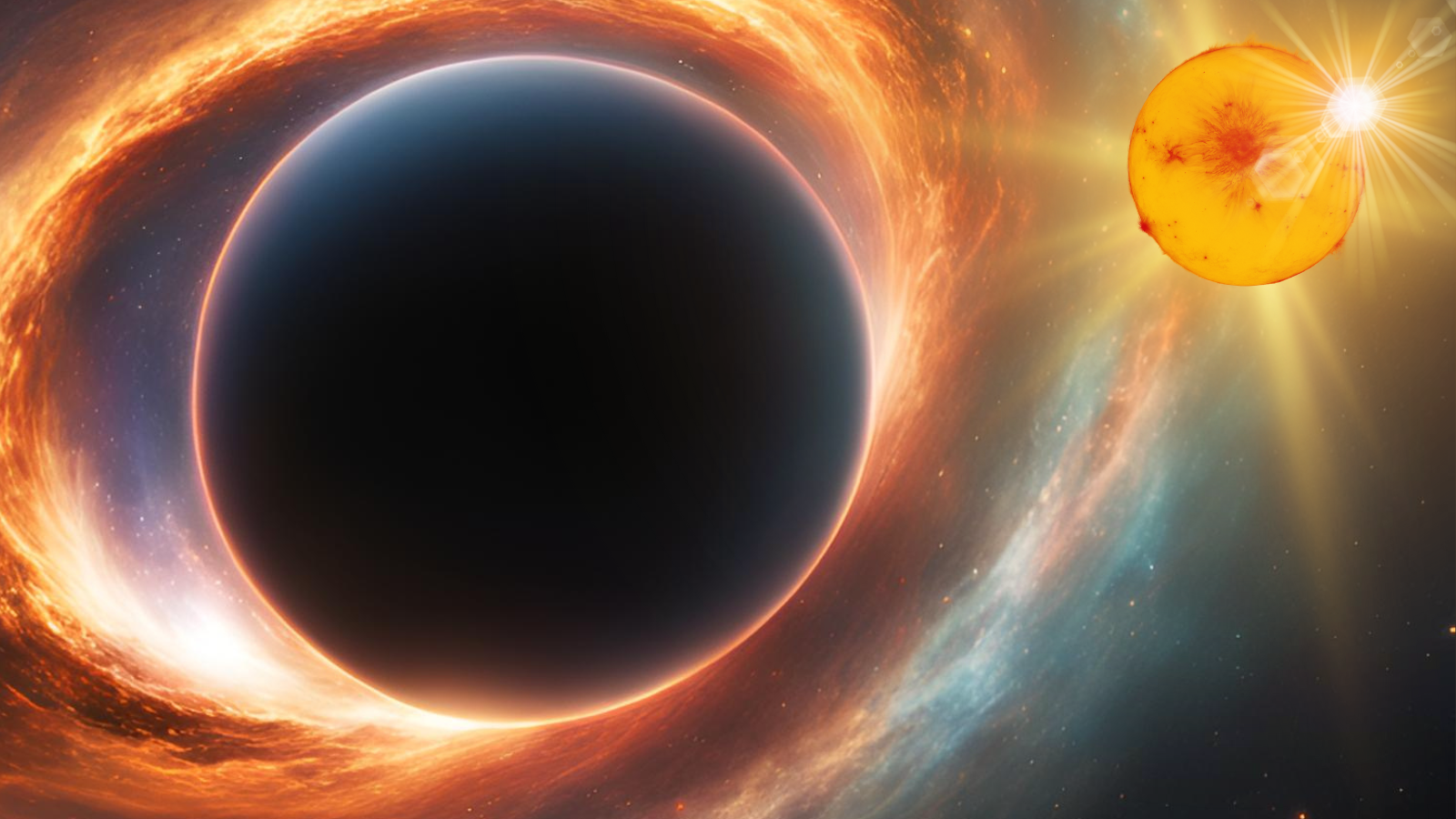
Astronomers are seeking public assistance in the hunt for millions of missing black holes within our Milky Way galaxy. The project, named Black Hole Hunters, aims to enlist volunteers to assist in reviewing data gathered by the NASA space telescope. By identifying recognizable patterns that may indicate a black hole's presence, participants can help expedite a search that would otherwise take years to complete.
Project co-lead Adam McMaster, an astronomer at the University of Southampton in the U.K., explains that volunteers will be narrowing down the precise location of where telescopes should focus their efforts next. He adds that volunteers could potentially discover a black hole. Cosmic black holes form when massive stars, approximately 20 times heavier than our sun, exhaust their fuel and collapse, leaving behind an immense gravitational force that even light cannot escape.
However, they don't emit light themselves but reveal their existence through the bending of nearby light and a specific gravitational magnification effect when aligned with Earth.
The Black Hole Hunters project relies on data from NASA's Transiting Exoplanet Survey Satellite (TESS), which tracks tiny, continuous changes in a star's brightness over time. This method is well-suited for detecting black hole magnification events, where the black hole's gravity acts like a cosmic magnifying glass, briefly brightening a nearby star's light as it passes directly between the star and Earth.
Automated algorithms initially screen TESS data, identifying potential black hole candidate locations among millions of stars. However, AI struggles with cosmic complexities like stellar flares and natural stellar pulsations that can lead to false positives. This is where human volunteers come in. By reviewing graphs and recognizing the right patterns, they help minimize errors. Each graph is reviewed by multiple volunteers, and their answers are combined to average out individual mistakes.
Grace Clarke, a University of Southampton undergraduate student involved with the project, explains that anyone with a laptop and spare time can participate and make a significant impact on space science. The data, primarily pattern recognition, requires no advanced astronomy background. Since its launch on the Zooniverse platform in October 2021, Black Hole Hunters has attracted nearly 23,000 volunteers who have completed over 12 million classifications.
Researchers plan to further expand the search using other instruments, such as the European Space Agency's Euclid mission and NASA's recently launched Nancy Grace Roman Space Telescope. The project's goal is to potentially make thousands of new discoveries, and they are eager to enlist as much help as they can get.
Written by urgent.news from Space.com's reporting — not their text. Machine-written — may contain errors; check the original before relying on it.