Ash Gourd In Durga Puja: Know Its Religious And Cultural Significance
Durga Puja is one of the most significant Hindu festivals, celebrated with devotion, elaborate rituals and cultural programmes across India. This year, Durga Puja will conclude on October 21. While the festival is widely associated with the worship of Goddess Durga, several traditional offerings and ritual practices also hold religious and cultural importance. Ash gourd, also known as winter…
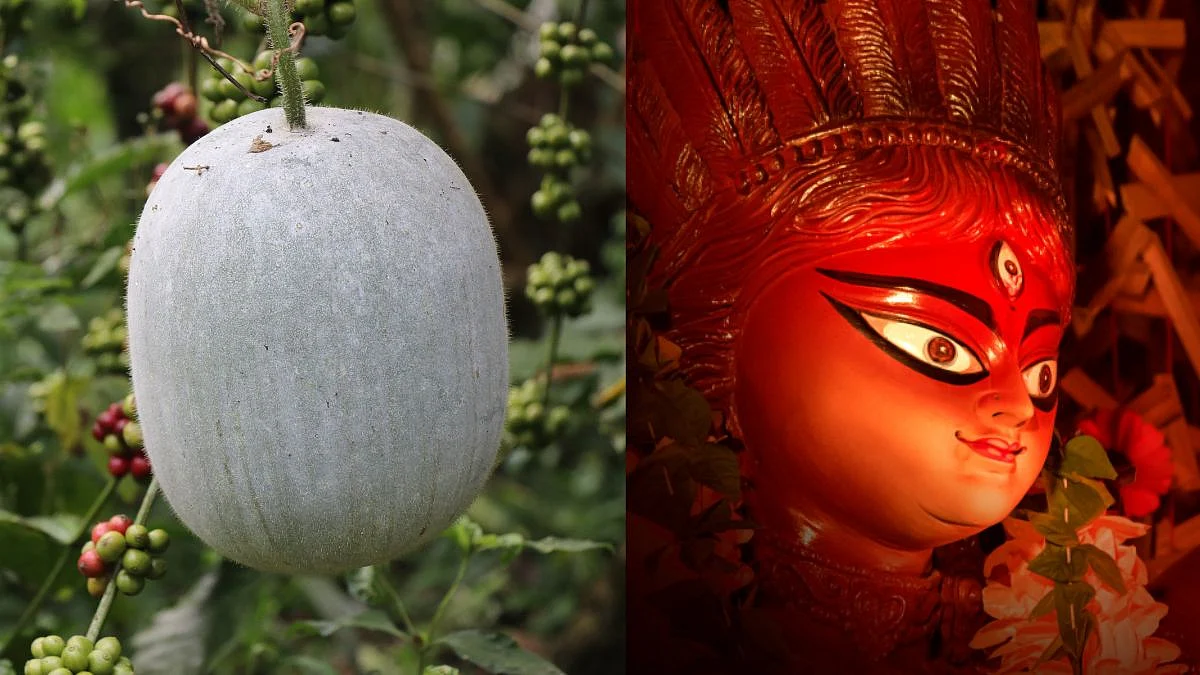
Durga Puja, a prominent Hindu festival observed across India, concludes on October 21 this year. While the celebration revolves around the veneration of Goddess Durga, traditional offerings and rituals also hold cultural and religious significance. One such ingredient used in certain Hindu rituals is the ash gourd, or winter melon.
Religiously, ash gourd is utilized in various Hindu practices as a symbolic offering, taking the place of animal sacrifice. This reflects the belief that symbolic offerings can fulfill ritual purposes without causing harm to living beings. During Durga Puja, ash gourd, known as chalkumro in Bengali, serves as a non-violent alternative for animal sacrifice.
The use of ash gourd in rituals is attributed to its symbolic value of purity and auspiciousness. In certain ceremonies, the vegetable is cut or offered to ward off negative energies or signify the completion of a religious observance. In Vedic and Shakta traditions, ash gourd is associated with Kushmanda, the fourth manifestation of Goddess Durga. Revered as the creator of the universe, ash gourd is considered a high-prana biological entity that can absorb and ground heavy or fierce energy.
The Durga Puja festival brings together religious devotion, regional customs, and community celebrations. From the preparation of bhog to the decoration of pandals, each aspect reflects the cultural identity of the observing community.
Written by urgent.news from Free Press Journal's reporting — not their text. Machine-written — may contain errors; check the original before relying on it.