Are We Overcomplicating ‘Eating Right’?
For many people, health eating has turned into a mission. We study labels, count calories, compare ingredients and track the latest diet fads. There is information on what we should eat before exercise, what we should eat in the evening and what we shouldn't eat at all. It is no wonder that we think that eating right must be planned to the last detail. However, eating well doesn’t always have to…
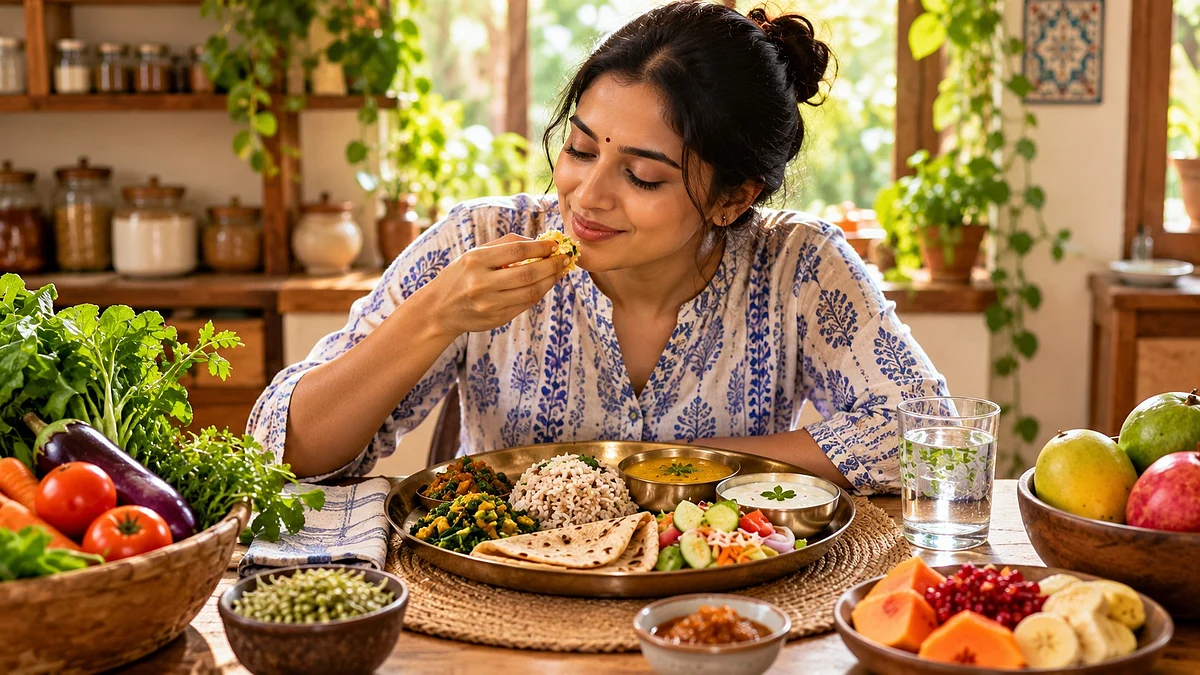
Many individuals have transformed healthy eating into an obsessive pursuit, meticulously analyzing food labels, tallying calories, scrutinizing ingredients, and following the latest dietary trends. This approach often leads to the notion that eating right demands meticulous planning. However, achieving a balanced diet doesn't necessarily entail such complexity.
At its core, healthy eating hinges on the consumption of an appropriate mix of foods. The body needs carbohydrates for energy, protein for repair and growth, healthy fats, vitamins, minerals, fiber, and adequate hydration. There's no requirement to spend substantial sums on rare items to fulfill nutritional needs. Traditional meal practices can offer valuable insights into this matter.
In India, meals have traditionally comprised a variety of foods presented together on a single plate. For example, a typical Indian meal might consist of dal, roti or rice, vegetables, curd, and a seasonal fruit. All these components provide essential nutrients. This variety is crucial because no single food item contains everything the body needs.
The notion of a 'superfood' can sometimes be perplexing, as a food might contain an abundance of a particular nutrient but cannot substitute for all other food items. Consuming a range of grains, legumes, vegetables, fruits, nuts, and seeds can help achieve a well-rounded diet. This principle also applies to grains. While rice and wheat are commonly consumed in India, there are numerous other types of grains.
Including a variety of traditional grains like millets in the diet can be beneficial. It doesn't imply substituting one food for another; rather, it emphasizes diversification. It is vital to differentiate between minimally processed and highly processed foods. While processing doesn't always equate to something negative, excessive reliance on foods high in added sugars, salts, or unhealthy fats, especially those designed for frequent consumption, should be a concern.
Greater emphasis should be placed on fiber, which can be found in pulses, whole grains, vegetables, fruits, nuts, and seeds. However, contemporary diets often overly rely on processed grains and packaged foods. Incorporating these items into daily diets could be an effective way to enhance dietary diversity. Seasonal eating not only benefits the environment but also offers practical advantages.
By incorporating fruits and vegetables that are naturally available during a specific season, one can add variety to their kitchen, maintaining a connection with local farming traditions and culture. The method of cooking also plays a significant role. Simple cooking methods like steaming, boiling, roasting, or stir-frying ensure that the food is prepared without unnecessary complications.
Traditional cooking techniques underscore the fact that healthy and tasty meals can be achieved through simple preparation methods involving herbs, spices, grains, beans, and vegetables. Importantly, proper nutrition shouldn't be associated with feelings of guilt. Attaining good nutrition doesn't necessitate flawless meals in every instance.
Occasions like special meals at restaurants, festive foods, or days when time is limited for meal preparation are inevitable. The key is consistency. Perhaps, contemporary nutrition knowledge can learn from the experiences of previous generations, focusing on basic principles such as a varied diet comprising whole foods, minimally processed foods, vegetables and fruits, legumes, and grains, rather than constantly chasing the latest food fads.
A deeper understanding of where our food comes from, including seasonal and traditional foods, can also contribute to making more conscious food choices. The ultimate goal is to make our daily diets more diverse, healthy, and sustainable. Yet, sometimes, the most effective approach may involve revisiting traditional dietary practices that we might have overlooked along the way.
Written by urgent.news from Free Press Journal's reporting — not their text. Machine-written — may contain errors; check the original before relying on it.