AI coding agents made me a better programmer, but only after I stopped letting them write the code
Don't let coding agents completely steer your ship.
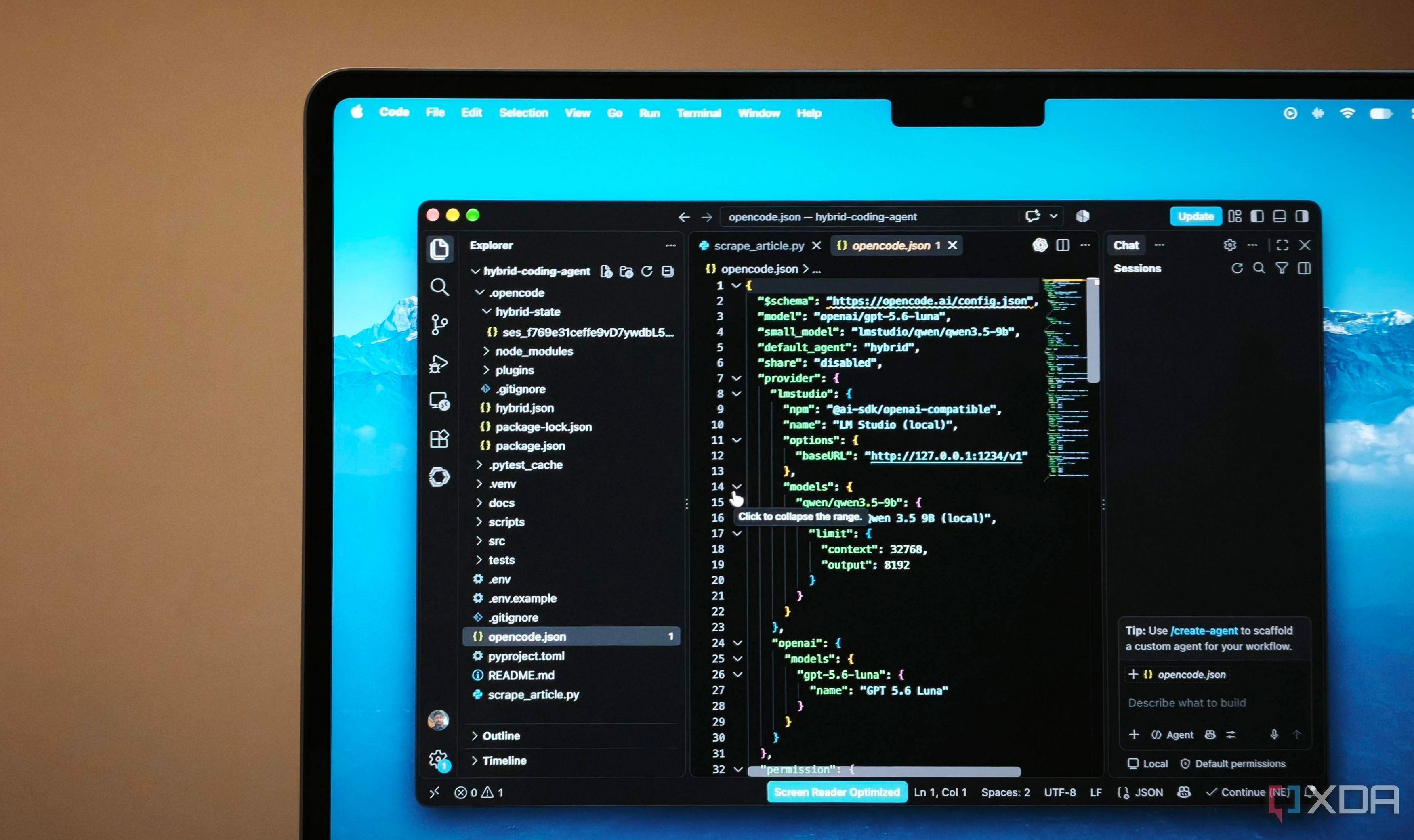
Using AI coding agents can make a programmer better at their craft, but only if they resist the temptation to let the agents handle everything. I, too, used to think that learning to code manually was unnecessary when AI could write the code for me. However, I've discovered that a more hands-on approach yields better results. After using AI agents like Claude Code and Codex, I realized that I was not learning much from the process.
I could explain what my application did, but I struggled to understand the underlying workings. To overcome this, I began asking the agents to explain the required steps, the files to modify, and the interactions between components. I started breaking down implementations into smaller tasks and attempting to write some code myself.
When I encountered obstacles, I sought the agent's guidance to explain the issue or offer solutions. While I still use agents for boilerplate code, repetitive tasks, and complex concepts, I now take responsibility for parts of the implementation. This has helped me better understand how the code functions. Moreover, when something breaks, I have a clearer idea of where to look for a solution.
I don't believe that one must spend years learning a programming language before building something useful in 2026. Instead, one should focus on grasping fundamental programming principles, as there is little value in memorizing syntax or writing repetitive code when an AI agent can accomplish these tasks in seconds. The key is to comprehend what you are building and how it operates, even if you are not the one typing every line of code.
For instance, understanding functions, API communication, or data flow between components is far more beneficial than simply knowing the exact syntax for every operation. If one grasps these concepts, they can explain their requirements to the agent, assess its output, and recognize when something isn't functioning as expected. Ultimately, one can refer to documentation or ask AI for assistance.
I've also found that learning through actual projects proves more effective than attempting to learn everything in advance. When confronted with an unfamiliar aspect, I ask the agent to explain it, examine its implementation, and attempt to make changes myself. This approach enables me to learn concepts with immediate application rather than working through exercises that might never be relevant.
Of course, aspiring to become a professional software engineer necessitates a solid foundation in programming and computer science. However, for individuals like me who primarily aim to create useful tools and applications, I believe it is reasonable to rely on AI for repetitive tasks and dedicate more time to understanding the crucial decisions.
One challenge I've encountered with coding agents is the propensity to generate excessive code. When an agent is tasked with implementing a feature, it may create multiple files, introduce dependencies, or write functions that already exist in the application. While the feature functions correctly, I accept the changes and proceed.
Nevertheless, every unnecessary addition complicates the application's maintenance, particularly during the learning process. Moreover, this issue has worsened with AI-generated code. According to GitClear's 2026 research, which analyzed 623 million code changes, code block duplication surged by 81% compared to 2023. The research also revealed a notable decline in refactoring and code reuse.
Excessive code generation does not necessarily equate to better software. This highlights the importance of understanding programming principles. When an agent suggests a solution, I want to know whether it necessitates new functions, whether it can leverage existing code, and whether there is a simpler approach to achieve the same result.
This is a vital aspect of modern programming, and I do not wish to ignore it. AI and coding agents have become integral to programming, and it is essential not to deny this reality. Whether working on the front end, back end, or elsewhere, developers must adapt to the changing expectations. Learning to code remains crucial as it allows one to better utilize these agents.
Written by urgent.news from XDA Developers's reporting — not their text. Machine-written — may contain errors; check the original before relying on it.