‘Please don’t make us poorer’: Bangkok protesters challenge IMF, World Bank over spending cuts
BANGKOK, Oct 17 — Coconut farmer Sombat Chuekrod travelled more than 200km to join hundreds on the streets of Bang...
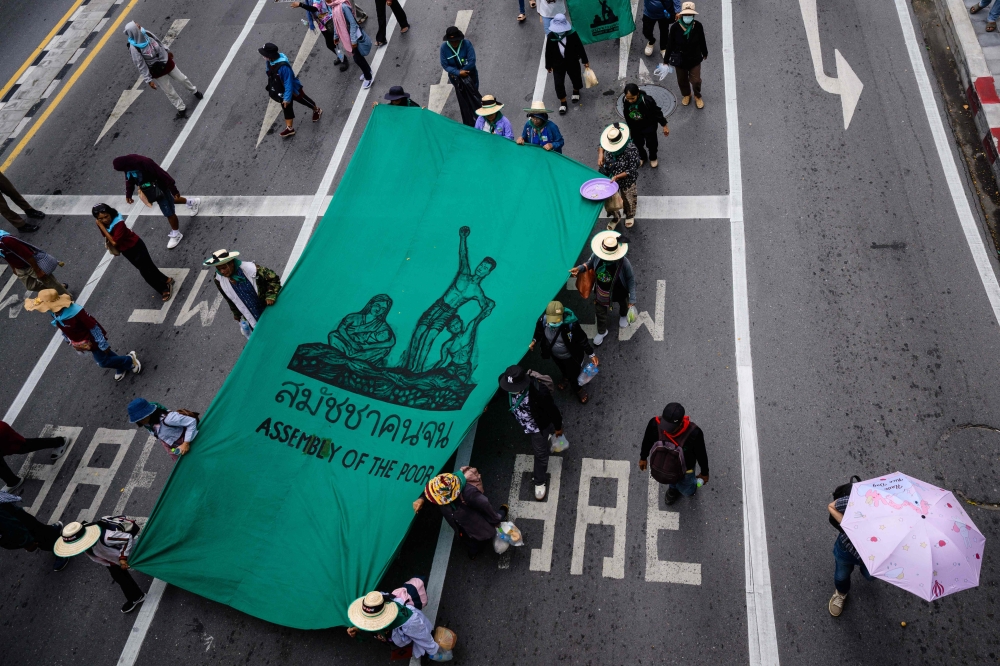
On October 17, coconut farmers and other protesters gathered in Bangkok, Thailand, to challenge the International Monetary Fund (IMF) and World Bank's approach to economic spending cuts. These individuals traveled over 200 kilometers to participate in the IMF-World Bank Annual Meetings, where global policymakers were discussing an inflation crisis exacerbated by the US war on Iran and other economic shocks.
Finance ministers, central bank governors, and other decision-makers were concerned about high worldwide debt levels following the pandemic and ongoing conflicts in Ukraine and the Middle East. The IMF's stance is that governments must reduce spending to address these mounting debts. However, the protesters and rights groups argue that this approach will only exacerbate poverty in developing nations.
51-year-old Sombat Chuekrod, a coconut farmer who participated in the protest, emphasized that Thai people are already impoverished and urged the IMF and World Bank not to make the situation worse. Protest organizers called for the institutions to prioritize climate financing and tax reforms that benefit lower-income citizens, rather than advocating for the reduction of subsidies and social spending.
Oxfam Executive Director Amitabh Behar warned that the IMF's calls for fiscal consolidation are essentially urging the reduction of essential social support during the current inflation crisis caused by war-related inflation. IMF deputy chief of research Petya Koeva Brooks acknowledged that vulnerable countries face a more challenging situation but asserted that they have no alternative but to address fiscal balances by either cutting spending or increasing revenues.
IMF chief Reza Baqir shared his experience as Pakistan's central bank governor, emphasizing the difficulty policymakers face in balancing the needs of the population with the demands of the IMF. He also stressed the importance of addressing domestic governance challenges to reduce reliance on international institutions and support citizens in a targeted and prudent manner.
Meanwhile, Christina Segal-Knowles of the Rockefeller Foundation cautioned that developing countries are essentially presented with two undesirable choices: either take on debt at extremely high interest rates or make drastic spending cuts that could potentially undermine development goals. On the streets of Bangkok, protesters expressed their intention to continue advocating for change, asserting that the network of citizens present is a crucial stakeholder in the ongoing negotiations.
Written by urgent.news from Malay Mail's reporting — not their text. Machine-written — may contain errors; check the original before relying on it.