Microsoft's Maia 300 swaps raw compute for a 2.5x memory bandwidth gain as it moves to make in-house silicon its main AI engine while claiming a 40% efficiency bump — could going the Google route be the pin that pops the Nvidia AI bubble?
Can in-house chips pop the AI bubble? Microsoft's Maia 300 makes the case, but Nvidia shrugged off the news with a 1.29% decline.
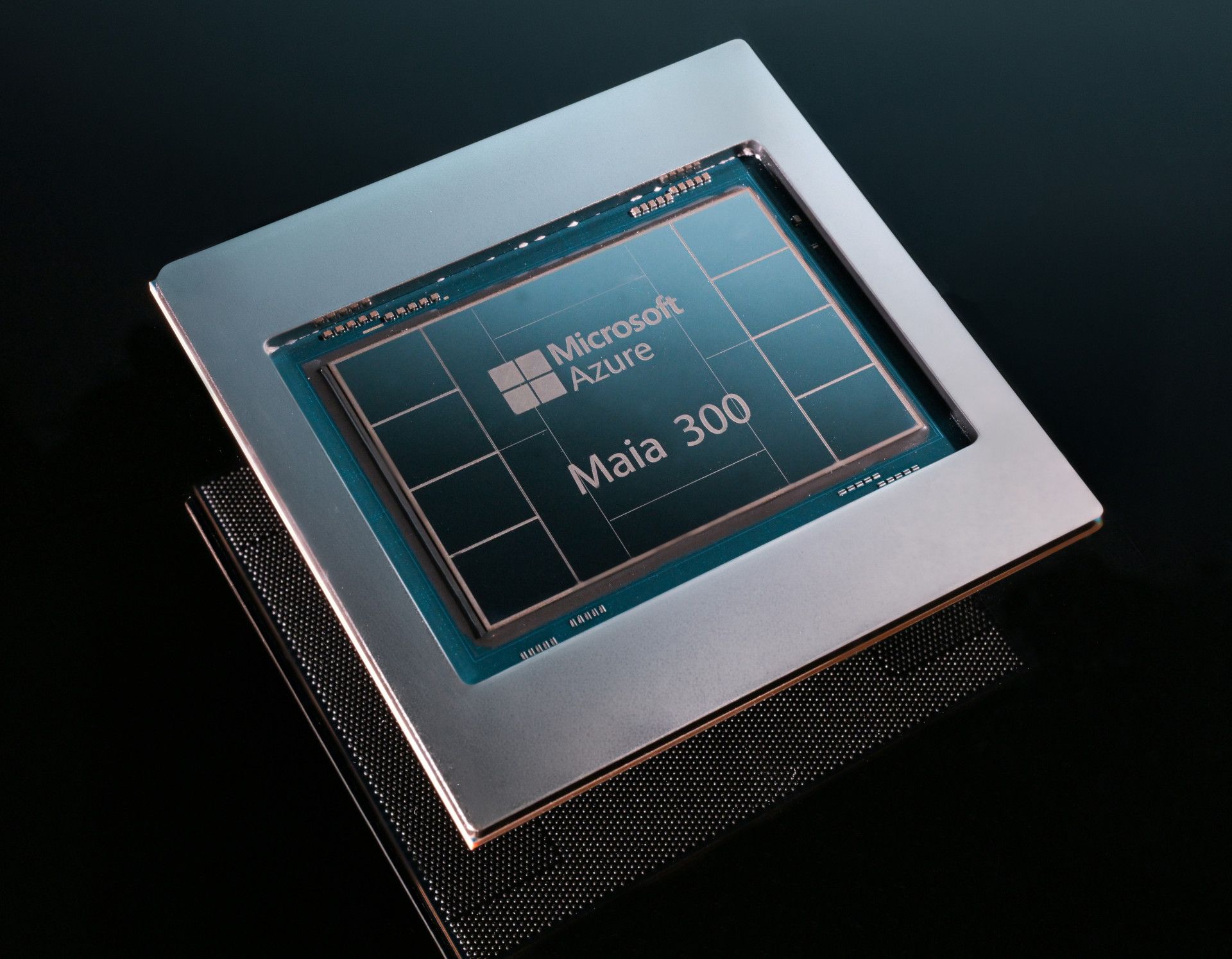
Microsoft's upcoming Maia 300 accelerators will replace Nvidia GPUs as the primary inference engine for the company's products and services, making the move in-house similar to Google and Amazon. The Maia 300 trades a modest 36% compute gain for a 2.5x memory bandwidth increase compared to the Maia 200, betting on memory-bound decode as the key to efficiency.
With production set for 2027, the accelerators will be scaled to multi-gigawatt deployments and will be manufactured on TSMC's N2P process, with memory-controller and I/O functions split onto separate dies. The new architecture aims to reduce data transfer bottlenecks by keeping data closer to the compute that utilizes it, through a non-uniform memory layout, software-managed on-die SRAM, and narrower number formats.
While the move is seen as a significant step towards in-house silicon, it remains to be seen if the shift will be the final catalyst to break Nvidia's AI bubble, as the largest buyers of AI hardware continue to rely on Nvidia's margins.
Written by urgent.news from TechRadar's reporting — not their text. Machine-written — may contain errors; check the original before relying on it.