How a beetle inspired a South African designer's water-wise skyscrapers
South African designer Shaakira Jassat has developed a water-harvesting system inspired by one of the Namib Desert’s smallest and most resourceful survivors. After successful pilots in South Africa and the Netherlands, the technology is moving from design experiments towards commercial production.
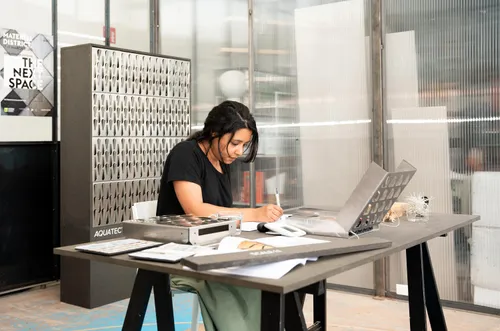
Before dawn in the Namib Desert, a beetle climbs a dune and tilts its hardened outer wings, causing drops of water to settle on its body and drift towards its mouth. South African designer Shaakira Jassat drew inspiration from this beetle's survival strategy, contemplating how buildings could collect water instead of merely directing it away. Her concept, Aquatecture Water Harvesting, involves modular panels mounted on building facades to collect rainwater, channeling it through gutters towards storage.
Jassat's interest in rainwater collection originated from witnessing rain run down bricks near her home. She recognized the untapped potential in utilizing vertical surfaces for water collection, particularly in high-rise buildings. The panels work by gravity, allowing water to flow into storage tanks. Removable sections facilitate cleaning and maintenance.
While the initial focus was on rainwater, Jassat also explored fog and moisture harvesting technologies during her research. However, the findings revealed that while feasible, the collected water via these methods was insufficient to support the entire system. As a result, rainwater became the practical choice for water harvesting.
In 2021, Engineers Without Borders partnered with Jassat to develop a pilot installation. A group of ten students from the University of Cape Town's Engineers Without Borders South Africa student society participated, bringing diverse expertise to the project. The installation was placed at a parking garage near the Oranjezicht Farmers’ Market, providing an opportunity to monitor the system's performance and assess its capacity.
The pilot successfully filled a JoJo South Africa-sponsored collection tank with harvested rainwater, which was then used to irrigate shrubbery at the nearby Oranjezicht Farmers’ Market. However, the project also highlighted challenges such as wind's impact on collection capacity and the need to consider environmental impact and materials used in the system.
Despite attracting significant interest and media attention, translating that curiosity into practical use remains a challenge, particularly in manufacturing, construction, and considering local production options. Jassat aims to produce the system locally, emphasizing sustainability, materials, and maintenance considerations. The project continues to evolve, seeking a balance between innovation and practical implementation.
Written by urgent.news from IOL's reporting — not their text. Machine-written — may contain errors; check the original before relying on it.