Faisal Islam: Why China and AI are worrying global finance bosses
At the IMF meeting in Bangkok this week finance and business leaders grappled with uncertainty.
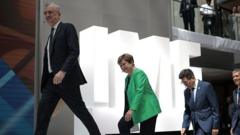
A tug of war is occurring in the direction of the global economy, with opposing forces at play. On one hand, crises such as the energy shock, trade conflicts, and war are hindering growth, particularly in advanced economies. On the other hand, massive spending on artificial intelligence (AI) is providing a boost, along with the resilience shown by smaller economies.
At the International Monetary Fund (IMF) meetings in Bangkok, these themes were discussed repeatedly by financial leaders, but they remain unsure about the future direction of the economy. Currently, the bond markets are focusing on the US and France, though the situation remains uncertain. Despite concerns, major economies have avoided a global recession or debt crisis so far.
The UK, once on the bond markets' naughty step, has been praised by the IMF for its budget plans and strong growth data. The UK's economy has outperformed expectations, with Chancellor John Healey attributing this to AI and tech investment. However, the China shock, characterized by the rapid rise of Chinese electric vehicles and dominance in advanced manufacturing, poses a significant challenge.
The EU is trying to reassess trade dynamics and protect itself against China's influence. The UK's relationship with the EU is also a topic of discussion, with the possibility of "Breturn" or a renewed relationship. Finance ministers are hopeful that AI will help revive the economy, but they acknowledge that its economic impact may not last indefinitely.
Rewritten by urgent.news; may contain errors — check the original.
Source: bbc.co.uk