Analysis: Indonesia's textile rescue: Revival or another failed SOE?
President Prabowo Subianto wants to revive Indonesia's struggling textile industry by establishing a new state-owned enterprise (SOE), potentially drawing on assets left behind by bankrupt textile giant Sritex. The plan comes amid factory closures, mass layoffs and mounting competition from cheaper imports. But with much of the industry's production capacity already underutilized, the government…
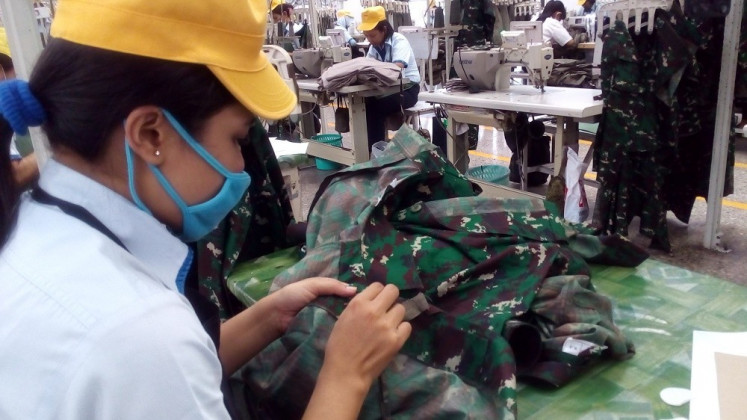
Indonesian President Prabowo Subianto aims to revitalize the country's struggling textile industry by creating a new state-owned enterprise (SOE), possibly utilizing assets from the bankrupt Sritex. The proposal arises due to factory closures, large-scale layoffs, and increased competition from cheaper imports. However, with a significant portion of the industry's production capacity already underused, policymakers grapple with a critical question: Can another state-owned company enhance the sector's competitiveness or simply exacerbate existing issues?
The proposed SOE falls under the purview of the State Asset Fund Danantara, led by CEO Rosan Roeslani. The government intends to establish a vertically integrated textile company rather than merely injecting capital into an existing enterprise. This plan has elicited both support and apprehension from industry stakeholders. Some endorse government involvement to bolster the domestic textile supply chain, while others express concern that another state-owned producer might intensify competition in an industry already burdened with weak demand, surplus capacity, and pressure from inexpensive imports, particularly from China.
The industry's predicament extends beyond foreign competition. Production capacity remains heavily underutilized throughout the entire textile value chain. Capacity utilization ranges from approximately 45 percent in the fiber segment to 58 percent in garments, indicating that numerous manufacturers are already operating far below their maximum output.
These statistics prompt an essential inquiry: If existing manufacturers cannot effectively utilize their production capacity, would establishing another producer aid in reviving the industry or merely contribute to its excess capacity? The answer hinges largely on the new SOE's placement within the textile value chain.
Indonesia's textile industry comprises several interlinked segments, ranging from the production of synthetic fibers and other raw materials upstream to spinning, weaving, fabric processing, and garment manufacturing downstream. Although the nation has established manufacturing capacity in many downstream activities, it remains reliant on imported inputs for certain upstream processes.
Written by urgent.news from The Jakarta Post's reporting — not their text. Machine-written — may contain errors; check the original before relying on it.