The Moon Is Shrinking About 2 to 4 Inches Every Million Years, Triggering Moonquakes on the Lunar Surface
Learn how fast the moon is shrinking, a process hundreds of millions of years in the making that has been driven by the cooling of its interior.
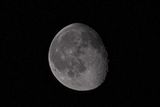
For centuries, the moon has been a constant in our night sky, seemingly unchanged. However, recent research has revealed that the moon is actually shrinking, inching closer to Earth each passing era. New findings published in The Planetary Science Journal estimate that the moon's radius has decreased by approximately 148 feet over the past 400 to 800 million years.
This gradual change is a result of the moon's interior cooling and contracting. Astronomers have documented over 10,000 young faults on the lunar surface through images captured by NASA's Lunar Reconnaissance Orbiter Camera. These faults provide crucial clues about the moon's historical contraction due to its cooling core. As the moon continues to cool and shrink, existing faults grow, and new ones form, leading to moonquakes on the lunar surface.
This shrinking process began around 300 to 400 million years ago, approximately 2.3 to 4.3 inches per million years, or 39 millionths of an inch per year.
Written by urgent.news from Discover Magazine's reporting — not their text. Machine-written — may contain errors; check the original before relying on it.