Elusive Baby Giant Armadillo Caught on Camera, a Rare Sighting in the Peruvian Rainforest
Learn more about giant armadillos, why they’re so rare to see, and what this once-in-a-lifetime footage could mean for the species' future.
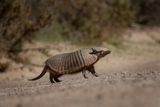
In the vast Peruvian rainforest, a trail camera unexpectedly captured a rare moment. A baby giant armadillo, scurrying through the dense foliage, initially appeared to be attempting to climb over a fallen tree but quickly abandoned the idea and swiftly moved out of camera range. The camera, installed by researchers from Amazon Research International in the Native Community of San Francisco in Loreto, likely never anticipated such a remarkable sight.
Founding member and conservationist Rosa Vásquez Espinoza shared with the BBC that despite using numerous cameras and spending years trying, capturing this creature on film proved to be an elusive feat. Thanks to the indigenous knowledge of the community, the team managed to capture this footage, which holds significant importance for conservation efforts.
The footage not only provides excitement but also serves as crucial evidence that could aid in protecting the species. The giant armadillo, the world's largest armadillo species, can grow up to nearly 4 feet long, as per the World Land Trust. Characterized by a large carapace, bony plates, and tough skin, these solitary, predominantly nocturnal creatures primarily feed on termites, which they find by using their long claws to break into termite mounds.
In addition to termites, their diet consists of spiders, ants, and worms, aiding their burrowing through their claws. Existing primarily in their burrows during the day, giant armadillos emerge at night to search for food. When threatened, they either flee to the nearest hole or dig a new burrow for safety. Due to their secretive nature, babies are a rare sight, primarily because of the animals' elusive behavior and the slow reproductive rate of females, who give birth to offspring only once every 2 to 3 years.
As of 2024, the International Union for Conservation of Nature (IUCN) has listed the giant armadillo as "vulnerable," indicating a decline in population due to habitat loss resulting from deforestation, ranching, and other agricultural practices. Armadillo habitats are desirable for cattle ranching, farming, and wood plantations, leading to increased land encroachment.
Other threats include hunting and trapping. Despite limited knowledge about giant armadillo reproduction, it is known to be slow, resulting in the production of just a few offspring at a time. In 2025, the Peruvian province of Satipo took a significant step by passing the first-ever ordinance granting legal rights to stingless bees.
Vásquez Espinoza played a crucial role in passing this legislation. As these bees are essential pollinators in the Amazon, their protection is vital. The new law grants bees the right to exist, thrive, have a healthy habitat, and be represented in court if faced with threats. The area where these bees reside is actively monitored and protected under the new legislation, benefiting not only the bees but also the habitat of giant armadillos, as they share the same environment.
Vásquez Espinoza expressed to the BBC that Amazon Research International intends to leverage this footage of the baby giant armadillo to introduce a new law in Loreto, specifically designed to protect armadillos and other mammals in the region, particularly those listed on the IUCN Red List. The baby armadillo, captured on camera going about its daily routine, remains unaware that this footage could potentially contribute to the protection of its kind.
Written by urgent.news from Discover Magazine's reporting — not their text. Machine-written — may contain errors; check the original before relying on it.