In the new world order, expect fewer alliances and more ‘pop-up partnerships’
“America has no permanent friends or enemies, only interests.” The observation, widely attributed to Henry Kissinger but originating with the British statesman Lord Palmerston, has long captured the logic of international relations. Nearly two centuries later, it may offer the clearest explanation of the new world order taking shape. For much of the past century, international relations were…
In today's evolving global landscape, traditional alliances are giving way to more flexible, purpose-driven partnerships. This shift challenges the long-standing notion that nations have permanent friends or enemies, instead emphasizing the importance of interests over allegiances. For decades, international relations were organized around alliances, geographical blocs, and established institutions, with countries joining organizations and committing to long-term engagements.
However, the new world order is characterized by temporary, issue-specific coalitions, aptly named "pop-up alliances".
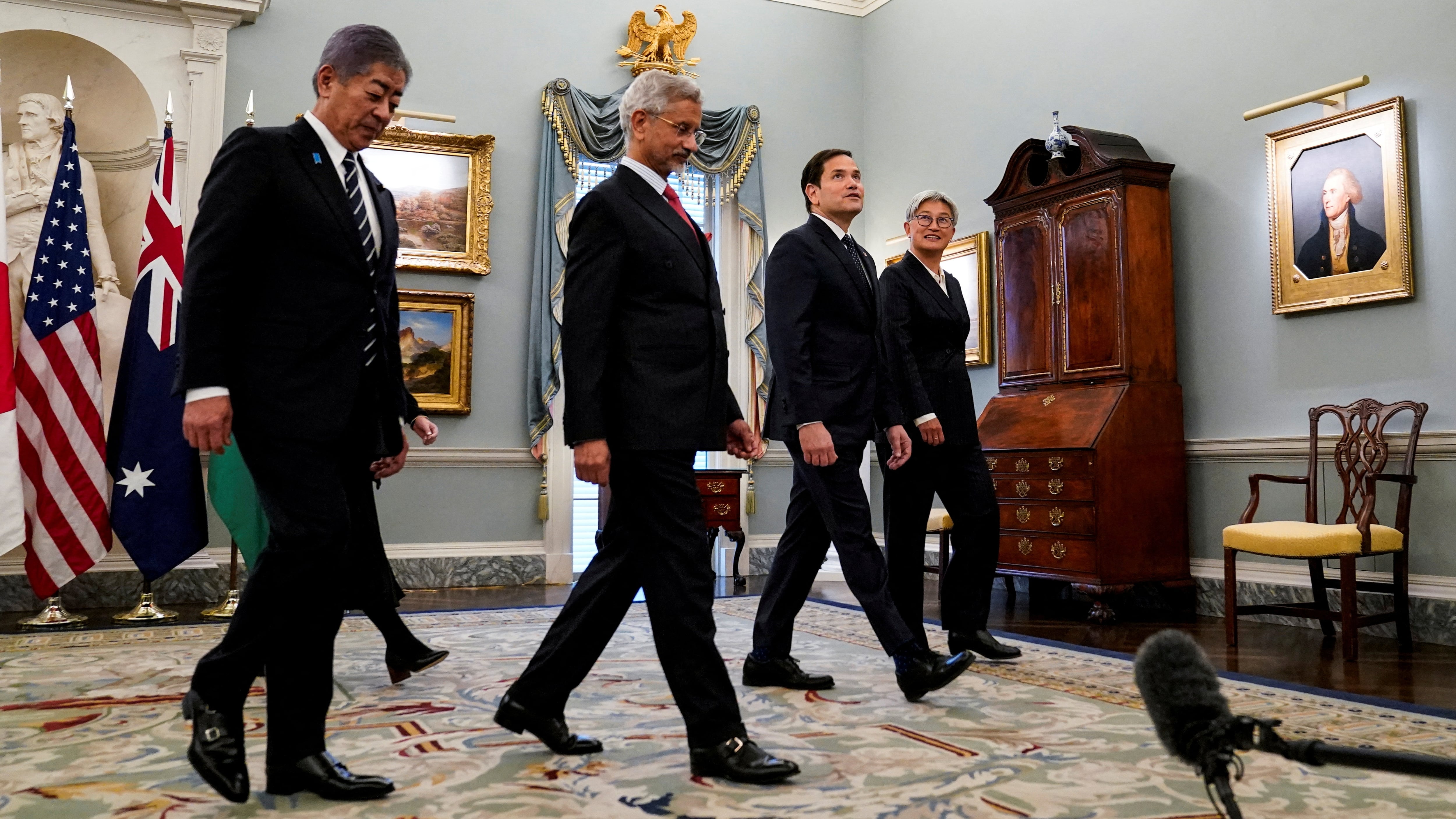
Countries are no longer bound by long-term commitments; instead, they prioritize retaining the ability to collaborate with various sides as needed. India exemplifies this new approach, participating in the Quad alongside the US, Japan, and Australia, while also maintaining defense relationships with Russia, belonging to Brics, and deepening economic ties with Europe and the Gulf.
Similarly, the UAE combines Brics membership with extensive western security partnerships and growing commercial relationships through comprehensive economic agreements across continents.
This new geopolitical paradigm is characterized by countries choosing partners based on specific issues rather than permanent geopolitical affiliations. Canadian Prime Minister Mark Carney's concept of "variable geometry" reflects this shift, suggesting that middle powers should collaborate more deliberately, forming different coalitions for different issues.
Rather than relying on traditional measures of power and size, influence is determined by a country's ability to mobilize capital, technology, energy, natural resources, and market access.
The emergence of these pop-up alliances also challenges the geographical foundations of traditional alliances. Once largely defined by regional proximity, regions such as the EU, GCC, and ASEAN are increasingly defined by strategic interdependence and shared interests. Critical sectors such as semiconductors, critical minerals, artificial intelligence, and cybersecurity are creating overlapping interests across continents. Geographical boundaries are thus becoming less relevant in shaping international partnerships.
The restructuring of relationships between traditional powers and emerging middle powers is illustrated by Britain's evolving ties with Europe. Brexit represents a departure from institutional integration, yet the subsequent rebuilding of economic and security cooperation demonstrates that geography and mutual dependence cannot be legislated away. The ongoing debate over closer relations, including potential re-entry, highlights a broader movement towards more selective forms of international cooperation.
This shift is not the end of globalization but rather its reconfiguration. Countries are reassessing their dependencies, purposes, and conditions for engagement. Strategic resilience now means maintaining options rather than committing every national interest to a single alliance. The future of international relations will likely involve "pop-up governance": flexible partnerships formed around specific challenges, designed to achieve defined outcomes and time-bound, with the potential for dissolution when their purpose is fulfilled.
Traditional institutions like the UN, EU, GCC, and ASEAN will persist, albeit with potentially diminished influence as governments seek faster and more targeted arrangements. Alongside them, a growing layer of pop-up alliances will emerge, organized around shared interests rather than geography, with clear objectives and sometimes explicit time limits.
These partnerships will address various domains, including defense, geopolitical tensions, and other priority areas.
Written by urgent.news from The National Business's reporting — not their text. Machine-written — may contain errors; check the original before relying on it.
This story
This is one outlet's version. Read the fullest account.
- In the new world order, expect fewer alliances and more ‘pop-up partnerships’ thenationalnews.com