Here’s Exactly How Tesla Made Its New 230-Mph Car ‘Fly’
It turns out the Roadster 2 both sucks and blows.
Tesla's new Roadster 2, revealed in McGregor, Texas, showcased a series of extraordinary feats. The two-seater vehicle launched itself, accelerated from 0 to 60 mph in less than a second, and even drove upside down off a ramp before landing. These incredible maneuvers were powered by Tesla's innovative technology. Lars Moravy, head of vehicle engineering at Tesla, explained the workings of the Roadster 2.
Franz von Holzhausen, Tesla's chief designer, designed the Roadster 2's angular exterior. The vehicle features rear-wheel drive, with two motors delivering over a megawatt of power (1,341 horsepower) and over 1,400 Newton-meters (Nm) of torque, making it more powerful than a three-motor Plaid. Despite its larger size, the Roadster 2 remains light, weighing just under 1,700 kilos (under 2 tons).
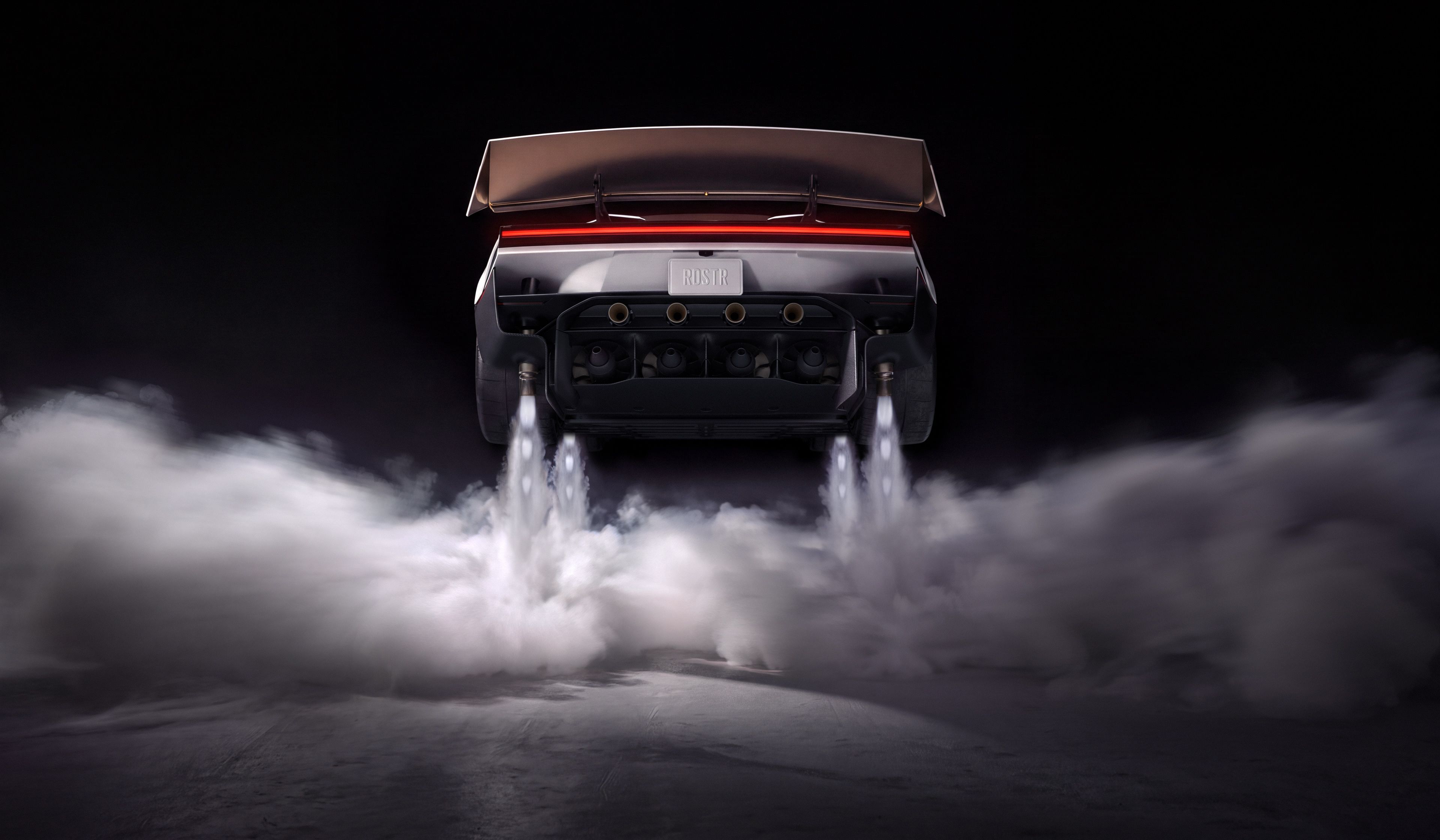
The car boasts a range of over 300 miles and the fastest-charging battery Tesla has ever produced, capable of charging from 15 to 80 percent in just 10 minutes. The Roadster 2's unique "sucker system" uses four 20-kilowatt fans and four independent replaceable skirts to increase traction by "sucking" the car onto the road at lower speeds.
Additionally, the vehicle employs a 200-liter cold gas thruster system inspired by a propeller-laden submarine from a James Bond film. This system allows the Roadster 2 to achieve acceleration in under a second, with rear thrusters producing more than 80 kilonewtons of thrust, equivalent to that of a Dassault Falcon 10X jet. The Thrust model of the Roadster 2, which includes the "flight system" with six extra thrusters and a 400-liter cold gas COPV, can reach a top speed of 230 mph.
However, production of the Roadster 2 is not expected until 2028, and the Federal Aviation Administration will need to approve this flying car.
Written by urgent.news from Wired's reporting — not their text. Machine-written — may contain errors; check the original before relying on it.