EU-Gipfel: Selenskyj fordert weitere 70 Milliarden Euro von der EU
90 Milliarden Euro hat die EU der Ukraine für die Jahre 2026 und 2027 bereits bewilligt. Das Geld reicht aber nicht aus. Der ukrainische Präsident nennt beim EU-Gipfel die Größe der Finanzlücke.
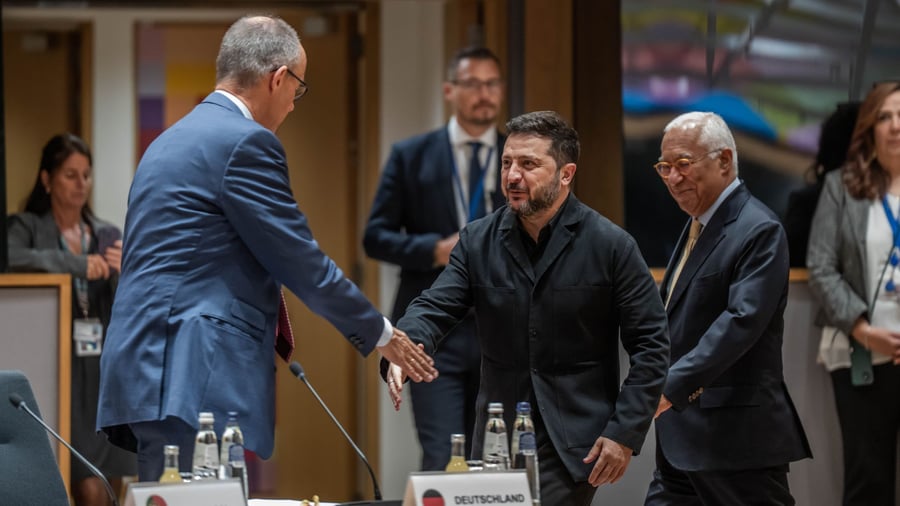
On the EU summit, Ukrainian President Volodymyr Selenskyj demanded an additional 70 billion euros from the European Union for the coming year to withstand the Russian aggressors. He stated that this money was needed for defense, weapons, and resilience during a speech before EU leaders, which he later published on the X platform.
The war would cost Ukraine a total of 155 billion euros next year. The financial need will now be examined by the EU Commission, and a decision will be made in November or December. The initial 90 billion euros provided to Ukraine last year are insufficient. German Chancellor Friedrich Merz had called for an increase in funds for Ukraine at the beginning of the summit, but did not specify the scale.
Merz later stated that the EU is largely in agreement on continuing to support Ukraine throughout the winter and next year. The financial requirement will now be reviewed by the EU Commission, and a decision will be made in November or December. The 90 billion euros previously approved by the EU for Ukraine in 2026 and 2027 are not enough.
Ukrainian Finance Minister Serhiy Martschenko had outlined the additional financial needs of Ukraine in September during a visit to Brussels. Ukraine's regular budget lacks 32.6 billion US dollars (29.1 billion euros) for next year, with defense spending estimated at 45 billion US dollars (approximately 40.1 billion euros). Selenskyj's announcement before EU leaders has made this demand official.
Whether the EU Commission will go along with this amount is unclear. The EU could consider using frozen Russian wealth, estimated at 210 billion euros, for funding. The EU aimed to de-escalate the dramatic tensions between US President Donald Trump and Selenskyj during the summit, avoiding direct criticism or accusations against Trump.
EU Commission President Ursula von der Leyen emphasized that the European Union supports Trump's proposal for an energy weapons truce, which temporarily refrains from attacking power plants, refineries, and other energy infrastructure in Russia and Ukraine. Von der Leyen noted that Russia was the one who did not keep a minute of the weapons truce and even escalated the situation instead.
Selenskyj made it clear that the channels of communication with US negotiators remain open in Washington. His team is in constant contact with US negotiators, he said after discussions with German Chancellor Friedrich Merz and other EU leaders. He expects a further meeting "in the coming days." Trump, on the other hand, continued to oppose Selenskyj, portraying him as an obstacle to a peace deal with Russia.
If a deal were to be reached, it should be without Selenskyj, he stated in an interview with the ultra-conservative US broadcaster Newsmax. Selenskyj is "no good man to negotiate with," Trump said, expressing that he is not a big fan of Selenskyj. Trump also accused Selenskyj of causing rising oil prices on the global market by attacking Russian refineries.
The EU's Ratspräsident António Costa emphasized that it is not the time to reduce support for Ukraine or relax sanctions against Russia. Now is the time to strengthen support and increase pressure. The recent escalation of tensions between Trump and Selenskyj came after Trump temporarily lifted sanctions on Russian diesel fuel, allowing Russia to provide large quantities of diesel to the US and the global market in the coming months.
This would lower fuel prices before the mid-November midterm elections. Selenskyj reacted indignantly to Trump's announcement, prompting Trump to call for Selenskyj's replacement. There have also been reports of missing US intelligence information on Russian missile launches and restrictions on internet access via the US Starlink satellite network, which hindered Ukrainian drone operations.
The EU faces a highly sensitive situation, as it knows it cannot compensate for the technical and intelligence support from the US indefinitely. Therefore, the EU must ensure that the dispute between Trump and Selenskyj does not lead to a complete halt of US aid. At the same time, it must prepare for further enhancement of its support and increase pressure on Russia.
Written by urgent.news from Handelsblatt's reporting — not their text. Machine-written — may contain errors; check the original before relying on it.
This story
This is one outlet's version. Read the fullest account.