Das neue Geben: „Sie sind ja eh nur Sozialarbeiterin“
Auf den Konten gemeinnütziger Organisationen liegen 45 Milliarden Euro fast unverzinst. Die Banken spenden dem Sektor ab und zu. Als Kunden nehmen sie ihn selten ernst.
In Sandesneben, near Hamburg, unmarked white vans travel through the villages, evoking images of craftsmen. Inside, however, they are places where women affected by violence receive counseling, at the supermarket or school parking lot. No one enters an advice center unnoticed in the village, so the counseling comes to the women.
Miriam Peters founded Land-Grazien in 2020, as the demand was too great. The organization grew rapidly. A half year ago, Peters moved from the vans to the office to manage the money. There was work to be done: the organization's bank fees were higher than the interest. She asked two banks about an investment. At the Sparkasse, she heard: "You are just a social worker, after all."
The statement was outrageous, but also a bad business. Private nonprofit organizations (foundations, foundations, churches, and associations) had about 74 billion euros in cash and deposits in banks at the end of 2025. Forty-five billion of that was in current accounts, available daily and almost interest-free. For comparison, banks charged 0.6 percent interest on such deposits in the euro area in July.
The banks themselves earned 2.5 percent interest on the same money overnight from the European Central Bank. And the nonprofit organizations? After a survey of the Bcause crowdfunding platform, almost forty percent received no more than one percent interest. Almost as many didn't even know. Representative it is not, but it fits the Bundesbank statistics.
As customers, we don't calculate very demanding or self-confident. Let's calculate this: the difference of 1.9 percentage points on 45 billion euros amounts to about 850 million euros per year. All private individuals in Germany made about 4.6 billion euros in donations in 2025. The interest that is missing corresponds almost to a fifth of all donations.
Or the annual budget of 2800 organizations, such as Land-Grazien. Why is so much money sitting unused in a sector that touches almost every person in Germany so deeply? I see three explanations, but none of them exonerates the banks. First, nonprofit organizations are legally obliged to spend donations within two years or form complicated reserves.
An attractive investment option is difficult, but term deposits and money market funds are possible. Second, most are small. More than half of Germany's 657,000 organizations spend less than 10,000 euros a year. The effort is not worth it for them. For the others, it is. Third, they are often neither demanding nor self-confident as customers.
In many associations, the treasurer determines who has not defended themselves in time. But for that, there is counseling. Meanwhile, many banks advertise their commitment. The first commitment Miriam Peters received came from a Sparkasse foundation: 2500 euros. (But she could not spend it as she wanted, only for expenses.) The Sparkassen Finanzgruppe spent about 136 million euros on social causes in 2025.
The amount of interest that banks could earn in 2025 (also at other banks) is more than six times this sum. As a fundraiser, Miriam Peters was welcomed. As a customer, she was only a social worker. A financial industry is productive when it finances ideas that would not exist without it. It is valuable for the economy. For organizations like Land-Grazien, it does the opposite.
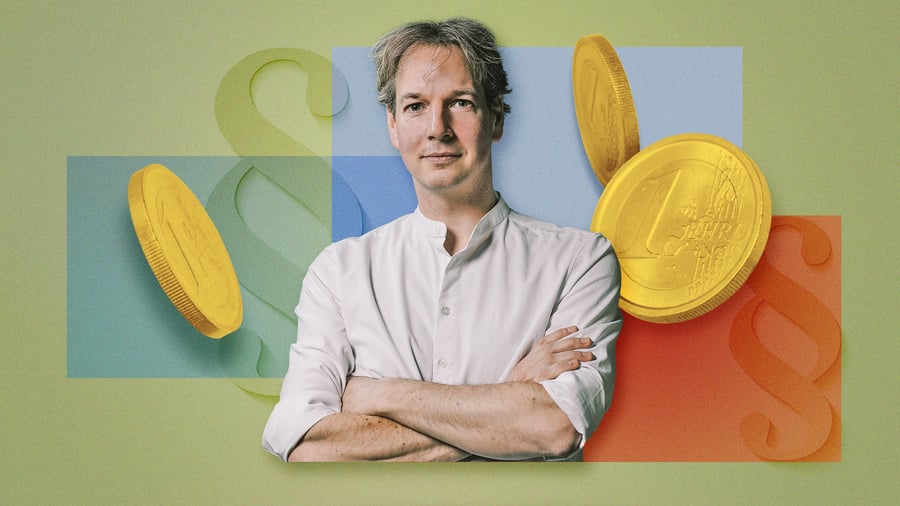
It hoards money until it is worth less. It may be how to deal with a donation recipient, but not with a customer. Across the country, there are organizations with ideas to make social work better. Their problems are as invisible as what happens in the vans. Felix Oldenburg is a writer (The Captive Prosperity, 2025) and CEO of the Stiftungs-Start-up Bcause.
Previously, he led the Federal Association of German Foundations and the Ashoka Social Entrepreneur Network. With companies, podcasts, and newsletters, he encourages everyone who can contribute more to join a new giving. More: Use assets and not hide them. First publication: October 9, 2026, 04:00 AM.
Written by urgent.news from Handelsblatt's reporting — not their text. Machine-written — may contain errors; check the original before relying on it.
This story
This is one outlet's version. Read the fullest account.
- The new giving: "You're just a social worker anyway" handelsblatt.com