The new giving: "You're just a social worker anyway"
Non-profit organizations have almost 45 billion euros in accounts that earn little to no interest. Banks occasionally make donations to the sector, but rarely take it seriously as customers.
In the rural community of Sandesneben, situated half an hour from Hamburg, unmarked white vans traverse the villages, reminiscent of craftsmen. However, inside, they provide counseling to women suffering from violence, either at the supermarket or school parking lots. The villagers seldom stumble upon these counseling centers unnoticed, so the assistance comes directly to the women.
Miriam Peters founded Land-Grazien in 2020 due to the high demand. The organization rapidly expanded. Six months ago, Peters transitioned from a van to an office, focusing on managing the organization's finances. The challenge arose because the bank fees for her organization were higher than the interest earned. She inquired at two banks about investment opportunities.
The Sparkasse informed her, "You're just a social worker." This remark was unsolicited and also a poor business decision. German nonprofit organizations held approximately 74 billion euros in cash and deposits with banks as of the end of 2025, with 45 billion held in easily accessible current accounts. Despite this, banks paid around 0.6% interest on these deposits, while the European Central Bank offered 2.5% interest on the same funds overnight.
Information on nonprofit organizations' interest rates is scarce, but a survey conducted by the Bcause donation platform revealed that nearly 40% received no more than 1% interest. Similarly, many are unaware of this disparity. Representative statistics notwithstanding, the Federal Bank's methodology suggests that the 1.9 percentage point difference on 45 billion euros could yield approximately 850 million euros annually.
Combined, all private individuals in Germany donated around 4.6 billion euros in 2025. The missing interest therefore equates to nearly one-fifth of all donations, or the annual budget of roughly 2,800 organizations such as Land-Grazien. Given that virtually every person in Germany is deeply affected by this sector, why is such a substantial amount of money left unutilized?
Three explanations emerge, though none absolves banks of responsibility. First, nonprofits are legally obligated to distribute donations within two years or else form complicated reserves. An attractive investment option is challenging to find, but fixed deposits and money market funds are feasible. Second, most organizations are small, with over half of the 657,000 nonprofits in Germany operating on budgets of less than 10,000 euros annually.
For them, the effort is not worthwhile. However, for the others, it is. Thirdly, many are not demanding or self-assured customers. In many associations, the treasurer may not object if someone has forgotten to pay their dues. Yet, this is precisely where counseling is needed. Meanwhile, many banks tout their social engagement. Miriam Peters' first pledge, 2,500 euros from a Sparkassenstiftung, was welcome but could only be spent on specific costs.
The Sparkassen-Finanzgruppe allocated approximately 136 million euros to social causes in 2025. The financial sector's loss of interest (even in other banks) on the 45 billion euros exceeds six times this amount. A donor's initial approach was met with Peters from a Sparkassenstiftung, but as a customer, she was only considered a "social worker."
Banks are productive when they make financially viable ideas possible that would not exist without them. This profitability serves the economy. However, in the case of organizations like Land-Grazien, the opposite is true. They hoard money that loses value over time. This strategy may work for donors but not for customers. Across the country, there are organizations with ideas to improve social work, but their issues remain largely invisible.
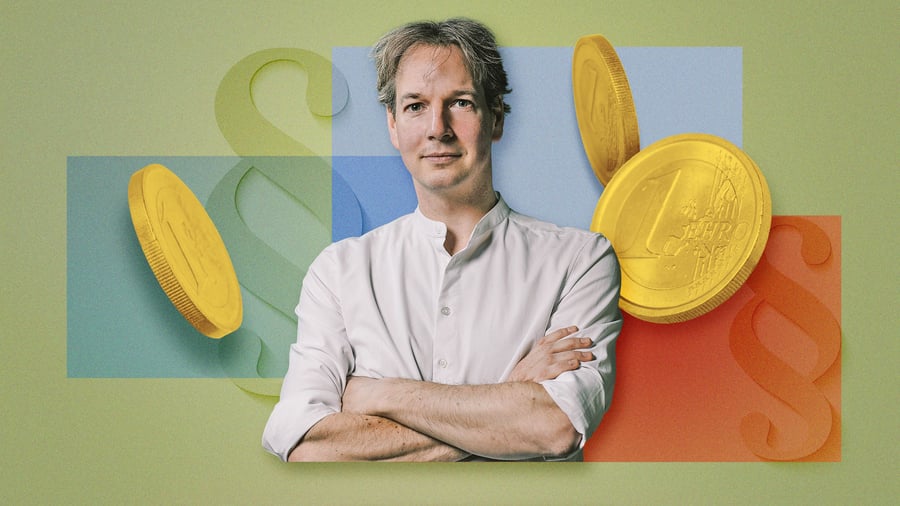
Felix Oldenburg, author of "The Trapped Prosperity" (2025) and CEO of the Stiftungs-Start-up Bcause, has been advocating for individuals to contribute more to a new giving approach. His work includes a book, a company, a podcast, and a newsletter, all aimed at encouraging those who can contribute more to join a new era of giving. More: Utilize wealth rather than hide it. First published: October 9, 2026, at 04:00 AM.
Written by urgent.news from Handelsblatt's reporting — not their text. Machine-written — may contain errors; check the original before relying on it.