Can this Democrat crack the code for universal healthcare?
Twelve years ago, Vermont Democrats tried to make their state the first in the nation to have a single-payer government-financed healthcare system — a bold experiment to push the limits of American health coverage when Obamacare was just being launched. Their plan failed, and rebooting it became politically impossible, even in Vermont: The Democrats lost […]
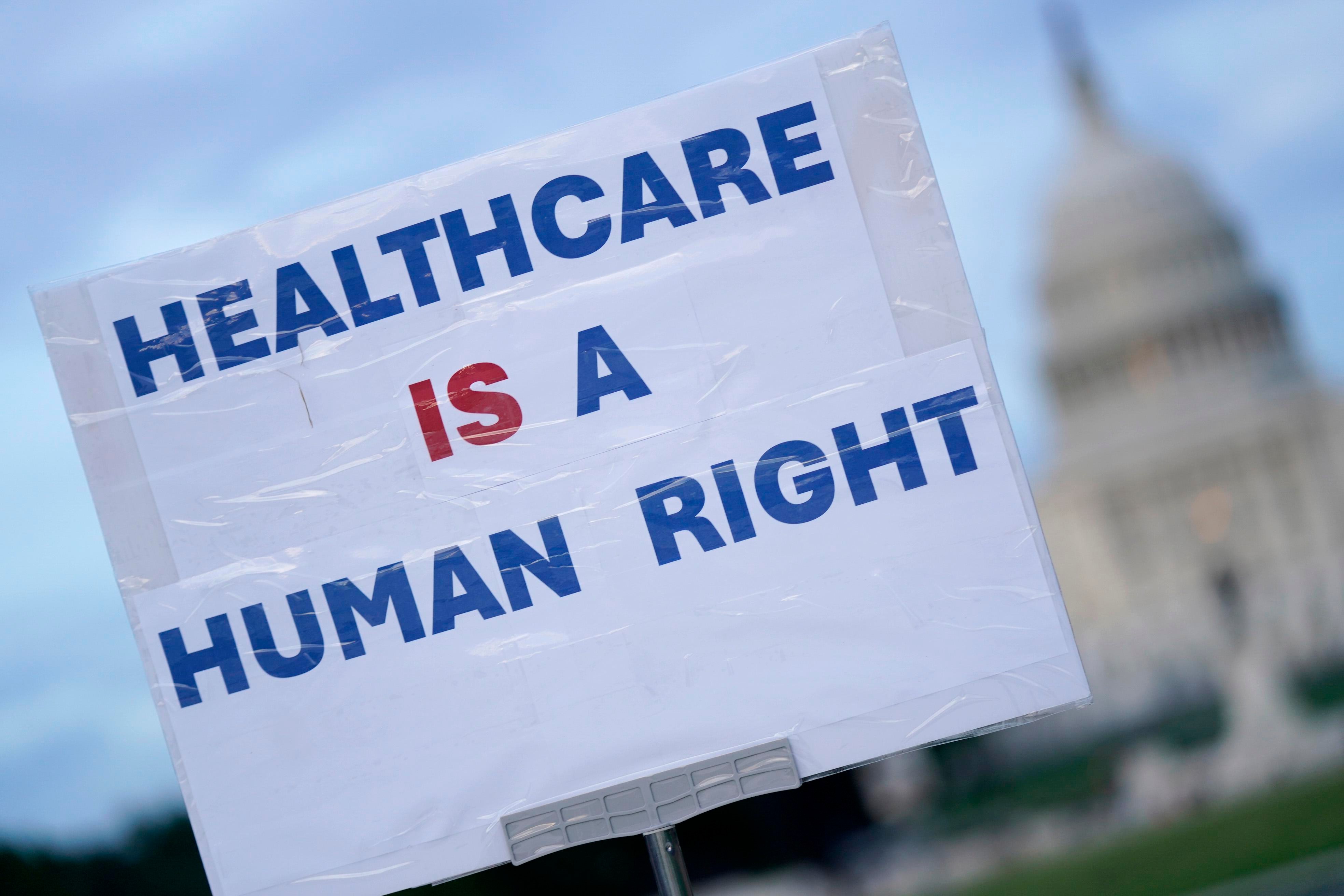
In a budget showdown at the Capitol on May 7, 2025, in Washington, DC, signs urging the protection of Medicaid were prominently displayed. This year, a progressive political newcomer named Amanda Janoo is challenging incumbent Republican Phil Scott for the governorship of Vermont. Polls indicate that this race is extremely tight.
If Janoo emerges victorious, she could usher in a groundbreaking healthcare system in the state. Key aspects of Janoo's proposal include making primary and preventive healthcare a single-payer system where the state would be responsible for covering these costs and making them free for patients, thereby removing insurance companies from the equation.
Previous attempts to establish a full single-payer system at the state level have proven unsuccessful, including Vermont's 2014 effort. Janoo aims to focus initially on this specific aspect of the health system in the hopes that it may serve as a stepping stone toward comprehensive single-payer reform in the future. However, the implementation of this more limited reform faces considerable political and practical challenges.
Janoo's campaign reflects the emerging trend of policy experiments nationwide, as Democrats could gain power in numerous states during this projected "blue wave" election. Nevertheless, Janoo's proposal represents a more modest approach compared to Vermont's 2014 attempt or Bernie Sanders's "Medicare-for-All" plan. Under Janoo's plan, the state government would cover primary care providers such as doctors and nurse practitioners, ensuring universal and free access for all Vermonters, with insurance companies excluded.
However, other components of the healthcare system, such as hospitals, specialists, and prescription drug companies, would continue to operate within the existing insurance framework. Previous attempts to enact full single-payer at the state level have all failed, regardless of the political leanings of the state. In Vermont, the previous single-payer experiment resulted in the law being signed but later abandoned before implementation due to concerns about its feasibility.
The high costs associated with transitioning to a state-funded health system and the resulting need for increased taxes have been major obstacles. Janoo recognizes the challenges and aims to modify single-payer to make it more achievable by focusing on a smaller portion of the system. She emphasizes that a profit-driven healthcare system is undesirable and proposes financing the universal primary care initiative through a tax on the wealthiest individuals.
While primary care is a relatively cost-effective part of the healthcare system, Janoo hopes that implementing this reform will yield significant benefits by improving Vermonters' overall health, potentially reducing costs in other areas of the system, such as by preventing unnecessary hospital visits. Health policy experts express support for the goal of universal primary care but raise questions about the feasibility and potential consequences of Janoo's proposal.
They inquire about the impact on the availability of primary care doctors in Vermont, whether the plan would adequately compensate these physicians, and whether the anticipated cost savings from preventive care will materialize. Janoo's proposal is not unique to Vermont; similar ideas are being discussed in other states like Minnesota and Washington.
Kevin Grumbach, a family physician and professor at the University of California San Francisco, highlights the growing interest in universal primary care across the country. However, a significant point of contention is whether insurers should be involved or excluded from the system, as Janoo advocates for a single-payer approach.
While primary care reform ideas are gaining traction, the debate over the best approach remains a complex issue, with significant implications for the future of healthcare in the United States.
Written by urgent.news from Vox's reporting — not their text. Machine-written — may contain errors; check the original before relying on it.