Lit Hub Daily: October 16, 2026
What do movies like What Does That Nature Say to You, A Poet and Late Fame reveal about how we view poets? “The poets don’t need the movies as much as the movies need characters who still have something unruly
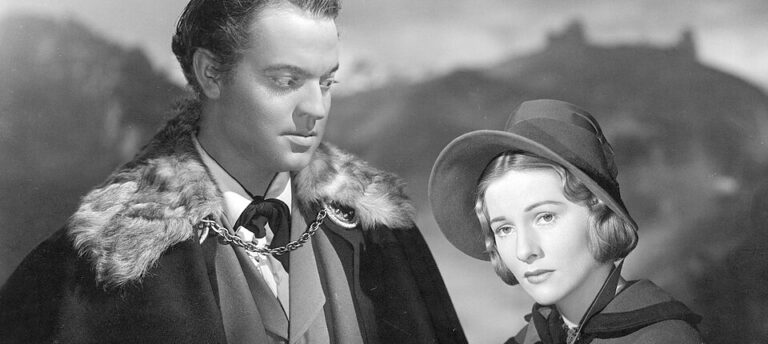
In 1847, the novel Jane Eyre made its debut. Movies such as What Does That Nature Say to You and A Poet and Late Fame offer insight into how we perceive poets. The filmmakers assert, "The poets don't need the movies as much as the movies need characters who still have something unruly to lay on the line."
The memoirist Melissa King reflects on the significance of cooking and care in her upbringing as a Cantonese American in Southern California.
In the realm of craft writing, Will Maclean advocates for damaging a notebook to foster creativity in writing a novel, stating, "The notebook is a refuge from the digital world."
Yiyun Li's Music Against the Night, Shawn Gude's American Socialist, Bonnie Garmus's Peck & Peck, and Lieke Marsman's On Another Planet They Can Save Me are among the best-reviewed books of the week. Alexander Lee, a finalist for the Cundill History Prize, suggests five essential books to comprehend the Venetian ghetto and Jewish history, authored by John Julius Norwich, Margaret Plant, and others.
Lit Hub Politics discusses the role of Reverend Al Sharpton in shaping the justice narrative surrounding the murder of Jordan Neely. Writer E. L. Shen uses writing as a means to understand her assassinated ancestor.
To understand the importance of preserving boglands and peatlands, one must appreciate their beauty and danger. Despite stereotypes, rural life holds different meanings for everyone, with the author asserting, "If the same variety of plant on a single farm isn't even uniform in its expression of spring color, why imagine that 'rural culture' or 'rural people' means something, especially something I could grasp in any singular summation."
In the novel Passengers, Alexander Maksik explores the intersection of two long hallways and a vast food court.
In James Gleick's work, he examines how recent books on chatbots reveal their deceptive nature. Sarah Chihaya questions the true identity of Emily Brontë in The Nation. The MIT Press Reader recounts how a 13-year-old Edward Everett Hale and his brother conceived the concept of GPS in the 1830s.
Imogen West-Knights dissects why Sally Rooney's books cannot be sold in the United Kingdom. AI Auditor Anna August argues for governance over voluntary restraint in AI governance. Brooke Palmieri delves into the history of queer arcana through art.
The recipient of the Cundill History Prize, Alexander Lee, recommends essential books to grasp Venetian ghetto and Jewish history, penned by John Julius Norwich, Margaret Plant, and others. Lit Hub Nature emphasizes the need to recognize the beauty and danger of boglands and peatlands.
Written by urgent.news from Literary Hub's reporting — not their text. Machine-written — may contain errors; check the original before relying on it.