Waste is worth more recovered than burned — Ahmad Nizam Che Kasim
OCTOBER 15 — Every day, Malaysians throw away about 39,000 tonnes of solid waste, more than our landfills can comf...
On October 15, Malaysians generate approximately 39,000 tonnes of solid waste daily, with projections indicating the figure may rise to 17.03 million tonnes by 2035. Consequently, landfills could reach capacity by 2041. It's worth noting that roughly 40% of the waste thrown away could be recycled. Among household waste, food waste constitutes 44.5% and typically ends up in landfills instead of being composted.
This has prompted the government to consider waste-to-energy (WtE) incinerators, such as the Jeram plant in Kuala Selangor, which can process up to 1,700 tonnes of waste daily and produce 26MW of electricity. However, burning waste is not the sole solution and should not be prioritized. Modern incinerators are cleaner than their predecessors; yet, their safety relies on maintaining temperatures exceeding 850°C daily.
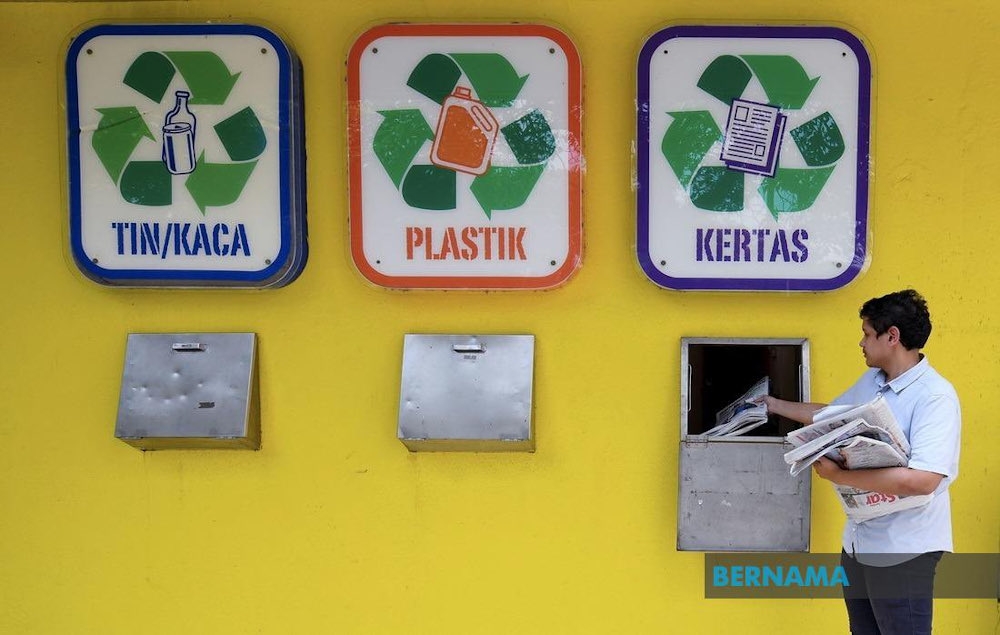
Consequently, nearby residents have expressed concerns about the safety, health, environmental impact, and traffic generated by proposed incinerator sites. Waste-to-resource methods pose significantly less risk, as they do not involve smokestacks. Composting food scraps, sorting paper, or converting palm residue into fertilizer require separating waste at the source.
At the Jeram plant, household waste must be dried for seven days prior to incineration. The Malaysian government's initiative to enforce recycling facilities in shopping malls is a positive step, and similar measures should be implemented in residential areas, wet markets, and food courts. The author contends that Malaysia should initially treat waste as a resource by prioritizing recycling, composting, and recovery before turning to waste-to-energy incineration.
Currently, Malaysia already boasts a functioning recycling industry, with 2.04 million tonnes of plastic, 1.77 million tonnes of metal, and 1.49 million tonnes of paper being recycled in 2024. However, there is a greater opportunity in agriculture, where Malaysia produces approximately 60 million tonnes of biomass annually, much of it from the palm oil industry.
Transforming fronds, trunks, and empty fruit bunches into mulch could save plantations up to RM450 per hectare annually on fertiliser costs. Businesses lacking the means to establish processing facilities can collaborate through cooperatives, industry associations, and universities. The financial benefits are also evident; incinerators are costly to build, as demonstrated by the estimated RM1.5 billion expense for the Broga incinerator with a capacity of 1,500 tonnes daily.
Once constructed, an incinerator requires a consistent supply of waste to offset its debt, which contradicts the goals of waste reduction and recycling. Conversely, recovered materials can be sold. For instance, a manufacturer that reduces its raw material loss by 5% could save RM12,500 annually, without generating additional sales.
To progress towards a circular economy, the focus should not be on the necessity of waste-to-energy plants but on the affordability of burning valuable materials. While incineration may have a role, it should only be employed for residual waste that cannot be reused. Malaysia's recycling rate stands at 37.9% in 2024, falling short of the 40% target set for 2025.
To achieve this objective, there must be stricter separation at the source, support for businesses that recover materials, and a shift in perspective towards treating waste as a resource first, and a fuel last. Our rubbish is not solely a disposal issue; it is a resource we have yet to utilize effectively.
Written by urgent.news from Malay Mail's reporting — not their text. Machine-written — may contain errors; check the original before relying on it.