Seoul stocks open sharply lower on lingering concerns over AI, US inflation
Seoul stocks opened sharply lower Thursday, as concerns over the sustainability of artificial intelligence (AI) and hotter-than-expected inflation in the United States dampened investor sentiment. The benchmark Korea Composite Stock Price Index (KOSPI) opened down 335.8 points, or 5.59 percent, to 5,673.01. Seoul stocks have continued their losing streak for the past six consecutive sessions.…
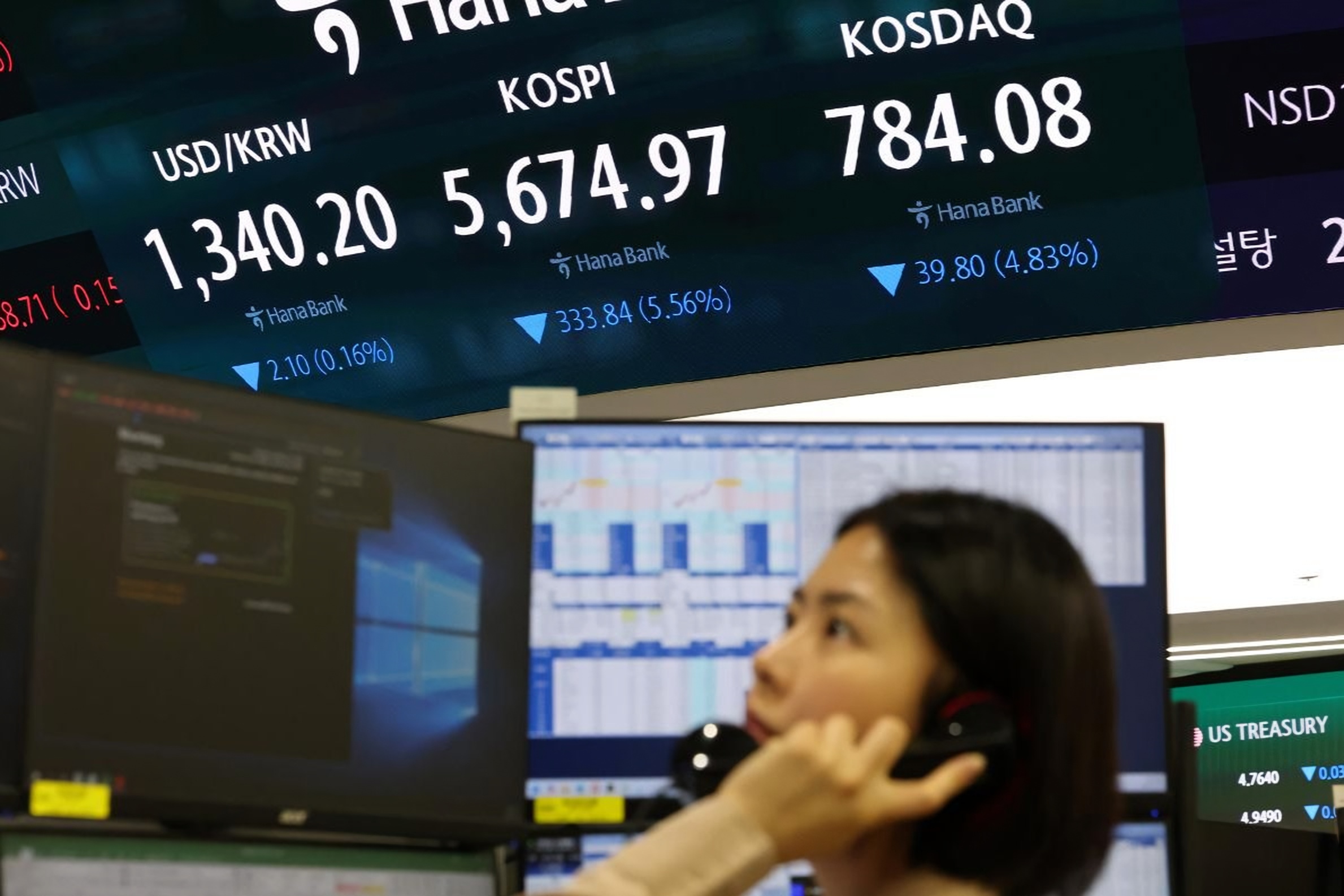
Seoul's stock market plunged on Thursday, with worries about the long-term viability of artificial intelligence (AI) and unexpectedly high inflation in the United States casting a shadow over investor confidence. The main index, the Korea Composite Stock Price Index (KOSPI), dropped by 335.8 points, or 5.59 percent, bringing its level to 5,673.01.
This marked the sixth consecutive day of declining stocks in Seoul. Wall Street's major indices also experienced declines overnight, with concerns about inflation and doubts about whether the AI boom would meet investors' expectations. The S&P 500 fell by 1.11 percent, while the tech-focused Nasdaq declined by 1.88 percent. In the United States, the Consumer Price Index increased by 0.6 percent in September, compared to the previous month, leading to an annual inflation rate of 3.7 percent, which exceeded economists' expectations of a 3.6 percent rise.
Moreover, investors continued to doubt the potential for AI investments to deliver the anticipated returns.
Rewritten by urgent.news; may contain errors — check the original.
Sources: en.yna.co.kr · koreatimes.co.kr
This story
This is one outlet's version. Read the fullest account.