School headscarf ban meets resistance in Austria
Austria’s conservative-led government insists the ban, introduced on Sept 1, promotes gender equality and protects Muslim girls from 'segregation and oppression'.
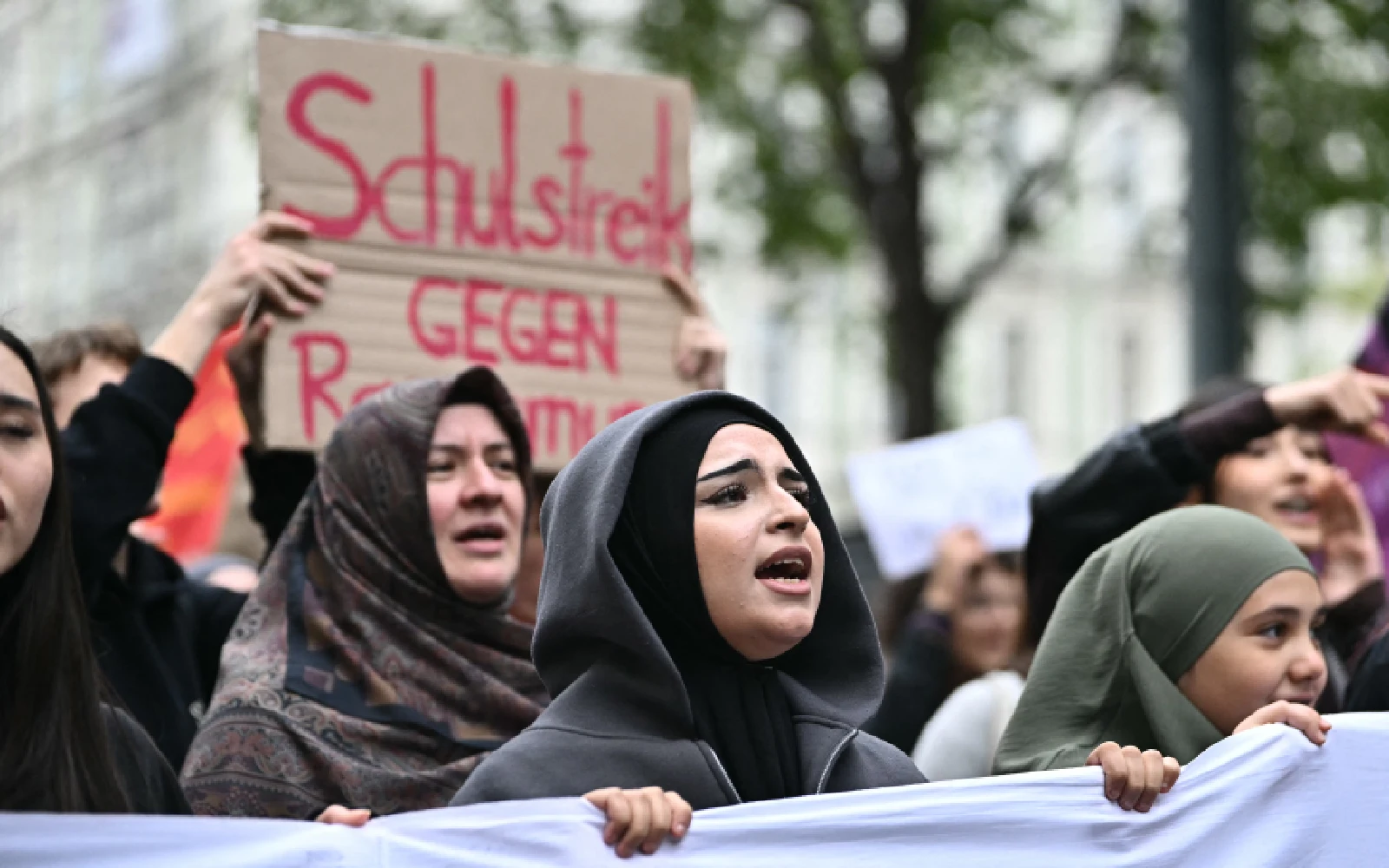
As Austria's school year begins, a headscarf ban for girls under 14 has ignited protests both inside and outside classrooms. The conservative-led government argues the September 1st ban promotes gender equality and shields Muslim girls from segregation. However, critics contend it unfairly targets Muslims, infringes religious freedom, and forces children to dress uncomfortably.
Education authorities have convened 127 meetings with parents and filed 52 reports over alleged violations since the ban's implementation. Opponents have staged protests nationwide, drawing several hundred attendees each. Zehra, a mother of two, expressed her daughters' sadness and anger at the regulation, stating it contradicts the principle that children can choose their identity.
Seham, a 12-year-old, admitted she feels afraid to remove her headscarf, having worn it for two years as a significant part of her identity. Despite discussions with school leaders, she would prefer to wear a different head covering rather than the full headscarf. Roughly 8% of Austria's nine million population identifies as Muslim, facing the highest rates of racism and discrimination in the EU, according to a 2024 report by Europe's FRA rights agency.
The far-right Freedom Party, which won for the first time in the 2024 elections, continues to lead voter polls. This is Austria's second attempt to restrict headscarves in schools; a 2019 law targeting primary school pupils was overturned by the constitutional court for targeting only Muslims. The Islamic Religious Community in Austria, supporting legal action against the new ban, has received around 70 reports of difficulties during implementation.
The constitutional court has acknowledged receiving a legal complaint about the law, with a decision expected in the first half of 2027. Schools are mandated to hold discussions with pupils and parents if a girl refuses to comply, and parents can face fines for continued non-compliance. Education Minister Christoph Wiederkehr maintained that the majority of pupils and parents are cooperative, with most discussions proving successful.
In Vienna, authorities noted that girls seem to wish to wear headscarves voluntarily. A 12-year-old student named Sandy began wearing a headscarf a year ago, emphasizing her strong religious convictions and desire to live her faith.
Rewritten by urgent.news; may contain errors — check the original.
Sources: freemalaysiatoday.com · malaymail.com · nst.com.my