Satellite data reveal how Antarctica’s ice cliffs behave over time
The cliffs don’t always collapse in the runaway process that scientists had expected.
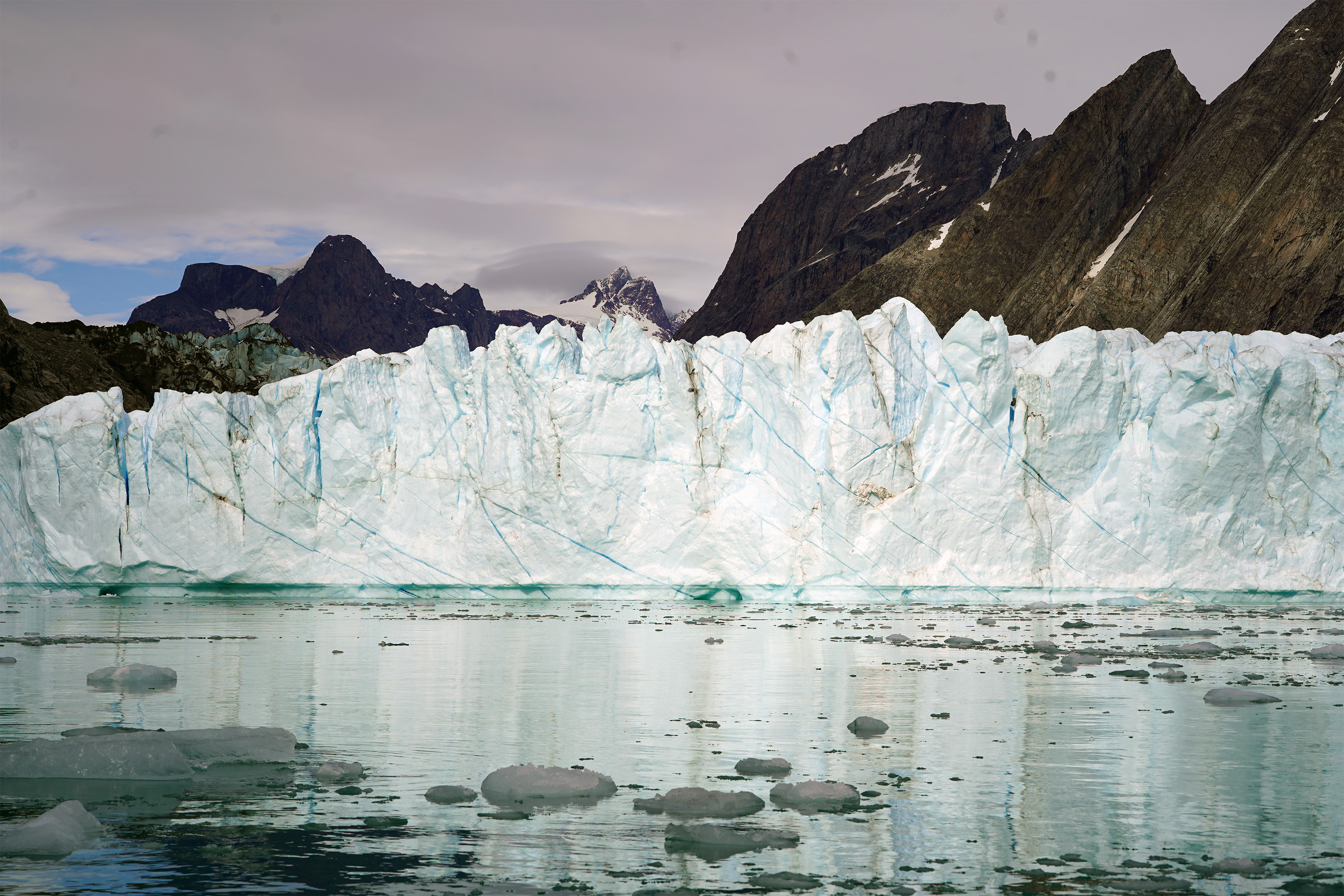
Recent satellite data have shed new light on how the towering ice cliffs of Antarctica behave over time. As global temperatures rise, these ice shelves are melting and calving off at unprecedented rates, leaving behind massive, exposed cliffs of solid ice. Scientists have long assumed that an ice cliff's stability depends primarily on its height, with cliffs taller than 100 meters (the height of the Statue of Liberty) prone to collapse under their own weight.
However, a new study led by researchers at MIT and the Woods Hole Oceanographic Institution (WHOI) suggests that this simple height-based model may be overly simplistic.
The MIT-WHOI team analyzed over 15,000 ice cliffs in Antarctica, monitored by NASA's ICESat-2 satellite between 2019 and 2023. Their findings reveal that ice cliffs are generally much shorter than the 100-meter threshold often cited in existing models. On average, the cliffs measured were about 30 meters tall. However, the researchers did identify a handful of rare cliffs that exceeded 100 meters in height.
The study found that when these taller cliffs collapsed, they did so at a much faster rate than previously predicted by models. However, the collapse was not followed by a runaway effect that would further erode the ice sheet. Instead, the retreating cliffs quickly stabilized, with the ice sheet spreading back out towards the ocean. This suggests that the previously proposed "marine ice cliff instability" (MICI) process may not lead to the catastrophic retreat of the Antarctic ice sheet that many models have predicted.
The researchers identified several factors that may help stabilize ice cliffs, preventing them from collapsing and triggering further ice sheet retreat. One key factor is the thickness of the "mélange" - a slushy mixture of broken icebergs and sea ice that accumulates at the base of ice cliffs. The thicker the mélange, the more stable the cliff.
Additionally, the depth of the surrounding water appears to play a role in cliff stability. Deeper water can provide greater buoyancy, helping to counteract the forces driving cliff collapse.
The study also highlights the importance of considering the underlying topography of the land beneath the ice when assessing ice cliff stability. If the land rises up, the ice sitting directly over that high point is actually shorter than it appears, reducing the cliff's overall height and making it less prone to collapse. This topographic effect, combined with the stabilizing influence of mélange and water depth, suggests that the rapid retreat of ice cliffs may be more of a temporary phenomenon than a long-term trend.
The findings have significant implications for understanding how Antarctica's ice sheet will continue to evolve in response to rising global temperatures. While the new data indicate that the worst-case scenarios predicted by some models may be overstated, they also underscore the need for continued monitoring of these ice cliffs.
The team emphasizes that further research is needed to fully understand the complex interplay of factors that govern ice cliff stability, and to refine our predictive models of how the Antarctic ice sheet will respond to a warming climate.
Written by urgent.news from MIT News Research's reporting — not their text. Machine-written — may contain errors; check the original before relying on it.