Opinion · World
Polishing the staging and story of a modern mining drama
Bongani Ngomane praises the production’s ensemble energy, choreography and exploration of exploitation, but calls for clearer staging, stronger characterisation, better sound balance and more deliberate pacing.
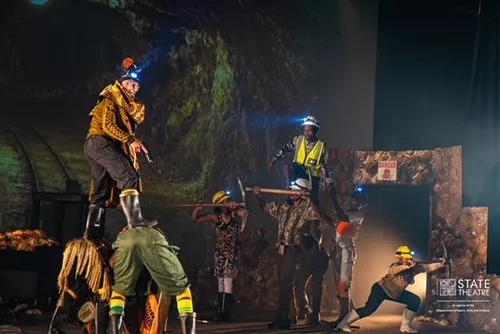
Theater critic Bongani Ngomane offers insights into a groundbreaking stage play that examines the dark side of the mining industry. While commending the production's raw energy, expressive choreography, and poignant exploration of exploitation and survival, Ngomane provides a set of observations and recommendations for improvement.
The play delves into themes of mining, sacrifice, survival, and hope, shedding light on the harsh realities faced by miners, including exploitation, cheap labor, illness, and broken dreams. Incorporating zama zama mining adds contemporary relevance to the narrative, touching on issues of inequality, migration, and resource struggles.
The ensemble delivers a consistent performance, bolstered by strong individual performances, expressive choreography, and effective use of language, particularly Sesotho. The themes are well-defined, and the relationship between social injustice and capitalism forms a strong foundation for the production. However, the confrontation between miners and police requires clearer delineation to ensure audiences understand the nature of the interaction. The director's intention, that the encounter is a trap, must be evident in the performance.
Several adjustments can enhance the visual clarity of the production. The director and performers should identify each location by name and establish its physical conditions, including entrances, sightlines, and imagined features. For instance, the bench used in the commissioner's scene should be repositioned to avoid obstructing the performer's view. Similarly, the lieutenant's diagonal positioning during exchanges will allow the audience to see more of his face and maintain the relationship between characters.
The doctor and lieutenant scene holds potential but would benefit from better placement to maximize its impact. The hospital bed is well-positioned, and diagonal blocking around it will improve actor visibility. Basotho performers seated with their backs to the audience should be arranged deliberately, while still allowing for deliberate moments of facing away from the audience.
The zama zama and Basotho performances are engaging, and when the Mosotho character calls for audience cooperation, ample time should be given for responses and direct engagement with audience input.
The choreography is praised for its beauty, but its beats, tempo, and pace require more definition. Lead movers should commit to larger, firmer movements when the sequence calls for authority or collective strength. The gunfire and ensuing chaos create a powerful theatrical moment, but the intensity should be shaped through variations in rhythm, focus, and stillness to maintain its impact.
The music should be balanced to ensure lyrics and dialogue remain audible, with pauses after important revelations and emotional shifts. The white stones representing gold need clearer presentation, and the large drum's introduction should be purposefully integrated into the production's world. The grid visible in the background should be assessed for its relevance to the story.
Overall, these recommendations aim to refine the production's staging and storytelling to create a more immersive and impactful experience for the audience.
Rewritten by urgent.news; may contain errors — check the original.
Source: iol.co.za