Poland looks to economic heights in a country transformed since Soviet days
In the final part of our series on the country, Poles tell how wages have soared – along with the cost of living Above the rain-soaked streets of Warsaw, the observation deck of the Varso tower overlooks Joseph Stalin’s gift to Poland that has divided opinion for decades. For some, the Soviet-era Palace of Culture and Science is a drunk confectioner’s nightmare; standing as a relic of oppression…
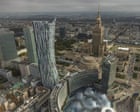
In the conclusion of our series on Poland, Poles reflect on how their country has transformed since regaining independence from Soviet rule nearly four decades ago. The Varso Tower, currently the tallest building in the European Union, serves as a symbol of this progress. Its 310-meter spire looms above the Soviet-era Palace of Culture and Science, a monument to both the country's oppressive past and its newfound prosperity.
Cezary Błaszczyk, managing director of HB Reavis in Poland, explains that the tower's height represents Poland's rise above communism and its emergence as an economically strong nation. Over the past four decades, Poland's income per capita has surged, surpassing $1tn and ranking among the 20 largest economies globally. Marcin Bosacki, Polish Deputy Foreign Minister, recalls the hardships of the 1980s, when families waited in long lines for basic necessities such as butter and meat under communist rule.
However, the Solidarity movement and Pope John Paul II's landmark visit to Poland in 1979 were pivotal in ushering in a democratic transition in 1990 and a subsequent economic boom. Many Poles emigrated during this period, contributing to a brain drain as they sought better opportunities abroad. Today, the influx of global capital has led to rising living costs, exacerbating income inequality and causing political divisions ahead of the upcoming general election.
Despite these challenges, Poland's average monthly wage has tripled since 2004, and the cost of living in the capital, Warsaw, now surpasses that of cities like Tokyo. As Poland continues to integrate with western institutions, including NATO and the EU, the nation must adapt to maintain its competitive edge and address the evolving needs of its citizens.
Written by urgent.news from Guardian Technology's reporting — not their text. Machine-written — may contain errors; check the original before relying on it.