North Korea and China open new bridge after 12-year delay
A long-delayed road bridge linking China and North Korea has opened, Chinese state media report, as trade ties improve between the neighbours.
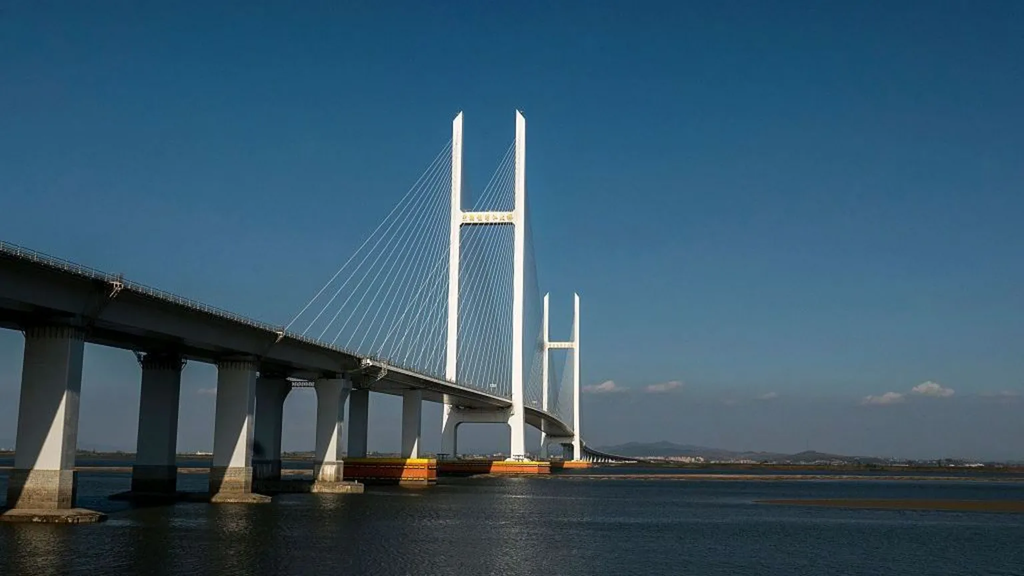
After a 12-year hiatus, China and North Korea have inaugurated a new road bridge, known as the New Yalu River Bridge, according to Chinese state media. The bridge, which spans 3 kilometers from the Chinese city of Dandong to the North Korean city of Sinuiju, is expected to become the primary land route for trade between the two nations.
The construction delay occurred following North Korea's suspension of road and customs facility construction during a period of strained relations with Beijing. Chinese Foreign Ministry spokesperson Mao Ning emphasized that the bridge would "further facilitate trade and people-to-people exchanges" and noted that bilateral trade had rebounded to pre-pandemic levels, reaching $2.7 billion last year, largely due to Chinese exports to North Korea.
However, North Korea's adherence to UN sanctions prevents a sudden surge in trade, and Pyongyang is cautious about the potential influence expansion from increased Chinese imports. Despite the ongoing tension, Beijing and Pyongyang maintain a close alliance, as evidenced by their mutual defense treaty, often described as "as close as lips and teeth."
The relationship has experienced periods of frostiness, particularly during the 2010s, due to North Korea's nuclear weapons program. Recent developments, such as China's reduced criticism of North Korea's nuclearization and North Korea's closer ties with Russia due to the Ukraine War, suggest a possible reinvigoration of their strategic partnership.
In 2024, Russia reportedly supplied North Korea with over a billion barrels of oil despite sanctions. Recently, North Korea and Russia opened their first road bridge, which allows up to 300 vehicles and over 2,000 people to cross daily. This development underscores China's efforts to reassert its influence over Pyongyang, as evidenced by the resumption of direct flights, passenger train services, and President Xi Jinping's recent state visit to North Korea.
Rewritten by urgent.news; may contain errors — check the original.
Sources: japantimes.co.jp · bbc.co.uk · myjoyonline.com · hani.co.kr