Urgent.News

What's breaking now, across hundreds of outlets.

Tech

My phones use my home ad blocker everywhere now, and the only place it broke was at home

Worth the hassle, as long as my ISP holds up.
My phones use my home ad blocker everywhere now, and the only place it broke was at home

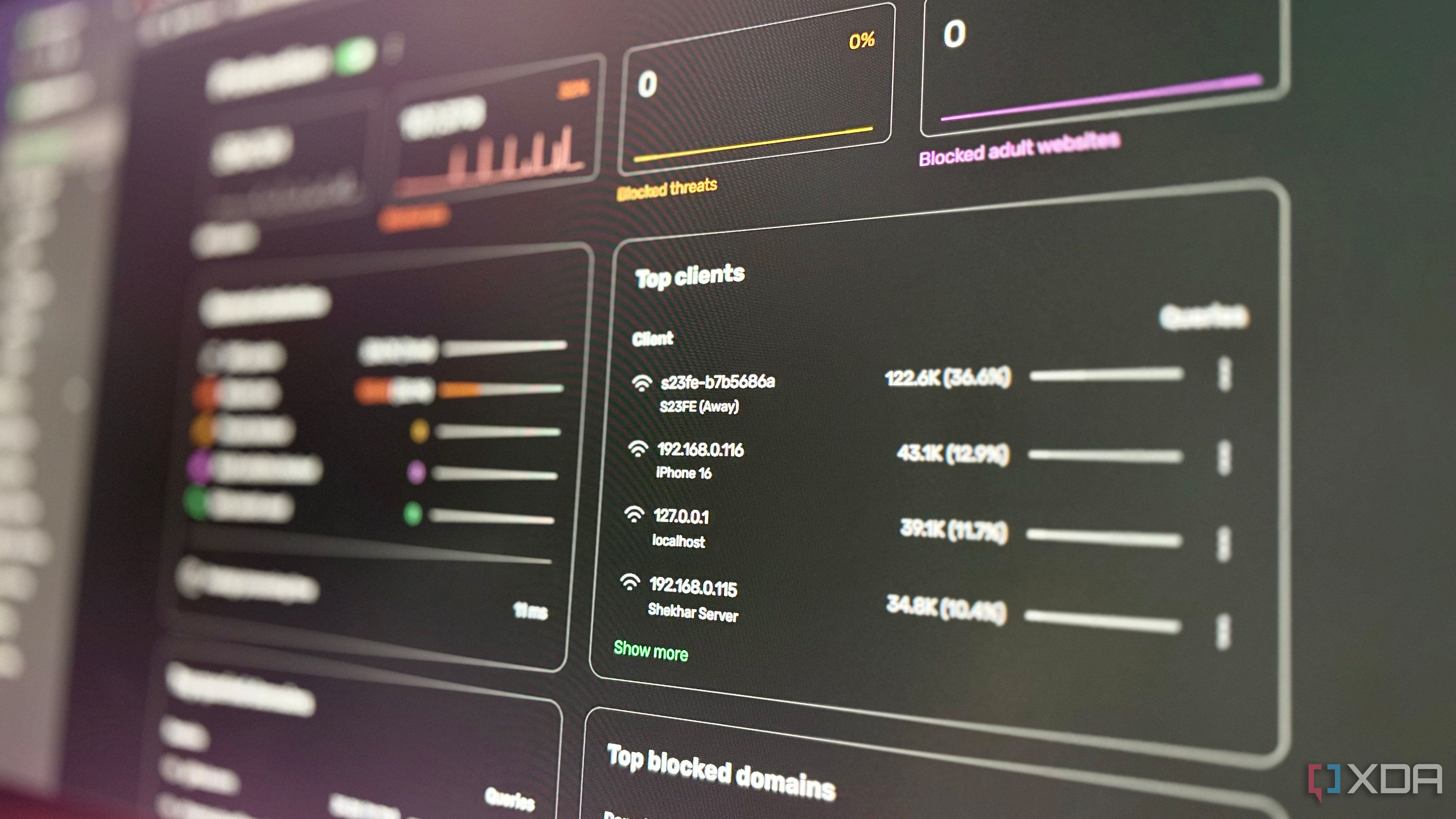
Over the past year, the author tested various DNS servers, all of which effectively blocked ads and filtered trackers while at home. However, when switching from home Wi-Fi to mobile data or public Wi-Fi, the protection against ads and trackers disappeared. To resolve this, the author set up a self-hosted encrypted DNS server called AdGuard Home (AGH) and pointed their phones at it, allowing the filtering service to work consistently across all locations.

After some trial and error, the author settled on AGH with DoH via Quad9. The setup involved exposing AGH through a public IP address and TLS certificate on NPM (Nginx Proxy Manager). The author then configured the phones to use the home server for DNS requests using built-in encrypted DNS settings. The DNS flow changed from carrier DNS to the static IP, ONT (ON Terminal), ER605 (Ethernet Router), NPM, and AGH, ensuring ads and trackers were blocked.

The author tested mobile data on both phones, and everything worked as expected. However, when connecting back to home Wi-Fi, both phones lost internet due to a double NAT setup causing a hairpin connection timeout. To fix this, the author rewrote the domain using AGH's native DNS rewrite, pointing both ".dns." and "*.dns." to the server's local IP address.

This setup required trade-offs, such as setting up a secondary public DNS server for failover and managing AGH restarts monthly to pick up renewed certificates.

Rewritten by urgent.news; may contain errors — check the original.

Source: xda-developers.com

Read the original at xda-developers.com →

Report a problem with this story

More in Tech

The Super Forms RCE takes two requests, and the first one just asks the site for a nonce

Wordfence has blocked over 440,000 exploit attempts against two WordPress plugin flaws, and the worse one demands nothing from the attacker. No session, no scraped nonce, no race condition.

  • Super Forms plugin vulnerable to two exploit requests
  • First request triggers AJAX handler without verification
  • Second request creates valid nonce for malicious payload

Codes pages are the fastest-traffic pages you can build — and the fastest to lose

A codes page can carry a site. It can also destroy it, because the traffic it attracts is exactly the traffic that leaves the moment the codes stop working.

  • Codes pages attract high traffic quickly due to clear search intent
  • Outdated codes cause visitors to leave instantly
  • Placing codes at top and adding timestamp improves reader retention

Your Test Suite Is Growing. But Is It Getting Better?

When a project starts, maintaining automated tests usually feels manageable. There are a few test cases, execution is quick, and when something fails, finding the reason isn't too difficult. But as the application grows, things start to change. More features mean more tests. More tests mean longer execution times.

  • Test suites start small but grow as applications expand
  • Hundreds of tests can lead to longer execution times and maintenance issues
  • Focus on execution details, not just pass/fail metrics, to prioritize test suite maintenance

More from Thursday, 15 October 2026 →