Living with a stink? Technology might help
Smells from rubbish dumps and industrial facilities are being more carefully monitored.
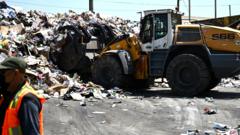
Milpitas, a city in California's tech-infused Silicon Valley, grapples with an unpleasant odor issue emanating from nearby industrial sites. Chia-Ling Kong, a tech worker living mere miles away from a 342-acre landfill, recalls being unable to open her windows for over a decade due to the noxious smells. While recent improvements have been made, residents still endure around two or three hours of bad odors daily.
To tackle the problem, local authorities have mandated the use of drones, monitors, and automated collection of gases responsible for the stench. This data-driven approach, according to Kong, promises to pinpoint problems at their onset.
Kong's optimism stems from the belief that technology can significantly reduce industrial odors. Similar issues are plaguing communities worldwide, with many lacking regulations to manage smells effectively. In the United States, the Environmental Protection Agency does not regulate environmental odors as pollutants, leaving states and local governments to address the issue. Urban sprawl exacerbates the problem by pushing communities closer to smelly facilities that were once kept at a distance.
Odor control technologies can be categorized into three types: absorbing odors, converting them through chemical reactions, or burning them away. According to experts, the most effective methods can eliminate 90% or more of the compounds responsible for odors. However, these solutions can be costly, and some operators opt for cheaper alternatives, such as spraying large quantities of deodorizers to mask the smells.
Des Moines, Iowa, has long suffered from a particularly pungent odor known as "Eastside Funk." A study commissioned by city authorities revealed that three industrial meat companies were among the culprits. The city now spends $240,000 per year on technology to monitor and track the stench, enabling them to pinpoint the source of the odors.
Smithfield Foods, one of the implicated companies, has invested $2 million to install a regenerative thermal oxidizer that destroys chemicals associated with bad smells, but the company denies being the source of complaints.
Written by urgent.news from BBC Technology's reporting — not their text. Machine-written — may contain errors; check the original before relying on it.
This story
This is one outlet's version. Read the fullest account.