Living with a stink? Technology might help
Smells from rubbish dumps and industrial facilities are being more carefully monitored.
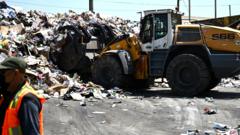
Milpitas, a luxurious city in California's Silicon Valley technology center, has faced an odor issue for years. Residents have endured foul smells emanating from industrial sites, including a 342-acre landfill. Chia-Ling Kong, a local engineer, couldn't open her window for over a decade due to the stench. Fortunately, recent improvements have reduced the frequency of unpleasant odors.
To tackle the issue, the landfill's operators have been mandated to employ drones, install monitoring systems, and automate the collection of landfill gases. Kong remains hopeful that the continuous monitoring approach will pinpoint problems promptly. Across the globe, communities grapple with the nuisance of bad odors generated by various sources, such as waste disposal sites, sewage treatment plants, and factories.
While many countries lack regulations governing odor management, states and local governments often shoulder the responsibility. Urban development, which brings communities closer to stinky facilities, exacerbates the problem. Odor consultants note that increasing urbanization and the desire to build nearer to valuable land have contributed to the issue.
To address industrial odors, various technologies are employed, including odor absorption, chemical conversion, and burning. The most effective methods can eliminate up to 90% of odor-causing compounds. However, these solutions can be costly, and some operators prefer cheaper alternatives, such as spraying deodorizers. Carlos Diaz, an environmental consultant from Spain, highlights the difficulty of treating landfill odors due to the large surface area involved.
In Des Moines, Iowa, authorities have invested $240,000 annually in odor-tracking technology to identify the source of foul smells. Smithfield Foods, a meat processing facility, has spent $2 million on an odor control system. Despite the investment, the company denies responsibility for the complaints. Detecting odors remains challenging, as people perceive smells subjectively.
Currently, olfactometry is the primary method for measuring and evaluating odors, but electronic noses offer a more objective approach.
Written by urgent.news from BBC Science's reporting — not their text. Machine-written — may contain errors; check the original before relying on it.


