India Mandates Registered Caller Name Display on 4G and Newer Networks From November 1
The Indian government has directed telecom service providers (TSPs) in the country to mandatorily display callers' registered names along with their numbers for incoming calls starting November 1, 2026, in an effort to help people identify calls from unknown numbers and tackle spam or fraudulent calls. To that end, the Department of Telecommunications has issued a circular urging service
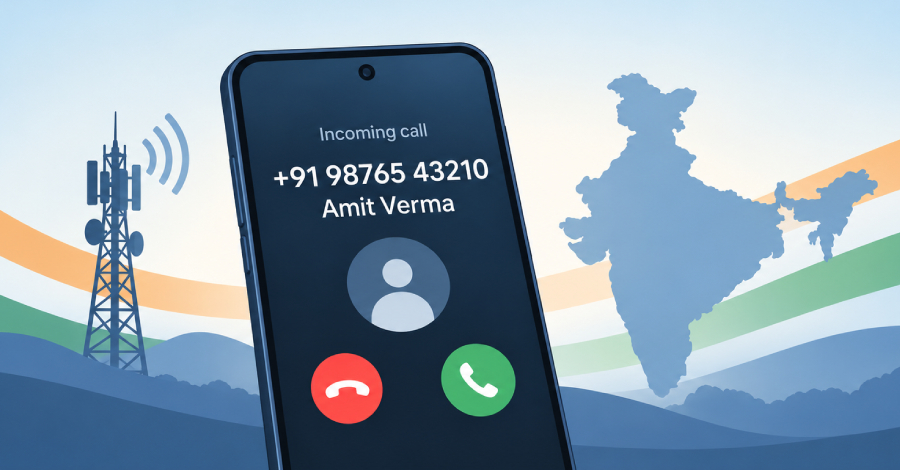
The Indian government has mandated telecom service providers to display callers' registered names alongside their numbers for incoming calls starting November 1, 2026. This new requirement, outlined in a circular by the Indian Ministry of Communications, aims to help people identify calls from unknown numbers and combat spam or fraudulent calls.
Service providers will need to implement the Calling Name Presentation (CNAP) service, which displays the caller's name on the recipient's device when a call is incoming. The caller ID system is primarily intended for wireless terrestrial networks using 4G and higher generation technologies. Telecom operators must establish a database linking subscribers' names to their numbers and query this database to retrieve the calling name identity, which they will then present to the user.
Users can also choose to hide their caller identity through a Calling Line Identification Restriction (CLIR) facility. Additionally, business connections or bulk connections can opt for a preferred name that replaces the calling name identity, provided they present original documents and true copies to the originating telecom service provider.
Written by urgent.news from The Hacker News's reporting — not their text. Machine-written — may contain errors; check the original before relying on it.