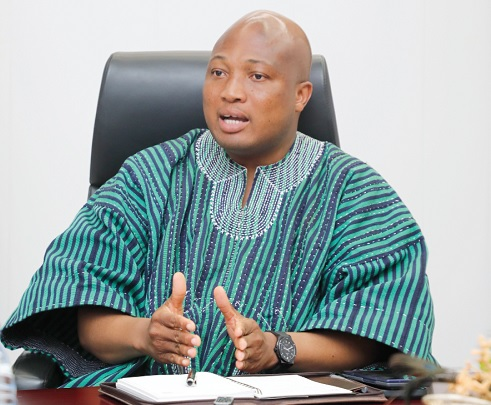
FWSC trains journalists on proposed IPEC
TWENTY journalists are undergoing training by the Fair Wages and Salaries Commission (FWSC) to deepen their understanding of the proposed transition to an Independent Public Emoluments Commission (IPEC). The two-day media capacity-building workshop in Accra is intended to equip the journalists with the knowledge to report accurately and responsibly on the proposed commission’s mandate and … The…

Two dozen journalists are currently participating in a training program organized by the Fair Wages and Salaries Commission (FWSC) in Accra. The two-day workshop aims to enhance their knowledge of the planned transition to an Independent Public Emoluments Commission (IPEC), enabling them to report on the commission's mandate and its impact on public sector workers with precision and responsibility.
Dr George Smith-Graham, the FWSC's Chief Executive Officer, explained that the IPEC would bolster oversight of public sector salaries by promoting fairness, transparency, and accountability in remuneration arrangements. He elaborated that the proposed reforms would address disparities in compensation by considering the full range of benefits received by workers, including allowances, housing, transport support, and other allowances.
Dr Smith-Graham highlighted that while workers performing comparable jobs might receive similar base salaries, their overall remuneration could vary significantly due to differences in allowances and institutional arrangements. The proposed IPEC would establish uniform standards for job evaluation, grading, salary structures, and pay bands, ensuring that disparities in remuneration are justified by factors such as responsibilities, skills, risks, and working conditions.
The Fair Wages and Salaries Commission emphasized that fairness in the system does not imply equal salaries for all; rather, it requires a fair system that acknowledges justified differences and requires supporting evidence. Dr Smith-Graham cautioned that public sector wage decisions could have broader financial implications, such as increased demands on other institutions, higher pension costs, and long-term financial commitments for the government.
The proposed commission would also facilitate collective bargaining by providing reliable information and clearer guidelines for negotiations, assuring organized labor that the reforms would not impede lawful collective bargaining or workers' participation in decisions concerning their conditions of service. The transition to IPEC would occur in stages, starting with consultations and the passage of the IPEC Bill, followed by the steps needed to establish the commission as a constitutional body.
Initially, the framework would cover public institutions and selected state-owned enterprises, while excluding office holders governed by Article 71 of the 1992 Constitution. Bringing these office holders under IPEC would necessitate a constitutional amendment process, including a national referendum. However, the establishment of the proposed commission would not automatically abolish existing allowances or grant new powers to the commission before relevant laws came into force.
Ms Emelia Ennin, the Head of Public Affairs at the FWSC, underscored that the training program was designed to deepen journalists' understanding of public sector pay negotiations and reforms. The program also sought to provide a platform for journalists to discuss challenges in labour reporting and explore means to improve access to credible information, with the hope that better-informed reporting would foster public understanding of the proposed reforms and contribute to industrial harmony.
Written by urgent.news from Ghanaian Times's reporting — not their text. Machine-written — may contain errors; check the original before relying on it.
This story
This is one outlet's version. Read the fullest account.