FWSC urges media to guard against misinformation in proposed IPEC transition
The Fair Wages and Salaries Commission (FWSC) has ended a two-day capacity-building workshop for selected media personalities on the proposed transition to the Independent Public Emoluments Commission (IPEC).
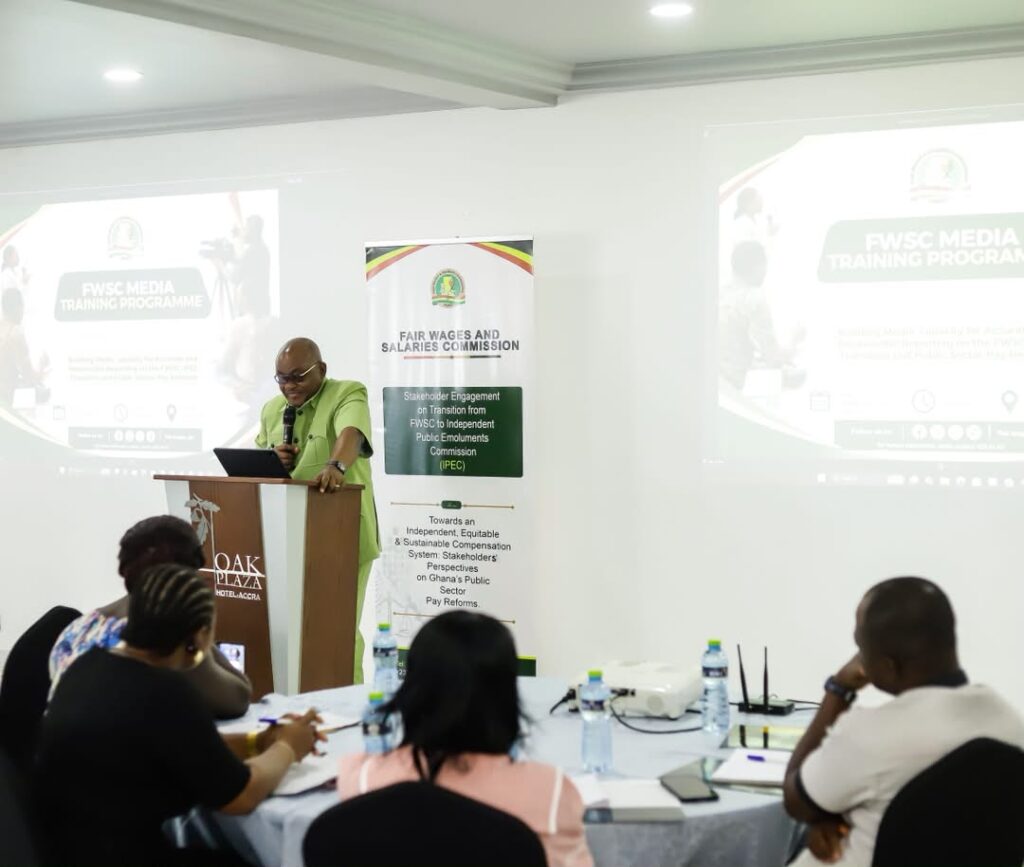
The Fair Wages and Salaries Commission (FWSC) wrapped up a two-day workshop for media representatives centered on the forthcoming transition to the Independent Public Emoluments Commission (IPEC). The workshop covered the proposed IPEC's responsibilities, the need for change, and its impact on public sector pay, collective bargaining, and public funds management.
Chief Executive of the FWSC, Dr George Smith Graham, highlighted that the transition presents a chance to tackle long-standing disparities in public sector pay through a unified, transparent, and accountable system. He clarified that a single pay structure alone cannot resolve all pay inequalities, as variations in allowances, benefits, and institutional arrangements still generate disparities among public servants.
Dr Graham emphasized that the IPEC framework would address these discrepancies by considering the complete spectrum of financial rewards associated with public employment. However, he stressed that fairness in pay does not mean equal salaries for all, as different roles entail varying responsibilities, requiring unique skills, exposing individuals to greater risks, hardships, or leadership demands.
The proposed IPEC will establish a national framework for public sector remuneration, including job evaluation, grading, salary structures, and pay bands. It will also strengthen remuneration assessments, support collective bargaining with reliable data, and enhance monitoring and public accountability. Remuneration proposals will be evaluated against legal, technical, and fiscal criteria before implementation, with compliance checks for budget provision and fiscal sustainability.
Dr Graham reassured organized labor that the reform would maintain lawful collective bargaining rights. He affirmed that negotiations would be more predictable with reliable information, transparent benchmarks, and fair cost assessments. The implementation plan includes several stages, starting with stakeholder consultations, the passage of the IPEC Bill, and setting up the necessary institutional frameworks for the Commission.
The roadmap also envisions IPEC becoming a constitutional body through the necessary constitutional procedures, potentially including a national referendum if required. Dr Graham emphasized that passing the IPEC Act as an ordinary law does not automatically confer constitutional status on the Commission.
Written by urgent.news from MyJoyOnline Ghana's reporting — not their text. Machine-written — may contain errors; check the original before relying on it.