Cambodia was told to clean up its monkey trade. Regulators say it still hasn’t
CHIANG MAI, Thailand — Global wildlife trade authorities say Cambodia has made little progress in cleaning up its monkey export industry, a year after the country was flagged as needing major reforms in how it manages the capture, breeding, and export of monkeys used in biomedical research. In November 2025, following years of controversies, the […]
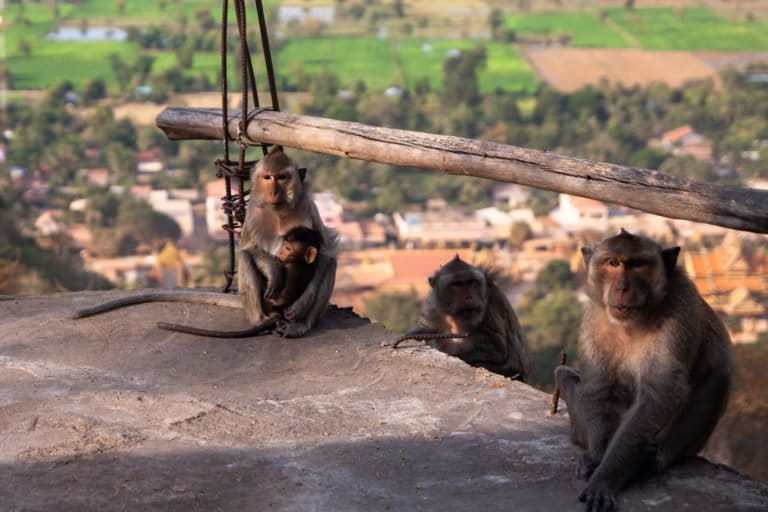
Chiang Mai, Thailand — International wildlife trade regulators assert Cambodia has made minimal progress towards cleaning up its monkey export trade, a year after facing stern warnings from global authorities. In November 2025, the Convention on International Trade in Endangered Species of Wild Fauna and Flora (CITES) released a report stating that Cambodia's efforts to regulate the capture, breeding, and export of long-tailed macaques— monkeys classified as endangered species—are insufficient.
The document, published on October 5, highlights that Cambodia has shown little improvement in its governance of monkey farms, and the review team cannot definitively confirm or dismiss instances of fraud or corruption in the trade. This assessment comes on the heels of a report by the United States Fish and Wildlife Services (USFWS) that found compelling evidence of Cambodian monkey farms mislabeling wild-caught monkeys as captive-bred, a practice which experts warn increases the risk of zoonotic disease transmission and threatens the wild population of long-tailed macaques (Macaca fascicularis).
The wild population of these monkeys has reportedly declined by 50% to 70% over the past three decades. The situation has drawn widespread criticism, and the upcoming CITES Standing Committee meeting in Geneva on November 2-6 will be a critical juncture for Cambodia, as countries not meeting CITES standards may face trade bans.
Rewritten by urgent.news; may contain errors — check the original.
Source: news.mongabay.com