Bhiwandi Civic Body Plans 5 Ward-Level Committees To Tackle Rising Air Pollution
Bhiwandi: In a concerted effort to tackle rising air pollution and dust levels, the Bhiwandi-Nizampur City Municipal Corporation (BNCMC) will constitute ward-level committees across its five prabhag areas, with a city-level review committee headed by the municipal commissioner overseeing their functioning. The move follows recommendations of a high-level committee in connection with a suo motu…
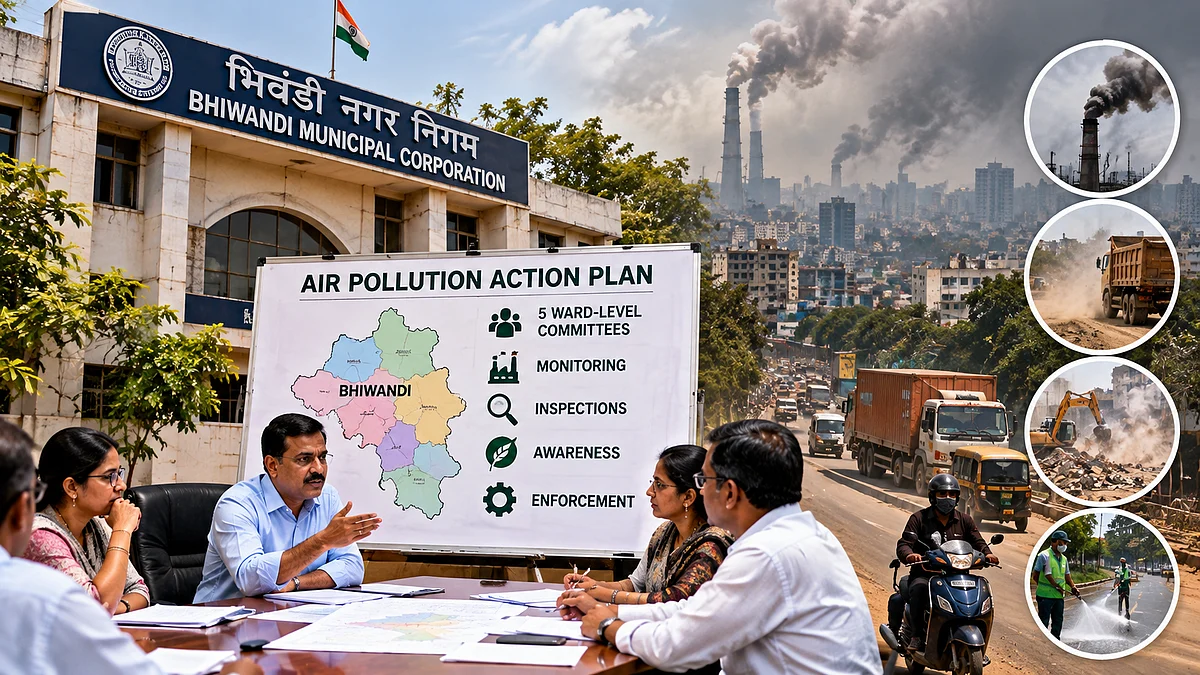
The Bhiwandi-Nizampur City Municipal Corporation (BNCMC) is establishing ward-level committees across its five administrative divisions to combat rising air pollution and dust levels, following recommendations from a high-level committee. These committees, chaired by prabhag officers, will oversee measures to improve air quality, control dust from construction sites, reduce vehicular emissions, and implement a winter action plan.
The city-level review committee, headed by the municipal commissioner, will oversee the committees' operations.
Each ward-level committee will be responsible for weekly meetings to assess pollution levels, identify vulnerable areas, and prepare a list of sensitive sites such as unpaved roads, unauthorized construction, construction and demolition zones, bakeries, furnaces, cremation grounds, open plots, traffic congestion hotspots, and waste dumping or burning locations. The committees will take strict action against identified locations within eight days.
Sensor-based monitoring devices will be installed at recognized construction sites, with daily data reviews and real-time monitoring through a control room at the municipal headquarters. Abnormal pollution levels will trigger immediate action and reporting. Special inspections will be conducted at construction and demolition sites, including those involving excavation and demolition activities.
Measures include covering waste and debris, stabilizing soil, installing biological fencing, and developing green belts to mitigate dust.
Road-sweeping machines equipped with cameras will be used for monitoring and record-keeping. Post-monsoon road patchwork and pothole repairs will be prioritized to prevent dust from damaged surfaces. The city-level committee will focus on planting native tree species and developing green belts to control dust. Pollution-control measures will be implemented in short, medium, and long-term phases, with a priority on construction dust, waste management, road dust, and vehicular emissions.
A nodal officer, the municipal deputy commissioner in charge of environment, will oversee the initiative's implementation, relying on timely enforcement, inter-departmental coordination, and regular monitoring of pollution hotspots.
Rewritten by urgent.news; may contain errors — check the original.
Source: freepressjournal.in