Wild photos and videos of a “space jellyfish” behind a rocket are quickly going viral. NASA explains the magic behind the jaw-dropping sight
A SpaceX launch on October 13 created a “space jellyfish” that could be seen for hundreds of miles away, creating incredible photos and videos
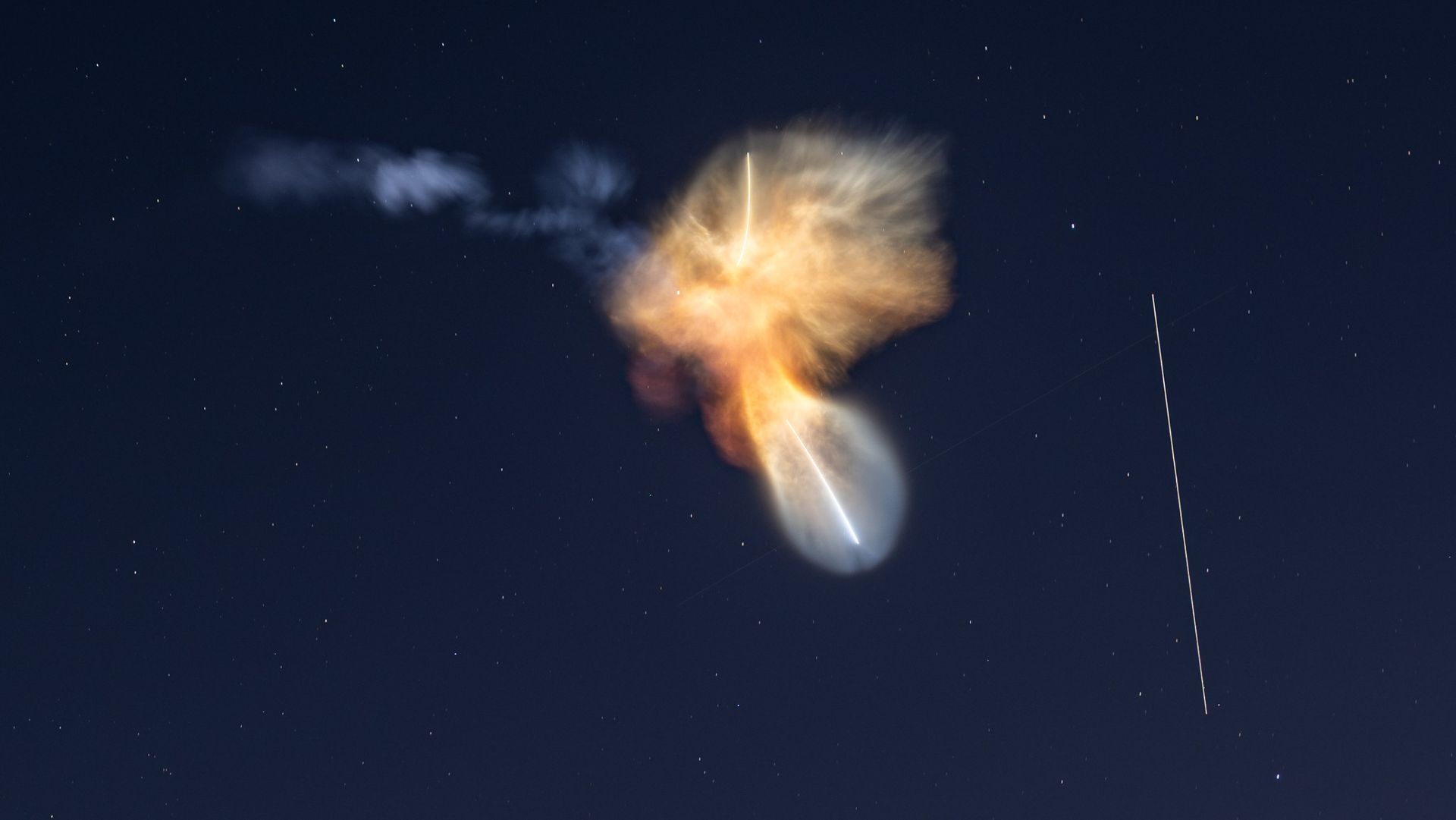
Videos of an enigmatic "space jellyfish" trailing behind a SpaceX rocket have quickly become a sensation on social media following an October 13 launch. NASA has now shed light on the science behind this captivating sight. The SpaceX CRS-35 cargo mission, carrying the Dragon spaceship and supplies to NASA, blasted off from Cape Canaveral Space Force Station in Florida.
While rocket launches usually produce awe-inspiring images, that October 13 launch generated a unique "space jellyfish" - a vivid, expanding shape that lingered in the sky for several minutes. The striking image was captured in a 480-second long exposure photograph showing the rocket's path as its exhaust plumes glowed blue and the sun began to rise behind the clouds (Image credit: NASA/John Kraus).
The spectacle was visible as far away as Washington DC, nearly 800 miles from the launch site, and videos of the peculiar phenomenon swiftly went viral. NASA has released its own images of the space jellyfish along with an explanation of the science (AKA the magic) behind the remarkable sight. The October 13 launch occurred just before sunrise at 6:33 AM ET.
Early sunlight backlit the rocket's exhaust plumes, making them more visible in the night sky than during daylight launches. The expanding orange glow in the image is the Falcon 9 rocket's first stage in a re-entry burn. Essentially, the early morning sunlight is making the often elusive exhaust plumes stand out like fireworks in the night sky. NASA explains that this phenomenon can also occur when a rocket launches near sunset.
Rewritten by urgent.news; may contain errors — check the original.
Source: digitalcameraworld.com