What We Could Lose Trying to Make Mars Habitable
The rock, ice, and atmosphere of Mars hold a largely unread archive. Terraforming could erase it before the biggest scientific questions are answered.
Carl Sagan once believed that revisiting the Library of Alexandria would reignite humanity's intellectual journey into space. Yet, Mars, too, holds a unique cosmic library, one that documents 4.5 billion years of solar system history. Six decades of missions have hinted at ancient oceans, rivers, and possibly, signs of life. However, the transformation efforts, like terraforming, could irrevocably destroy these crucial clues.
In 2008, NASA's Phoenix Lander directly observed water ice on Mars, which sublimated within days, confirming its volatile nature. Recent studies suggest a novel terraforming technique, releasing metallic nanoparticles into the Martian atmosphere to raise temperatures by at least 30°C within a century. This method is distinct from previously debunked strategies, such as releasing Mars' carbon dioxide reservoirs.
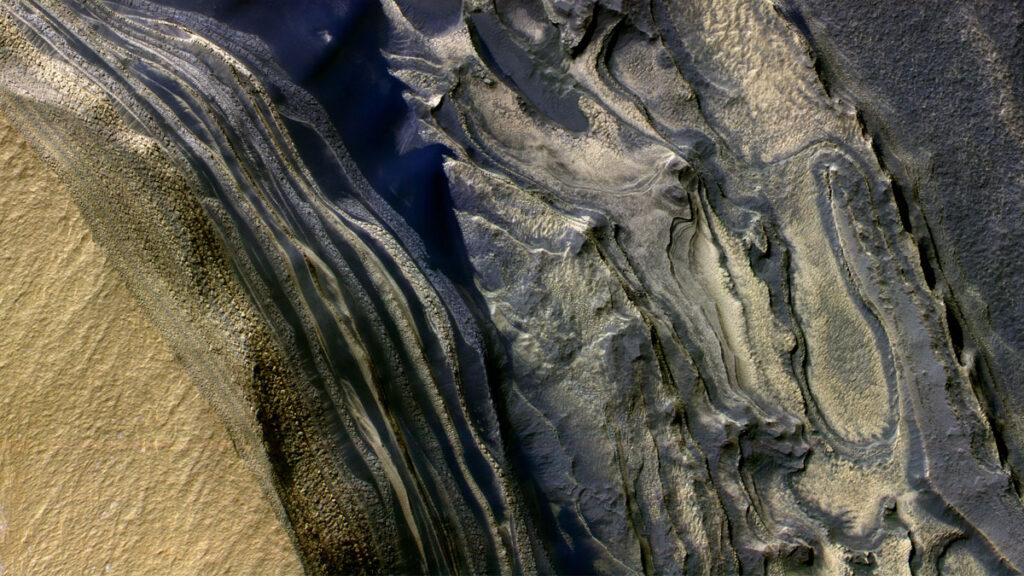
The Martian polar layered deposits, which could extend the climate record by 470 million years, hold invaluable information about Mars' climate history, including how it responded to changes in its orbit and axial tilt, and whether it ever supported life. However, melting or sublimating the ice due to rapid warming would irrevocably damage this archive and any potential microbial habitats.
Mars' vast underground ice, covering about 70 million square kilometers, may contain evidence of past or active life. Warming the planet would not only destroy this archive but also alter surface minerals and accelerate reactions in preserved organic molecules, spoiling the isotopic clues in the atmosphere. Thus, embarking on terraforming before thoroughly investigating Mars' record would be like burning the Library of Alexandria after opening just one scroll.
Written by urgent.news from Eos's reporting — not their text. Machine-written — may contain errors; check the original before relying on it.