VIR workshop explores credit policy and carbon market development
Vietnam needs a robust financial ecosystem to turn carbon market opportunities into concrete green investments Pham Van Hoanh em VIR s em editor in chief said at a policy workshop on credit policy and carbon markets in Hanoi
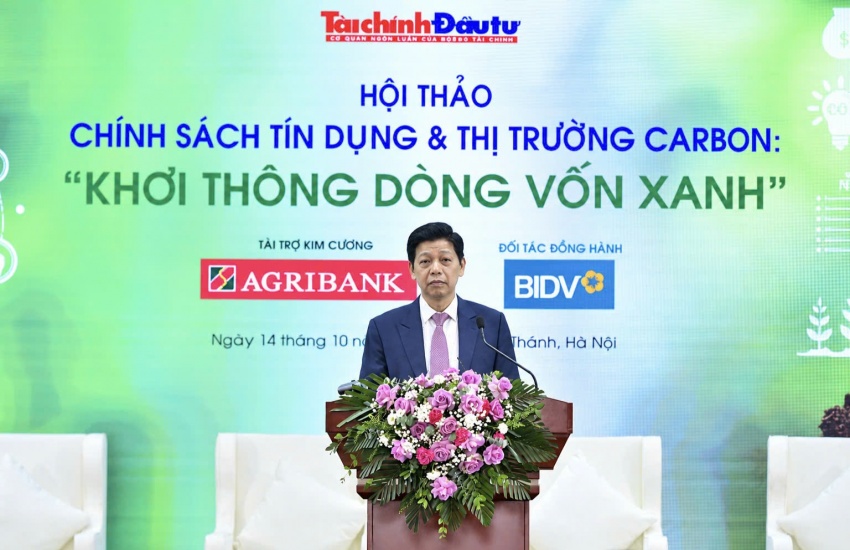
The domestic carbon market in Vietnam, which commenced operations on June 29, marks a crucial step in the nation's green transition, yet it underscores the necessity for robust financial mechanisms to facilitate its growth, according to Pham Van Hoanh, editor-in-chief of VIR, during a workshop on credit policy and carbon markets in Hanoi on October 14.
The workshop, organized by VIR in collaboration with the State Bank of Vietnam (SBV), emphasized that while the carbon exchange constitutes the market's infrastructure, credit policy, the banking system, and capital markets serve as the primary driving forces behind the green transition. Hoanh explained that credit policy holds a pivotal role in directing financial resources towards emissions reduction, enabling businesses and individuals to invest in greener activities, and aligning sustainable development goals with the flow of capital throughout the economy.
The green transition necessitates concrete investments in cleaner technologies, energy efficiency, process modifications, low-emission agriculture, forest preservation, waste management, renewable energy, and more sustainable supply chains. To actualize these initiatives, Vietnam requires a financial system equipped to identify, price, allocate, and manage green capital.
Vietnam's carbon market framework, established under the 2020 Environmental Protection Law and further developed through legal decrees, such as Decree No.29/2026/ND-CP for the domestic carbon exchange and Decree No.112/2026/ND-CP for international exchanges of greenhouse gas emission reductions and carbon credits, has seen progress.
The most recent regulations have laid the groundwork for a trading platform, but its long-term success demands liquidity, reliable data, verification mechanisms, confidence among market participants, and a solid financial ecosystem to support market players.
Hoanh outlined several critical questions for policymakers, financial institutions, and businesses, including the removal of regulatory and financial barriers, the allocation of green capital to appropriate projects, and facilitating banks in assessing the opportunities and risks associated with green investments. Businesses must also demonstrate the effectiveness of their transition efforts and gain access to bank loans and medium- to long-term financing from capital markets.
Moreover, carbon value must become a more dependable factor in financial decision-making. These challenges were among the motivations behind VIR organizing the workshop, which gathered policymakers, banks, businesses, experts, and stakeholders to discuss and propose practical solutions.
The carbon market is poised to become a significant economic driver, enabling businesses to recognize the financial benefits of emissions reductions, allowing banks and capital markets to effectively manage green capital, providing investors with value identification, and ensuring that producers receive commensurate benefits. Hoanh expressed optimism that the workshop's discussions would result in concrete policy proposals, practical cooperation initiatives, and implementable models.
The event is part of wider efforts to connect Vietnam's carbon market development with credit policy and capital mobilization, ensuring that the nation's green transition is supported by the necessary financial resources to achieve tangible outcomes. The workshop featured presentations from the SBV, the Asian Development Bank, and Agribank, followed by discussions with stakeholders from regulatory authorities, capital markets, banks, businesses, and consulting organizations.
Key topics included expanding green capital flows, enhancing businesses' access to finance, developing the carbon market, and strengthening the links between emissions reduction value and financial decision-making.
Written by urgent.news from Vietnam Investment Review's reporting — not their text. Machine-written — may contain errors; check the original before relying on it.