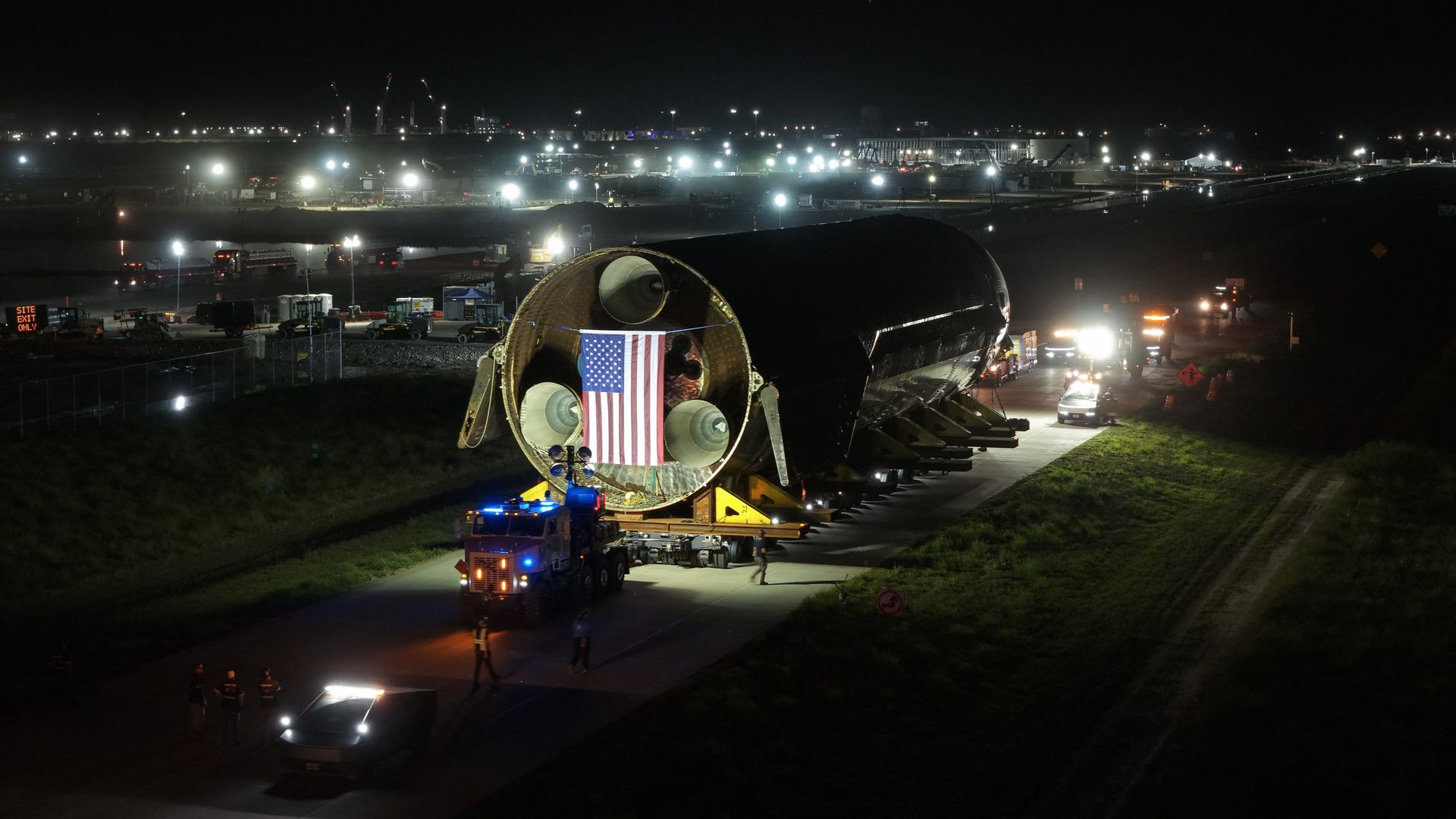
The 1st SpaceX Starship to survive a launch to space just came home to its launch site
After surviving its splashdown and a grueling journey at sea, SpaceX's Ship 40 has returned to Starbase, where engineers will study the first recovered Starship upper stage for clues to future reusability.
A spectacular cosmic jellyfish wowed skywatchers after SpaceX launched the CRS-35 cargo mission on October 13, 2026. (Image credit: SpaceX)
Did you witness a massive, glowing jellyfish in the pre-dawn sky early on Tuesday morning? If so, it wasn't an alien invasion - it was SpaceX launching its latest mission to the International Space Station (ISS). Just before dawn on Tuesday, a SpaceX Falcon 9 rocket took off from Cape Canaveral Space Force Station in Florida, carrying a robotic Dragon capsule filled with thousands of pounds of cargo for the ISS.
The liftoff initiated CRS-35, the 35th mission SpaceX has flown to the ISS under their Commercial Resupply Services agreement with NASA. This cargo mission includes medical supplies, food, clothing, scientific experiments, and more for the space station.
The sight of the glowing jellyfish is a result of the water vapor and carbon dioxide expelled by the rocket after takeoff. As the gases freeze into ice crystals in the cold upper atmosphere, they flow off and behind the rocket. If the launch occurs during dusk or dawn when the ground and skies are mostly dark, sunlight illuminating the frozen gas plume creates a unique and striking view.
If all goes as planned, the Dragon capsule will autonomously dock with the Harmony module of the ISS around 11 a.m. EDT (1500 GMT) on Thursday, October 15.
Written by urgent.news from Space.com's reporting — not their text. Machine-written — may contain errors; check the original before relying on it.
This story
This is one outlet's version. Read the fullest account.