Saudi employee arrested for allegedly bugging OpenAI office
A Saudi employee of OpenAI was arrested after allegedly planting a recording device in one of the company's San Francisco offices, the AI firm and federal prosecutors said Tuesday. "We discovered a sophisticated recording device that was hidden inside one of our offices" and "referred the matter to the FBI," OpenAI told AFP in a statement. OpenAI's security team found the device late last month…
United States authorities announced the arrest of Abdulrahman Alfozan, a Saudi national employed by artificial intelligence company OpenAI, following the discovery of a concealed recording device within one of the company's San Francisco offices. OpenAI officials notified federal investigators after their security personnel uncovered the sophisticated device, which was hidden inside the building. The arrest took place on October 9, according to the US Justice Department.
The 35-year-old Saudi engineer, who had been working for OpenAI since July 2025, allegedly inserted a USB device wrapped in toilet paper into a television located in an executive conference room. He was identified through security footage near the conference room on multiple occasions, despite not being authorized to attend meetings there. Alfozan was observed utilizing a productivity tool to gather additional information about OpenAI's office locations, meeting rooms, calendars, schedules, and personnel details.
Furthermore, a chatbot account linked to Alfozan's spouse contained queries about remote audio recording and encrypting memory cards. The intelligence community emphasized the significance of safeguarding the nation's cutting-edge intellectual property from foreign threats, as stated by Director of National Intelligence Jay Clayton.
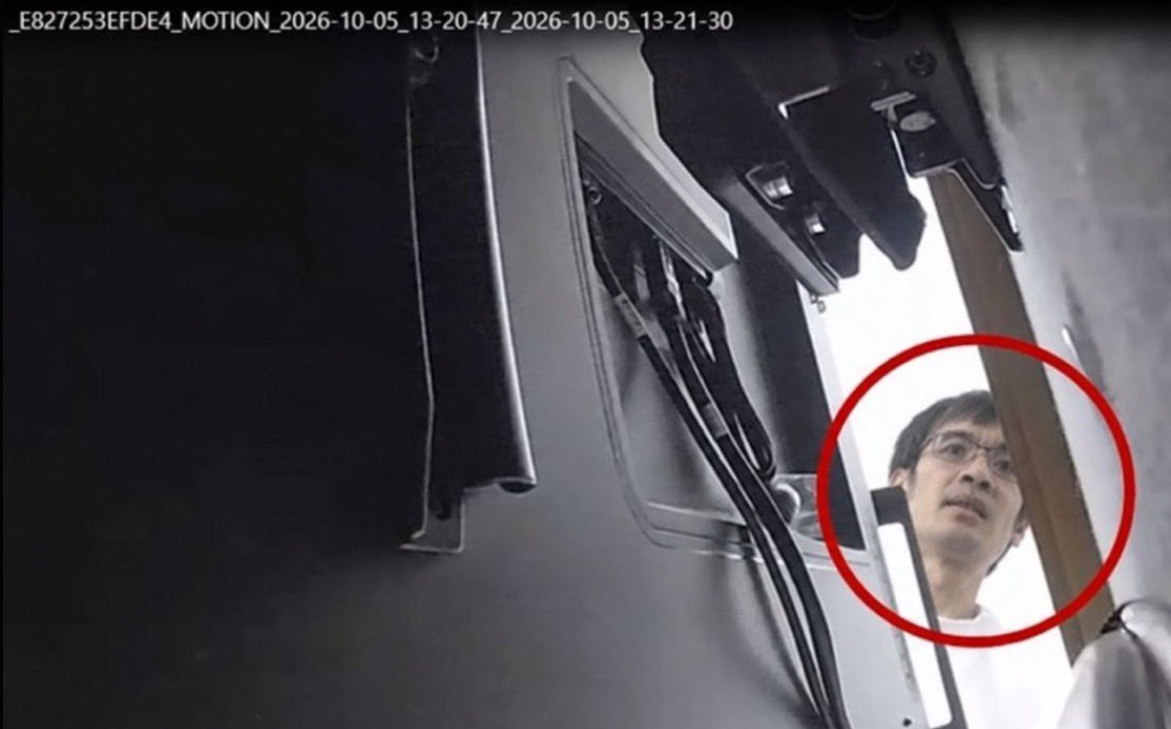
OpenAI emphasized that they have no evidence of the accused accessing or exfiltrating model weights, source code, or customer data. A second device was found by the company's security team when they inspected an unattended bag belonging to Alfozan. Alfozan was subsequently caught on security footage inside the restricted conference room, where he appeared to be looking behind the television where the recording device was concealed.
Alfozan, a former employee of Meta and an AI startup, as well as a venture capital firm, had also attended the University of California at Berkeley and the Massachusetts Institute of Technology. He faces up to five years in prison and a fine of $250,000 for allegedly intercepting oral communications. His arraignment is scheduled for October 19. In 2022, a former Twitter employee, Ahmad Abouammo, was convicted of spying for Saudi officials seeking to identify critics on the platform.
Written by urgent.news from Free Malaysia Today's reporting — not their text. Machine-written — may contain errors; check the original before relying on it.
This story
This is one outlet's version. Read the fullest account.
- Saudi employee arrested for allegedly bugging OpenAI office freemalaysiatoday.com
- Apple wins early access to OpenAI documents and employee testimony in trade secrets lawsuit 9to5mac.com
- Judge orders OpenAI to turn over hiring records in Apple trade secrets case techcrunch.com
- OpenAI says employee caught planting listening device dw.com
- Apple will get some OpenAI documents, but not everything it asked for in court appleinsider.com
- Apple v. OpenAI: a US judge partly grants Apple's motion for expedited discovery, ordering OpenAI to hand over forensic images of devices and other documents (Annelise Levy/Bloomberg Law) news.bloomberglaw.com
- Saudi employee arrested for allegedly bugging OpenAI office lemonde.fr
- Saudi employee arrested for allegedly bugging OpenAI office japantoday.com