Rice, Sugar & Pulses Turn Costlier Ahead Of Diwali, Global Supply Disruptions Raise Fresh Inflation Fears
Mumbai: Rising prices of essential food items are putting pressure on household budgets ahead of Diwali. Rice, sugar, pulses and edible oils have become costlier, while global supply disruptions and unfavourable weather conditions are raising concerns about further food inflation. According to the Food and Agriculture Organization (FAO), global food prices increased by 1.5 percent in September…
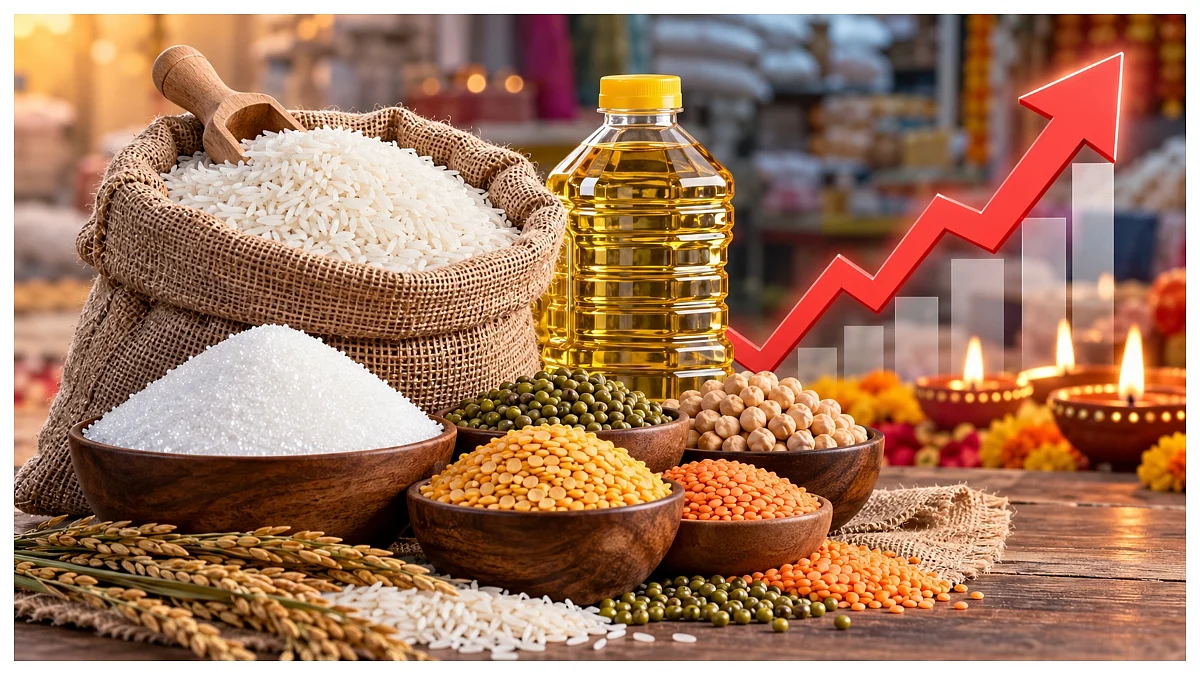
Ahead of the Diwali holiday, the cost of essential food staples such as rice, sugar, pulses and cooking oils is on the rise, sparking worries about rising inflation. The Food and Agriculture Organization (FAO) reported a 1.5 percent increase in global food prices in September 2026 compared to the previous year.
Rice prices have surged due to weather-related disruptions and limited supplies, with the FAO noting a 1.4 percent rise in global rice prices in September. In India, the average retail price of rice reached Rs 47.21 per kg on October 14, a 9.4 percent increase from the previous year's average of Rs 43.14 per kg.
Sugar prices are also climbing, with the FAO's Sugar Price Index up 6.1 percent in September, marking a 14.7 percent increase when compared to the previous year. The average retail price of sugar in India was Rs 57.21 per kg on October 14.
Edible oils have become more expensive due to robust demand and supply issues caused by weather-related challenges. Global vegetable oil prices, as measured by the FAO, rose 0.9 percent in September and 18.3 percent year-over-year. In India, mustard oil averaged Rs 204.94 per kg, while packed sunflower oil was priced at Rs 191.45 per kg on October 14.
Pulses are adding to household expenses, with government data showing retail prices of urad dal and tur dal increasing by Rs 20-30 per kg. This rise is attributed to supply shortages, higher transportation costs and increased demand due to festivities. India's overall retail inflation reached 5.54 percent in September, up from 4.83 percent in August, while food inflation jumped to 7.74 percent from 5.97 percent.
Wholesale inflation stood at 11.39 percent, indicating broader inflationary pressures. Continued geopolitical tensions, high transportation costs, and weaker crop production could maintain elevated food prices, further straining household budgets during the festive season.
Rewritten by urgent.news; may contain errors — check the original.
Source: freepressjournal.in