Patriot missile defence system: How it works, what it can intercept and why some threats get through
Patriot missiles explained: What they can & can’t stop
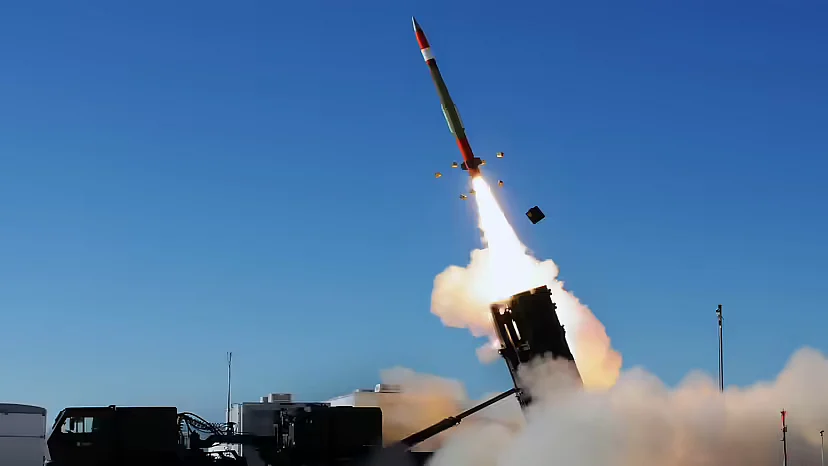
Dubai: The Patriot missile defence system stands as one of the world's most advanced air and missile defence technologies, capable of intercepting a range of airborne threats including ballistic missiles, cruise missiles, hostile aircraft, and drones. However, the intricate nature of modern weaponry means that even this sophisticated American-built system cannot guarantee complete protection against all threats.
This brings to light the complex interplay between missile trajectories, detection capabilities, and the inherent limitations of air defence technology. Here are the pivotal questions: What precisely is the Patriot missile system? Patriot is a mobile, ground-based air and missile defence system developed in the United States and utilized by various countries, including Saudi Arabia.
Its structure includes powerful radar, command-and-control equipment, launchers, and interceptor missiles. The system's radar detects and tracks incoming threats, while onboard computers analyze interception opportunities and guide missiles towards their targets. Initially designed to neutralize hostile aircraft, Patriot has undergone extensive upgrades over the years to counter increasingly sophisticated missiles.
What types of missiles can the Patriot system intercept? The system is equipped to engage several airborne threats. Ballistic missiles, which ascend to great heights before plummeting towards their targets with incredible speed, are a key focus. Modern PAC-3 interceptors are specifically designed to neutralize certain ballistic missiles during their final phase of flight.
Cruise missiles, often flown at low altitudes, can also be intercepted by Patriot if detected and tracked promptly. Aircraft and drones present additional targets. The PAC-3 variant of Patriot introduces a significant upgrade with hit-to-kill technology, enabling physical confrontation with threats at high velocity and expanding the defended area compared to earlier models.
This capability enhances Patriot's effectiveness against high-speed ballistic missiles. Can the Patriot system counter hypersonic missiles? In certain instances, but not all. Hypersonic weapons, traveling at speeds surpassing Mach 5, or five times the speed of sound, pose a formidable challenge as they can alter direction while moving at extreme velocities.
While some Patriot interceptors have demonstrated success in destroying Russian Kinzhal missiles, the dynamic maneuverability of hypersonic weapons makes them particularly challenging to neutralize with current technology. Why are low-flying missiles and drones particularly difficult to stop? Radar horizon poses a significant challenge, as ground-based radar systems struggle to detect every low-flying object from vast distances.
Additionally, terrain and buildings can obstruct radar coverage, leaving limited time for response. Small drones may further complicate detection due to their limited radar signatures. Can the Patriot system be overwhelmed by simultaneous attacks? Yes. Large, coordinated attacks can strain even the most sophisticated air defence networks.
A single Patriot battery carries a finite number of ready-to-fire interceptors, and the reloading process can be time-consuming. Defenders must simultaneously track multiple threats and prioritize engagements. Moreover, the financial implications are substantial; Patriot interceptors are notoriously expensive, while many attack drones cost significantly less, making their use more economically viable.
Can the Patriot system provide comprehensive protection for an entire country? No. Patriot's primary role is to safeguard critical locations, such as airports, military bases, cities, and energy installations. Its operational effectiveness hinges on radar capabilities, the type of interceptors deployed, geographical terrain, and strategic deployment configurations.
Consequently, countries often adopt a multi-layered approach to air defence, combining Patriot with shorter-range missiles, surveillance systems, and specialized counter-drone weapons. Why do missiles still succeed in evading interception? Several factors contribute to this outcome. Gaps in radar coverage may provide opportunities for missiles to slip through undetected, particularly if they approach targets at low altitudes.
Low-altitude approaches further complicate interception efforts. Additionally, arriving during a large-scale, coordinated attack can overwhelm defensive resources, leaving dangerous debris scattered across the defended area. It is essential to recognize that a missile's failure to be intercepted does not equate to Patriot's failure.
The weapon may have simply ventured outside the system's coverage area or encountered another defensive mechanism. In summary, the Patriot missile system serves as a formidable deterrent against various airborne threats, yet the intricate nature of modern weaponry and the limitations of air defence technology underscore the inherent risk of missile and aircraft assaults.
Rewritten by urgent.news; may contain errors — check the original.
Source: gulfnews.com