One of America's biggest meteor craters is 100 million years younger than we thought — and coincided with a global extinction event
Analysis of tiny zircon crystals buried within the 10-mile-wide Ames crater in northwest Oklahoma suggests that the submerged structure dates back to 370 million years ago, during the Frasnian-Famennian mass extinction event.
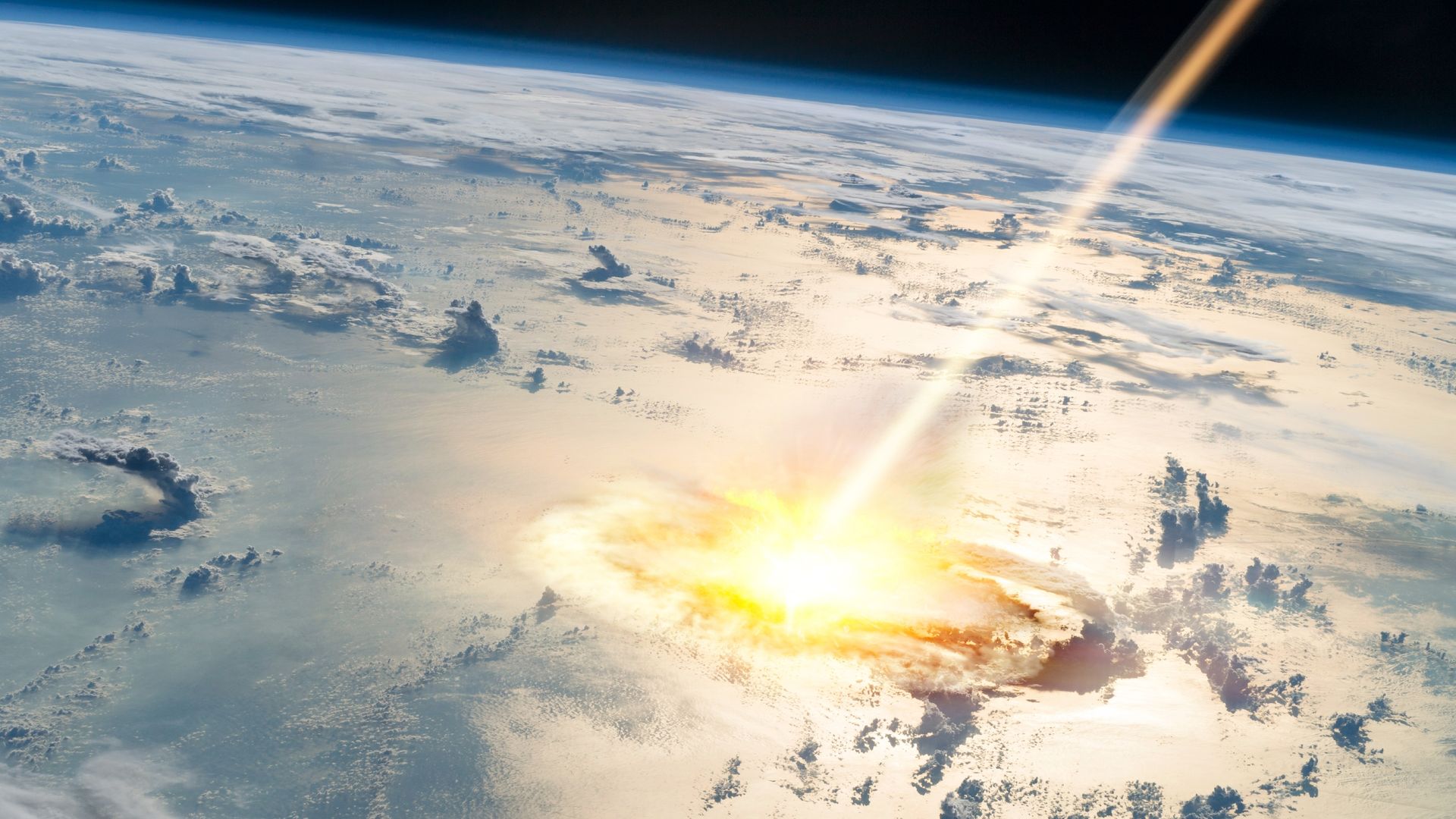
One of America's largest meteor craters, Ames crater, is 100 million years younger than previously believed, according to a recent study. The impact likely occurred around the same time as a major global extinction event, though it did not directly cause it. Ames crater, located in northern Oklahoma, was formed when a space rock more than 10 miles wide struck Earth at over 70,000 mph.
Today, no visible signs of the crater remain above ground, as it was buried under layers of seafloor sediment. The discovery of the crater's true age was made possible through the analysis of zircon crystals embedded in the crater, which revealed a dating of around 370 million years ago. This places the impact firmly within the Frasnian-Famennian mass extinction event, which resulted in the extinction of up to half of all marine life on Earth.
While the Ames impact did not directly contribute to the extinction event, the resulting atmospheric cooling effect may have played a role in the die-off.
Written by urgent.news from Live Science's reporting — not their text. Machine-written — may contain errors; check the original before relying on it.