Interview: Blackstone-Europachef Seppala: „Entscheidend ist, in die richtigen Sektoren und Objekte zu investieren“
Der Europachef des weltgrößten Gewerbeimmobilieninvestors Blackstone über die Enteignungsdebatte in Berlin, Sektoren mit guten Wachstumsperspektiven und den Faktor Mensch.
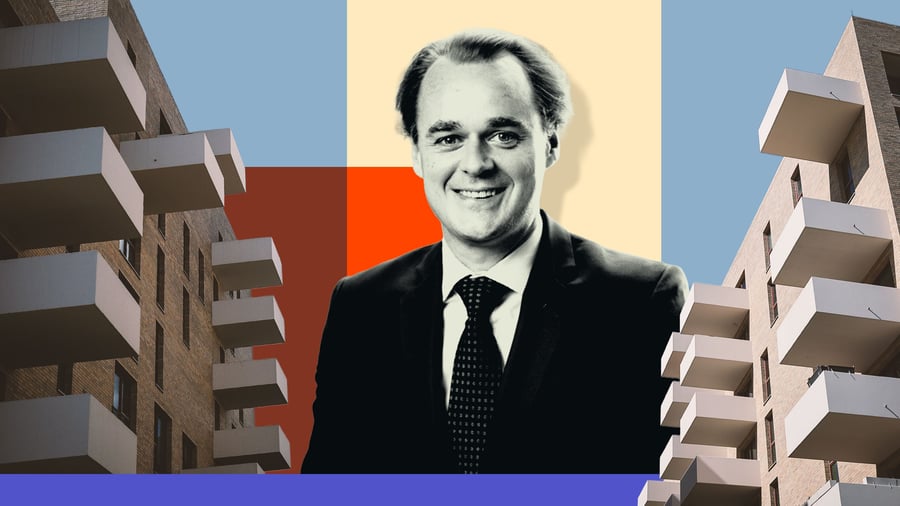
Interview with Blackstone-Europachef Seppala: "The decisive factor is investing in the right sectors and objects"
As the left party gained a victory in Berlin, Seppala, the world's largest commercial property investor, expressed concern about the potential forcible confiscation of housing stock in the capital. However, Blackstone's extensive commercial property portfolio in Germany is not significantly affected by this issue. Property rights are obviously important for every investor, especially in the real estate sector, and understanding the regulatory and legal framework is crucial.
Real estate is a long-term investment, and development in most markets and sectors is an even longer-term undertaking. Blackstone continues to invest significantly in Germany, seeking opportunities not only in real estate but also in other investment ventures. Germany is currently facing challenges like most large markets in Europe but remains one of the most important markets in Europe.
The author is not expecting any change in this regard. Germany has long been considered a safe haven. Will this status be lost due to the expropriation debate? Simply put, we do not believe so. Germany will remain an important market for us because we trust that people understand the importance of Germany's long-term economic success and the underlying reasons for housing shortages and the need to increase supply.
We remain confident and continue to invest in large economies experiencing some degree of political uncertainty or changes, such as the United States, France, and the United Kingdom. We expect to continue doing so in the future. Could you consider adjusting your investment strategy for Germany at least? No, Germany will remain an important market for us, and we will continue to explore opportunities across the real estate market.
Our approach will always be determined by the fundamental data of a specific investment. We ask whether we see sustainable demand and believe in the long-term outlook. If these conditions are met, we are willing to invest. The expropriation debate affects the German real estate industry at a time of rising interest rates. Last year, you were optimistic about the recovery of the German market.
How concerned are you about the recent rise in yields? The rise in interest rates has significantly impacted the real estate sector, reacting strongly to interest rates. The development was different from what many of us expected at the end of last year and the beginning of this year. The mood has become more subdued since the summer as people now assume that interest rates will not fall as quickly as anticipated.
We are quite calm about it. A world where interest rates are falling in Europe and the United States would be simpler, but we continue to deploy substantial capital. What does that mean in practice? By the second quarter of this year, we had bought, agreed to buy, or had offers for approximately ten billion euros worth of European real estate, both purchased and sold.
Most of this activity took place while interest rates were higher than we had anticipated. Meanwhile, we expect our European real estate sales this year to significantly exceed last year's levels, as they already exceeded the previous year's levels by 30 percent. In which sectors does this work? The market remains liquid in sectors where investors are confident they can generate revenue growth over time.
Logistics is a good example of this and our largest sector by revenue. Real estate is not a homogeneous investment class. The differences between sectors and within sectors are much greater today than in previous cycles. We are not buying real estate for the next nine months. We are buying where we believe in the growth outlook over the next five to ten years.
When we acquire assets at a reasonable basis in sectors where supply is tight and demand is expected to remain strong, historical evidence shows that such investments can be among the better ones during periods of uncertainty. Where do you see interest rates ultimately ending up? I do not want to specify an exact number. What matters to us is not a specific short-term level, but whether the long-term financing environment is understood and whether we can reasonably value an investment.
Even with higher interest rates, there are sectors where the fundamental data are strong, and investors can achieve attractive returns. We focus on these opportunities rather than trying to predict exactly where interest rates will settle. Investor sentiment is more cautious than it was before the summer, but there is still significant interest in real estate globally and in Europe.
I recently traveled to the Middle East and spent time in Asia, Canada, and Australia in the past months. Investors there still want to invest capital in European real estate. Interest varies by country and region, as is always the case. Institutional European investors are currently perhaps more cautious, but there is global capital that wants to invest in Europe and that was not present in the same amount five or ten years ago.
Written by urgent.news from Handelsblatt's reporting — not their text. Machine-written — may contain errors; check the original before relying on it.