Führungskräfte: „Gutsituierte haben genauso Angst wie Menschen an der Armutsgrenze“
Die Notärztin und CDU-Politikerin Lisa Federle erklärt, warum Leistungsträger ihre Ängste wegarbeiten, warum das Land in der Starre verharrt – und was gegen die Angstpolitik hilft.
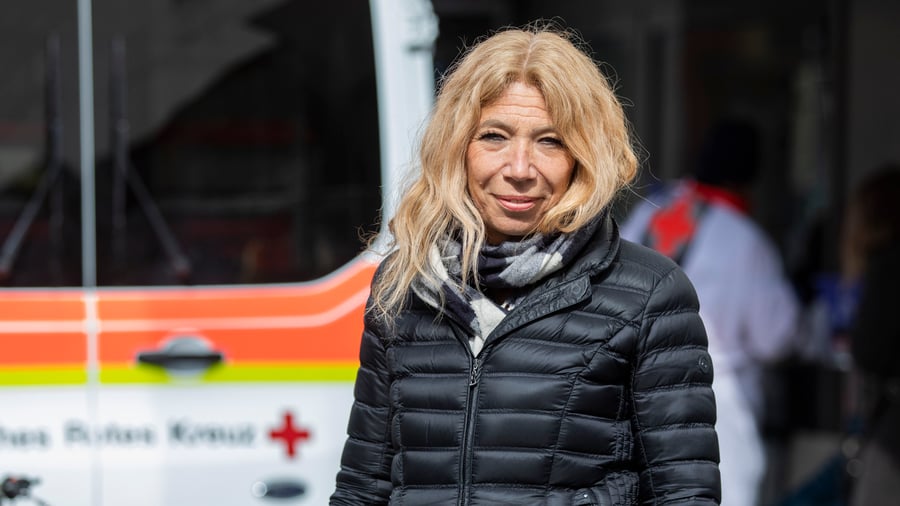
Führungskräfte: "Gutsituierte haben genauso Angst wie Menschen an der Armutsgrenze"
Notärztin Lisa Federle, who recently published a book on the various facets of fear, has uncovered a contemporary diagnosis of society. Federle, a kind of emergency doctor with expanded authority, has shown a way out of the isolation policy during the Corona pandemic and later written a highly regarded book on bureaucracy that defines this country.
She now confronts fear, a feeling that is rarely discussed in management but frequently present. "A kind of self-protection," Federle calls it, though with medium-term destructive consequences. If left unaddressed, fear stalls progress and hinders societal advancement. Federle has several ideas on what helps alleviate fear. She emphasizes that fear is not something that can be entirely addressed; it is a warning signal, an essential part of our existence.
Throughout history, the more fearful individuals have survived because they reacted faster. However, she points out that how others pretend to feel or convince themselves is often different from what lies dormant within them. Since the onset of the Corona crisis, several crises have piled up: pandemic, Ukrainian war, climate change, economic instability, retirement.
What does this mean for people? The Corona pandemic paved the way for fear to fall, affecting those who supported the measures as well as those who denied them. After several wars, the threat of Russia again loomed with the onset of climate change. Constant exposure to headlines about war threats, militarization, and aggressiveness can have long-lasting effects.
Social media exacerbates this issue, even though objectively, our lives are not that bad. Compared to post-war times or other countries, we are relatively well-off. We are not hungry, have good medical care, and no one has to die of isolation. Despite this, we still feel inadequate. In the past, grandmothers would alleviate children's earaches with a piece of string; now, they immediately call the doctor.
Germany has one of the highest rates of doctor visits. We have learned to cope with situations that are not comfortable. Many high achievers react to problems by working even more. Is this a typical pattern? It is a form of self-protection that usually occurs unconsciously. Few admit, "I created this chaos to avoid dealing with specific issues."
Some immerse themselves in work, others in volunteer roles, while others care selflessly for sick relatives and fail to realize they are also suffering. The crucial point is that they have no time to reflect. This is understandable: When we confront our issues, our situation may initially worsen. But fear can rob us of joy, destroy our careers, and damage family life.
Managers fearing for their jobs confess to fearing fear more than single parents. Is the hurdle higher for them? Yes, there is a heavy price to pay, but I have often seen that those at the poverty line face an even greater burden. Wealthy individuals often wear the oldest clothes, while those with less money buy trendy clothes for their children to avoid ridicule.
Gutsituierte (people who are fundamentally anxious) also experience fear. Some individuals are inherently more anxious, shaped by their upbringing, environment, and experiences. In many companies, managers often find themselves in a state of shock and inaction, avoiding decision-making and trying not to stand out. They remain alive, at least temporarily.
However, the danger of this strategy not succeeding is enormous, and the fall could be devastating. How can this be mitigated? One cannot rely on a chair with only one leg. Having three or four legs provides more stability. If family, friends, and volunteering commitments are essential, one's life will not fall apart as easily. Distributing weight across multiple points helps one stay grounded.
Defining oneself solely by one's work often leads to this situation. If it has been ingrained for years, is it possible to change it? Often, it happens through an illness. This may seem trivial, but I have seen many people who survived cancer and subsequently completely changed their lives. Just because one has always lived a certain way does not mean they must continue doing so.
What matters is being conscious of what one is doing. This does not necessarily require a disease; it can be a new partner, job, hobby, book, or any small step towards change. Even in politics, fear dominates action: fear of losing power, being unable to take a clear stance, and ultimately, a harsh reality. Fear is fundamentally human and dictates how we act.
However, politics must still make decisions and cannot please everyone. Things have become more challenging; in the past, an SPD voter would always vote for SPD, even if Willy Brandt did not always agree with him. Today, voters change parties even when they disagree with aspects of Willy Brandt.
Written by urgent.news from Handelsblatt's reporting — not their text. Machine-written — may contain errors; check the original before relying on it.
This story
This is one outlet's version. Read the fullest account.