Führungskräfte: „Gutsituierte haben genauso Angst wie Menschen an der Armutsgrenze“
Die Notärztin und CDU-Politikerin Lisa Federle erklärt, warum Leistungsträger ihre Ängste wegarbeiten, warum das Land in der Starre verharrt – und was gegen die Angstpolitik hilft.
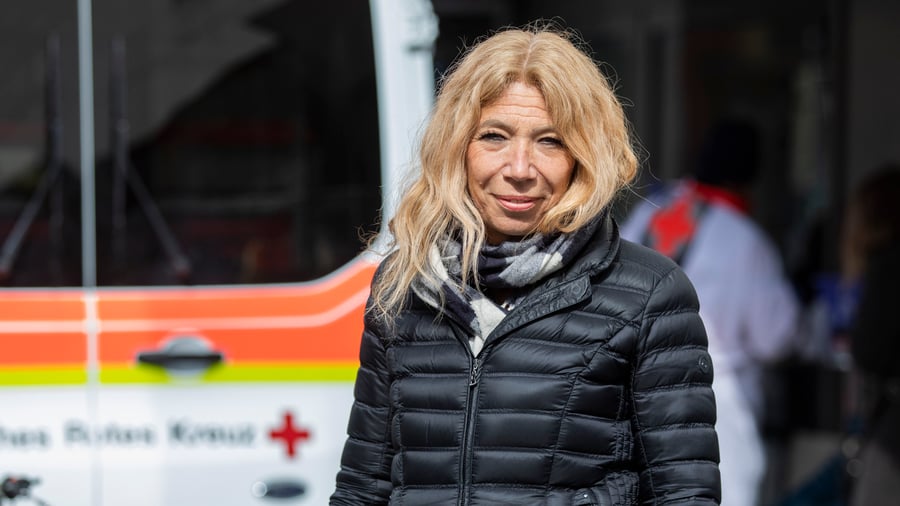
As recently retired nurse Lisa Federle penned her latest book, she actually intended to explain the many facets of fear through various individual examples from her practice – but in the end, she had written a prognosis of contemporary society. What this reveals about this country is less about Federle than the nation as a whole.
Federle is a kind of nurse with expanded responsibilities. During the COVID-19 pandemic, she demonstrated a way out of the isolation policy, later authored a much-cited book on bureaucracy that defines this country, and now suffers from fear herself. A feeling that is rarely discussed in executive suites but frequently guests there.
Federle calls this a kind of self-defense – but one with medium-term destructive consequences. Unless we confront it, the fear persists. Why leaders suppress their fears, the country remains rigid, and what helps the fear-fighting policy, Federle has a few ideas. Has Federle herself ever experienced fear? Of course. The topic is not closed for me.
As we age, more illnesses and impairments come along. And I am constantly reminded of my patients as I accompany them. Can fear be finally dealt with? I don't believe so. Fear is a warning signal, something existential. Without fear, we would not survive. In evolution, the fearful ones survived best because they reacted faster. I accompanied a woman who assured me time and again that she had no fear of death.
In the end, she experienced panic attacks and could not let go. What we portray to others or tell ourselves is often not what lies dormant within us. Since COVID-19, crises have piled up: pandemic, Ukraine war, climate change, economy, pensions. What does this mean for people? COVID-19 prepared the ground for fear to fall, for supporters of the measures and for deniers.
Then came several wars. As a child, I was always warned about the Russians, after which nobody could imagine Russia playing such a role again. With climate change, by the summer it became clear that it was not a scare story spun by amateurs. When we hear constant headlines about war threats, military buildup, and military movements, sooner or later something sticks.
And social media only exacerbates it. Despite objectively not being that bad compared to post-war times or other countries, we are not enough. Grandmother used to put a gingerbread bag on children with ear pain. Today, you run to the doctor immediately. Germany is one of the countries with the most doctor visits. We have learned to endure situations that are not comfortable.
Many high achievers respond to problems by working even more. Is this a typical pattern? It is a kind of self-defense that usually happens unconsciously. Almost no one says to themselves: I did something ridiculous just to avoid dealing with certain issues. Some get caught up in work, others in volunteer work, while others selflessly care for sick relatives and do not realize that they themselves are sick.
The main thing is that there is no time to reflect on oneself. This is understandable: if you deal with your issues, you may initially feel worse. But fear can take away your zest for life, destroy your career, and your family life. The manager fearing for his job is not ridiculed as much as the single parent. Is the hurdle higher for him?
Certainly, there is a shame he must face. But I have often seen that the people at the poverty line have an even greater shame. Those who are very well off often wear the oldest clothes. Those with little money still buy children trendy sports shoes so they won't be laughed at at school. And those with more resources have just as much fear.
Some people are simply naturally more fearful, shaped by their family, environment, and experiences. In many companies, managers find themselves in a kind of shock freeze: every morning at the office, they do not make any decisions, they just don't want to be noticed. And somehow they manage to survive until retirement. This is human, but the danger that this strategy does not hold up is enormous.
And then the fall is huge. How can it be reduced? No one sits on a chair with only one leg. With three or four legs, you are more secure. If family, friends, volunteering are important to me, I won't sink as deep. Plus the question: do I need a luxury car, designer clothes? This distributes the weight on many points that support me.
When has this changed from years of being ingrained? A disease often does the trick – sounds stupid, but I know many people who survived cancer and then completely changed their lives. Just because I have always lived this way does not mean I have to continue like this. What is crucial is that I am aware of what I am doing. This does not necessarily require a disease.
It can be a new partner, a new job, a hobby, a book. You can start with small steps. Even in politics, fear dominates action: fear of losing power, of being unable to make a clear position, of being impossible. Absolutely. Humans have always been afraid of change. Politics must decide and can never please everyone. Moreover, things have gotten harder.
Once, an SPD voter would always vote SPD, even if something didn't quite fit with Willy Brandt. Today, voters switch parties even if Willy Brandt did not quite meet their expectations. Today, parties change voters.
Written by urgent.news from Handelsblatt's reporting — not their text. Machine-written — may contain errors; check the original before relying on it.