Wealth Over Water: How Galamsey Is Threatening Ghana’s Water Security
Ghana is Africa’s top gold producer. But as the country digs deeper for gold, it is confronting a different and potentially more consequential scarcity: clean water.
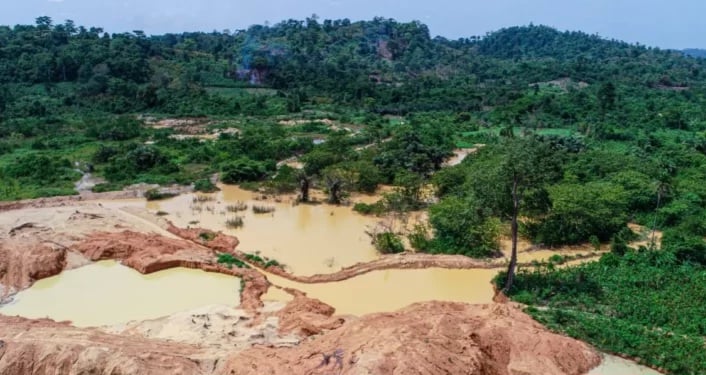
Ghana, Africa's leading gold producer, now grapples with a more pressing issue: water security. A visual analysis titled "Wealth Over Water" reveals a growing conflict between the country's gold mining industry and its natural resources. Researchers from various institutions, including the Water Resources Commission (WRC) and the Environmental Protection Agency (EPA), found that about 60% of Ghana's water bodies are polluted, primarily due to illegal mining, known as "galamsey." The analysis states that some water bodies may be irreparable even if pollution stops immediately.
Ghana's renewable water availability per person has dropped from 3,000 cubic meters in the 1960s to 1,650 cubic meters today, below the 1,700-cubic-meter threshold for water stress. Coupled with a population explosion from seven million in 1960 to over 30 million today, the situation becomes dire. If water quality continues to deteriorate, Ghana may eventually need to import water.
Galamsey's impact is particularly evident in river systems, where turbidity, a measure of suspended material, has skyrocketed. In some mining-affected rivers, turbidity levels are 94,800 NTU on the Ayensu, 64,000 NTU on the Birim, and up to 32,000 NTU on the Pra. Such high turbidity forces Ghana Water Limited to lose up to 50% of water during treatment, compared to a normal loss rate of 5%.
The heavy metals associated with this pollution, such as arsenic, lead, and mercury, pose severe health risks, especially when they enter the food chain through fish consumption.
Illegal mining has also encroached on cocoa farms, affecting 81% in the Eastern Region, 74% in the Western Region, and 68% in Ashanti. This threatens Ghana's cocoa production, already facing challenges from weather conditions, plant diseases, and aging farms. While galamsey is a significant contributor to this crisis, it's just one piece of a larger puzzle. The government has taken steps to curb excavator imports and track their use in illegal mining, but the environmental damage remains substantial and ongoing.
Written by urgent.news from MyJoyOnline Ghana's reporting — not their text. Machine-written — may contain errors; check the original before relying on it.
This story
This is one outlet's version. Read the fullest account.