Wealth Over Water: How Galamsey Is Threatening Ghana’s Water Security
Ghana is Africa’s top gold producer. But as the country digs deeper for gold, it is confronting a different and potentially more consequential scarcity: clean water.
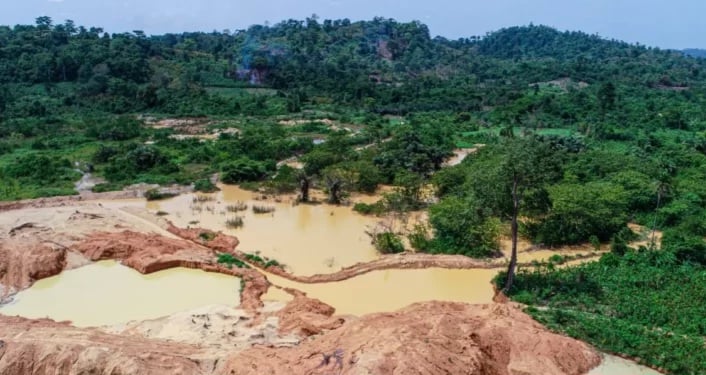
Ghana stands as Africa’s leading gold producer, yet it grapples with an even more pressing threat: clean water. A visual analysis by researcher Fatah Maltaba Abass reveals a growing clash between the nation’s gold economy and its water security. Galamsey, or illegal gold mining, contributes significantly to this crisis. Over 60% of Ghana’s water bodies are polluted, with mining ranked as a major culprit alongside agriculture and industrial activity.
Some of the worst-affected water sources may be irreparable even if pollution ceases immediately. Ghana’s access to clean water is dwindling; per capita renewable water availability has dropped from 3,000 cubic meters in the 1960s to 1,650 cubic meters today, falling below the 1,700 cubic meters threshold indicating water stress.
Coupled with a population explosion from roughly seven million in 1960 to more than 30 million currently, the strain on water resources is evident. The situation is visible in Ghana’s rivers, with turbidity levels reaching alarming highs of 94,800 NTU in the Ayensu River, 64,000 NTU in the Birim, and up to 32,000 NTU in the Pra.
This pollution not only harms the environment but also increases the cost of producing drinking water for the nation, with Ghana Water Limited reporting that extreme turbidity can cause water treatment facilities to lose up to 50% of water. Heavy metals such as arsenic, lead, and mercury are also contaminating Ghana’s water, with levels in some cases exceeding national safety standards.
The impact extends beyond rivers, as galamsey encroaches on vital cocoa farms, threatening Ghana’s cocoa production, which is already suffering from other challenges. The mechanization of illegal mining has also exacerbated the problem, with the government importing hundreds of excavators to aid in the mining process. The government must act swiftly to combat illegal mining and protect Ghana’s water resources before the situation escalates further.
Written by urgent.news from Joy Business's reporting — not their text. Machine-written — may contain errors; check the original before relying on it.