Voyager Technologies’ Griffin-1 Completes Environmental Testing at NASA JPL
Description A lunar lander from Voyager Technologies completed nearly three months of environmental testing at NASA’s Jet Propulsion Laboratory in Southern California in late September 2026. The tests demonstrate that the spacecraft is prepared to face the harsh conditions of launch, its journey to the Moon, and landing on the surface. Its final trial was […]
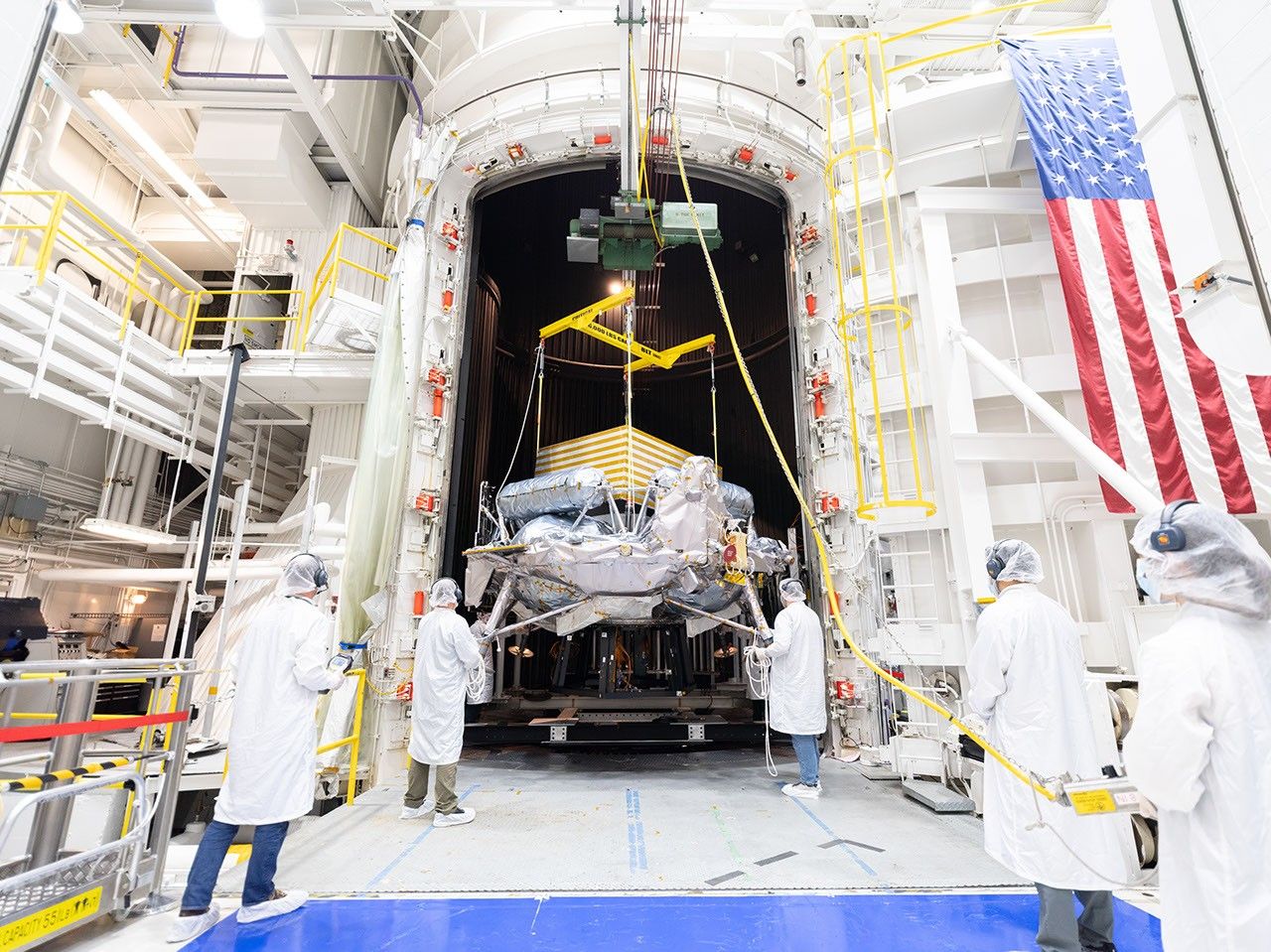
Engineers and technicians at NASA's Jet Propulsion Laboratory recently concluded rigorous environmental tests for Voyager Technologies' Griffin-1 lunar lander, readying it for a lunar mission. The spacecraft recently completed these tests and is now poised for launch later this year, expected to carry over 1,100 pounds of cargo to Nobile Crater near the lunar South Pole. This infrastructure-class lander is part of NASA's CLPS (Commercial Lunar Payload Services) initiative as part of the Moon Base Program.
The Griffin-1 spacecraft, weighing 2,789 pounds, was transported from the manufacturing facility in Pittsburgh to JPL in Southern California. It underwent a series of critical tests, including those simulating extreme space temperatures, vacuum, and the intense vibrations and noise of launch. These tests revealed that the spacecraft is capable of withstanding the challenges of space exploration.
Before the Griffin-1 took to the skies, it underwent electromagnetic interference and electromagnetic compatibility testing in JPL's specialized anechoic chamber, which lined with foam spikes to absorb sound and electromagnetic waves. This ensured that signals from the spacecraft's electronic components would not interfere with one another.
Additionally, the spacecraft was spun on a special table to measure its mass properties, enabling engineers to assess how the lander will move through space and prepare for lunar landing.
Written by urgent.news from NASA Science's reporting — not their text. Machine-written — may contain errors; check the original before relying on it.
This story
This is one outlet's version. Read the fullest account.