The biggest archaeological discoveries in the Middle East of 2026
The Middle East continues to reveal traces of its ancient past, with discoveries offering new insight into how early civilisations lived, worshipped and organised society. Since January, archaeologists have uncovered ancient burial chambers, royal monuments and prehistoric artworks. Some finds may answer long-standing historical questions, while others are challenging what we know about the…
Since the beginning of 2026, archaeologists in the Middle East have made several noteworthy discoveries that shed light on ancient civilisations. In Al Ain, a burial chamber dating back to the Wadi Suq period was uncovered at the Qattarah Necropolis. This 11 metre long and 2.5 metre wide chamber was in use from the Wadi Suq period into the Iron Age, indicating a long-lasting tradition of burial practices.
The chamber held weapons, vessels, and personal ornaments which provide insight into the customs of the region's inhabitants.
Near the Suez Canal, a sandstone lintel bearing the royal titles of Ramses II from the 13th century BC was discovered at Tell Abu Seify. It also records the restoration of a statue of Horus as Lord of the City of Masn. This find strengthens the possibility that Tell Abu Seify was an ancient settlement, adding to Egypt's known eastern frontier.
In Nineveh, Iraq, archaeologists unearthed a two-metre stone stele featuring cuneiform inscriptions and relief carvings associated with the reign of King Ashurbanipal. This monument documents the king's ambitions and achievements, offering further evidence of his development of Nineveh.
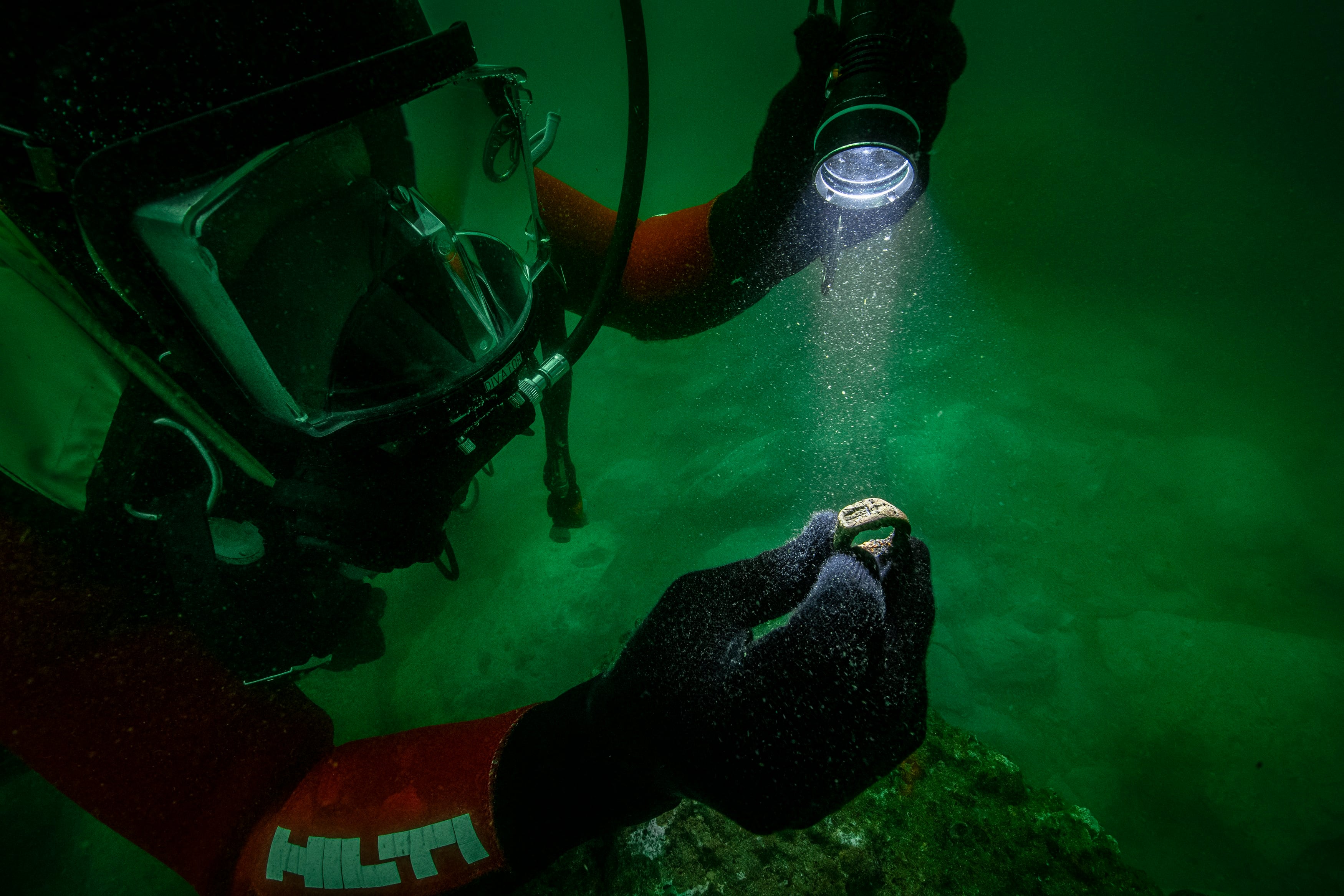
An ancient bronze ring with a depiction of the Lighthouse of Alexandria was discovered in the Mediterranean Sea. The signet ring, found during underwater excavations at Antirhodos, is believed to be the first known depiction of the lighthouse on a signet ring. The lighthouse, constructed in the third century BC, guided ships into Alexandria's harbour for centuries before its destruction due to earthquakes.
At Karahantepe in south-eastern Turkey, an 11,000-year-old carved human face was uncovered on a limestone pillar. This representation of a human face on this type of pillar, which is the earliest known example in the region, indicates the sophistication of prehistoric artistic and ceremonial traditions. Finally, thousands of years of rock art in South Sinai were documented at a previously unknown archaeological site on the Umm Iraq Plateau.
Prehistoric paintings, engravings, and inscriptions were found on a natural sandstone rock shelter, providing a glimpse into the region's diverse human activity over millennia.
Rewritten by urgent.news; may contain errors — check the original.
Sources: thenationalnews.com · hindustantimes.com · middleeasteye.net
This story
This is one outlet's version. Read the fullest account.
- IMF slashes Middle East growth outlook due to war disruptions middleeasteye.net
- The biggest archaeological discoveries in the Middle East of 2026 thenationalnews.com
- IMF slashes Middle East growth outlook due to war disruptions hindustantimes.com