Owls ringed to measure benefits of wildlife farming
A barn owl and 15 chicks are ringed to see if conservation-focused farming is working.
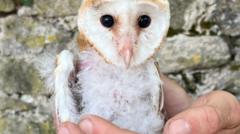
Barn owl chicks have been ringed for the first time in Purbeck to monitor their movements and assess the success of conservation farming. Fifteen chicks and one adult were ringed at three farmland sites through a collaboration between Birds of Poole Harbour, Carey Ringing Station, and the National Trust. Mark Singleton, the National Trust countryside manager for Purbeck, expressed excitement about the project, noting that while barn owl populations have dwindled over the past century, they may be recovering locally.
The project aims to be an annual occurrence, with plans to add more nest boxes in the following year. Singleton highlighted that National Trust tenant farmers are managing the land to promote wildlife, including creating long grass, maintaining hedgerows, and leaving patches of scrub to support voles and other small mammals that barn owls prey upon.
Kate Fox, a licensed bird ringer and ornithologist from Carey Ringing Station, emphasized the value of ringing in providing essential scientific data about these birds, as individual identification is challenging. Barn owls, classified as Schedule 1 breeding species, cannot be disturbed during the breeding season without a special license. The ringing process adhered to strict guidelines from the British Trust for Ornithology (BTO).
Written by urgent.news from BBC Science's reporting — not their text. Machine-written — may contain errors; check the original before relying on it.