Indonesia's peatlands go up in smoke
Your browser does not support the audio element.
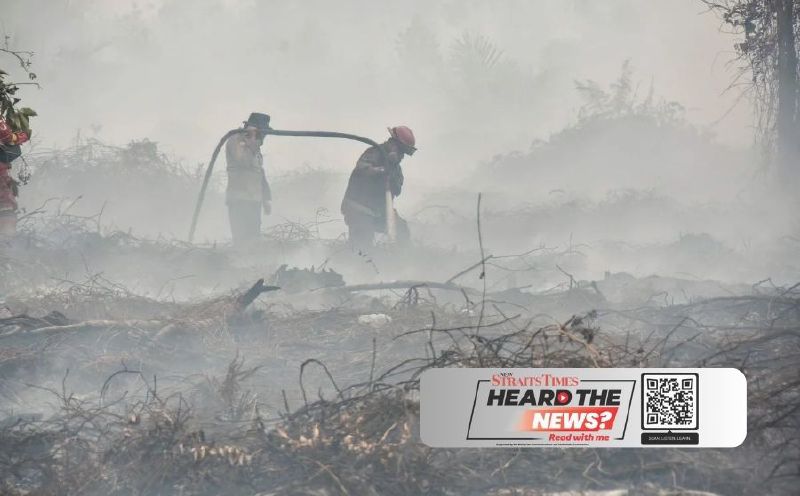
For weeks, Indonesian Borneo has resembled a post-apocalyptic scene with people donning masks due to a thick haze from rampant wildfires. The smoky landscape extends to neighboring Malaysia, Singapore, and the Philippines. Peatlands, composed of undecomposed organic material, form a layer over thousands of years in waterlogged conditions.
The fires, which burn slowly from the ground up, are a significant contributor to the annual dry season haze. Peatlands, home to diverse flora and fauna, including endangered orangutans and Sumatran tigers, are crucial for flood control. Despite covering only three percent of the Earth's land, they store a third of the world's soil carbon.
Indonesia, possessing the largest share of tropical peatland, accounts for about one-third of the global total. Approximately 16.4 million hectares of Indonesia's estimated 24.2 million hectares of peatland have been degraded and are at risk of fire. Industrial-scale plantations for timber, pulp, paper, rice, and palm oil are the primary culprits.
These plantations are drained with extensive canal networks spanning around 285,000 kilometers, equivalent to seven times Earth's circumference. The drained peatlands, left vulnerable by these canals, are susceptible to burning, particularly during strong El Nino years that cause severe drought. While fewer than a third of Indonesian wildfires originate from peatlands, they produce most of the haze.
The toxic smog emitted by these fires contains harmful substances like formaldehyde, hydrogen cyanide, ammonia, and fine particles (PM2.5), which can penetrate the lungs and bloodstream. According to the World Health Organisation, exposure to PM2.5 is linked to increased illness and death. As of October 6, Indonesian wildfires had emitted 140.5 megatonnes of carbon, accounting for around 13 percent of the global total for the year.
Written by urgent.news from New Straits Times's reporting — not their text. Machine-written — may contain errors; check the original before relying on it.
This story
This is one outlet's version. Read the fullest account.
- Damaged and drained, Indonesia's peatlands go up in smoke thejakartapost.com
- 'Zombie fires' ravage Indonesia's peatlands, spreading toxic haze across region nst.com.my
- Indonesia rules out national disaster status for forest fires despite regional haze thevibes.com
- Damaged and drained, Indonesia's peatlands go up in smoke phys.org